
The best mental exercises for dogs don’t require expensive gear or hours of your time — a muffin tin, a handful of kibble, and 15 minutes can leave your dog more satisfied than a 45-minute walk. If your dog is pacing, whining, or turning the laundry into a project, that’s a brain asking for a job. This post gives you 12 concrete activities, broken down by what you already have at home and how much energy you want to spend.
Why Mental Work Tires Dogs Out Faster Than a Run
A 20-minute nose work session can leave a high-drive dog calmer than a 3-mile jog. That’s not an exaggeration — it’s what most owners notice the first time they try scent-based activities with a dog that normally bounces off the walls. The reason is straightforward: problem-solving and scent processing draw heavily on your dog’s cognitive resources. The brain is metabolically expensive tissue, and working it hard creates genuine fatigue.
Physical exercise builds stamina over time, which means a dog that runs every day gets fitter and may actually need more exercise to reach the same tired state. Mental challenges don’t work that way. A puzzle that was hard last week can be rotated out for a new one, keeping the difficulty fresh. This is why consistent mental stimulation is one of the most sustainable tools in a dog owner’s routine.
According to the AKC, dogs that receive regular mental enrichment tend to display fewer destructive and anxious behaviors — not because they’re “worn out,” but because they have an appropriate outlet for their cognitive drive. If your dog is destroying things, the first question to ask is whether their brain is getting enough work, not just their legs.
The good news: most of the best mental exercises for dogs at home cost nothing. You already own the tools.
Nose Work and Scent Games: The Easiest Starting Point
Hide a piece of kibble under one of three plastic cups, shuffle them, and ask your dog to find it. That’s it. That’s a scent game, and most dogs go absolutely still with focus the moment they understand the rules. Nose work taps into what dogs are biologically wired to do — their sense of smell is estimated to be tens of thousands of times more sensitive than ours, according to AKC.
Indoor Scent Searches
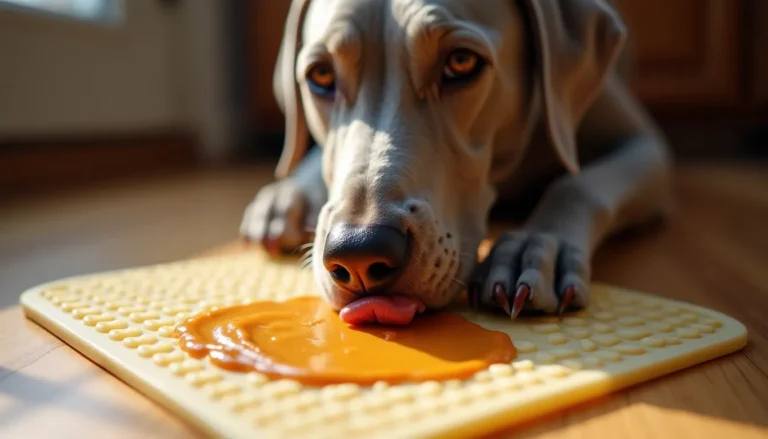
Scatter a handful of your dog’s meal across a snuffle mat or a patch of grass in the backyard. Instead of eating from a bowl in 30 seconds, your dog spends 5–10 minutes hunting each piece. This is one of the best free mental exercises for dogs because you’re using food your dog was going to eat anyway — you’re just making them work for it.
Start with easy hides and increase difficulty over several sessions — under a towel, inside a cardboard box, behind a chair leg. The progression keeps the game engaging without frustrating a beginner.
The “Which Hand” Game
Hold a treat in one closed fist and present both fists to your dog. Wait. Most dogs will paw, sniff, or nudge the correct hand within seconds. This simple game builds focus and impulse control simultaneously. It’s one of the easiest mental stimulation exercises for puppies because it requires no prior training.
Muffin Tin Puzzle
Place treats in a few cups of a muffin tin, then cover all 12 holes with tennis balls. Your dog has to remove each ball to check for a reward. It takes about 90 seconds to set up and delivers 5–10 minutes of focused searching. Rotate which cups have treats so your dog can’t memorize the pattern.
Obedience Training as a Mental Exercise for Dogs
Three minutes of focused obedience training — not an hour, just three minutes — can shift a restless dog into a calm one. Teaching your dog a new cue or sharpening an existing one requires sustained attention, which is exactly what makes it effective as a mental workout. The dog has to listen, process, and respond, all in real time.
You don’t need a training class to make this work. Pick one behavior and work it in short bursts throughout the day. “Stay” with increasing distance, “leave it” with progressively tempting objects, or a new trick like “spin” or “touch” — all of these count. Five 3-minute sessions spread across a day are more effective than one 15-minute block, both for learning and for mental fatigue.
If your dog already knows the basics, raise the criteria. Ask for a sit with eye contact held for five full seconds before releasing. Ask for a down-stay while you walk out of the room. Ask for a recall with a distraction nearby. Familiar behaviors practiced at a higher standard are still mentally demanding.
For owners with high-energy dogs who need more structure, our guide on enrichment strategies for high-drive dogs covers how to layer training into a full daily routine.
Puzzle Feeders and DIY Brain Games at Home
A Kong stuffed with plain yogurt and frozen overnight is one of the most effective mental exercises for dogs that also buys you 20 minutes of quiet. The dog has to lick, maneuver, and problem-solve to extract the food — and the frozen texture slows the whole process down. You can rotate fillings to keep it interesting without buying anything new.
Beyond the Kong, there are dozens of brain games for dogs at home that require nothing more than household items:
- Cardboard box foraging: Crumple newspaper or packing paper inside a cardboard box and hide a few treats in the layers. Let your dog dig them out.
- Towel roll: Lay a towel flat, scatter treats across it, then roll it up loosely. Your dog has to unroll it to get to the food.
- Bottle spinner: Thread a wooden dowel through two plastic bottles. Fill the bottles with kibble. As the dog noses the bottles, kibble falls out. See our full post on DIY mental stimulation ideas for step-by-step builds.
- Ice block: Freeze toys or treats inside a block of water. Works especially well in summer or for dogs that need mental stimulation without food frustration.
The goal with any puzzle feeder is to match difficulty to your dog’s experience level. A dog that’s never done puzzle work will give up on something too hard. Start with something that takes 2–3 minutes to solve, then increase complexity as your dog builds confidence.
For dogs that need mental stimulation without food — either due to dietary restrictions or because they’re not food-motivated — swap treats for a favorite toy hidden inside the puzzle, or use play as the reward at the end of a training session.
Trick Training and Cognitive Challenges by Age
A 10-year-old dog can still learn a new trick. Age slows the body, not necessarily the appetite for novelty. Trick training is one of the most flexible mental exercises because it scales to any physical ability — a dog recovering from surgery can learn “chin rest” or “paw targeting” from a lying-down position.
Tricks for Puppies (8 weeks – 6 months)
Keep sessions to 2–3 minutes maximum. Puppies have short attention spans and tire mentally very fast. Focus on simple shaping games: following a lure, targeting your hand with their nose, or offering a “sit” on cue. Mental stimulation for puppies should feel like play, not work — end every session before your puppy loses interest.
Tricks for Adult Dogs (1 – 7 years)
This is the age range where most dogs can handle 5–10 minute focused sessions. Advanced tricks like “fetch by name” (where the dog retrieves a specific named toy from a pile), “tidy up” (putting toys in a basket), or scent discrimination (identifying a specific scented object from a lineup) all require sustained cognitive effort. Naming objects is particularly demanding — research on border collies suggests dogs can learn to associate dozens of distinct names with specific items.
Tricks for Senior Dogs (8+ years)
Low-impact tricks that don’t require jumping or twisting are ideal. “Head tilt on cue,” “leg weave at a slow pace,” or “find it” games with easy hides keep the mind active without stressing joints. Shorter sessions — 3–5 minutes — with more frequent rest breaks work best.
Building a 15-Minute Daily Mental Enrichment Routine
Fifteen minutes of mental stimulation for dogs, done consistently, produces noticeably calmer behavior within a week for most owners. The key word is “consistently” — one intense session followed by three days of nothing is less effective than a short daily practice. Here’s a simple structure that works:
- Morning (5 min): Swap the food bowl for a puzzle feeder or scatter feeding in the yard. Your dog’s breakfast becomes a brain workout.
- Midday (5 min): Three minutes of trick training or obedience sharpening, followed by a 2-minute “find it” scatter game in the house.
- Evening (5 min): A stuffed, frozen Kong or a snuffle mat while you wind down. This gives your dog a calm, independent activity that signals the end of the active day.
You can swap activities freely within each slot — the structure matters more than the specific game. On rainy days when outdoor exercise is off the table, lean into the midday slot and extend it to 10–15 minutes with a new puzzle or a longer training session. Our collection of rainy-day enrichment ideas has plenty of options to pull from when you need variety.
One practical note: don’t do mentally demanding training right before bed if your dog tends to get activated and wound up by training. For those dogs, save the puzzle feeder for the evening slot and do the training earlier in the day.
Our Picks: Tools Worth Having for Mental Enrichment
These three product categories consistently deliver the best return for the time and money invested:
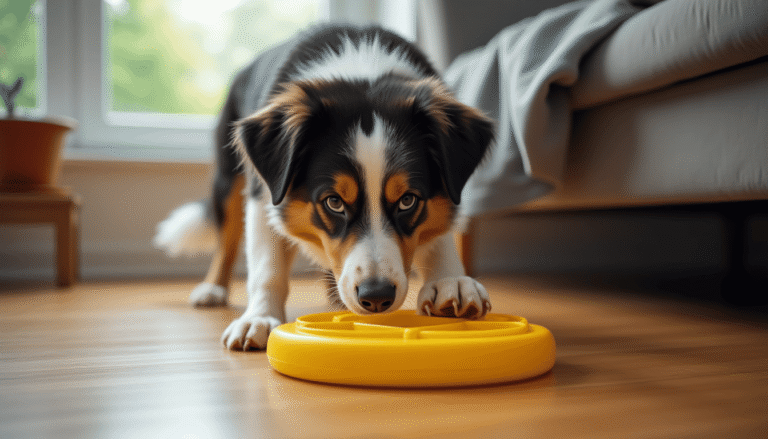
- Adjustable-difficulty sliding tile puzzle feeder — Unlike fixed-difficulty puzzles, adjustable designs grow with your dog’s problem-solving ability, so you’re not buying a new puzzle every few months.
- Rubber treat-dispensing chew toy with hollow center — Freezable, dishwasher-safe, and usable with dozens of filling combinations; this is the single most versatile enrichment tool for daily use.
- Snuffle mat with varied pile heights — Varied pile heights create genuinely different difficulty zones within the same mat, making scatter feeding more engaging than a flat surface.
FAQ: Mental Exercises for Dogs
How do I mentally exercise my dog at home without any special equipment?
Start with what you already have: use your dog’s regular meals for scatter feeding, hide treats under cups or in a rolled towel, or run a 3-minute training session with a behavior your dog already knows but can do better. None of these require purchasing anything. The muffin tin puzzle (muffin tin + tennis balls) is probably the most effective zero-cost option.
How long should a mental stimulation session last for an adult dog?
For most adult dogs, 5–15 minutes per session is enough to produce meaningful mental fatigue. Multiple short sessions throughout the day (3–5 minutes each) are more effective than one long block. Watch for signs your dog is losing focus — sniffing the ground, wandering off, or becoming frantic — and end the session before those behaviors appear.
Can mental exercises replace physical exercise for dogs?
Not entirely, but they can meaningfully reduce the amount of physical exercise your dog needs to feel settled. On days when a full walk isn’t possible — due to weather, injury, or schedule — a 15-minute mental enrichment session can take the edge off a restless dog. For dogs recovering from surgery or injury, check with your vet about which mental activities are safe given their restrictions.
What are the best mental exercises for high-energy breeds?
High-energy breeds — herding dogs, terriers, working breeds — tend to respond best to activities that have a clear “job” structure: nose work with a defined search area, trick training with high criteria, or object-name learning. Simple scatter feeding often isn’t enough for these dogs; they need something with more problem-solving depth. The ASPCA recommends combining physical and mental enrichment for working breeds rather than relying on either alone.
At what age can I start mental exercises with a puppy?
You can start simple mental games as early as 8 weeks old. Keep sessions very short — 2–3 minutes maximum — and end them before the puppy shows any frustration. At this age, the goal is to build a positive association with problem-solving, not to challenge the puppy’s limits. “Which hand” games, easy lure-following, and very shallow scatter feeding are all appropriate for young puppies.
Mental exercises for dogs don’t need to be elaborate to be effective. Pick one activity from this list — the muffin tin puzzle, a 3-minute training session, or a scatter-fed breakfast — and do it every day for a week. That single consistent change is enough to see a difference in your dog’s behavior. Once it’s a habit, add a second activity. The routine builds itself from there.