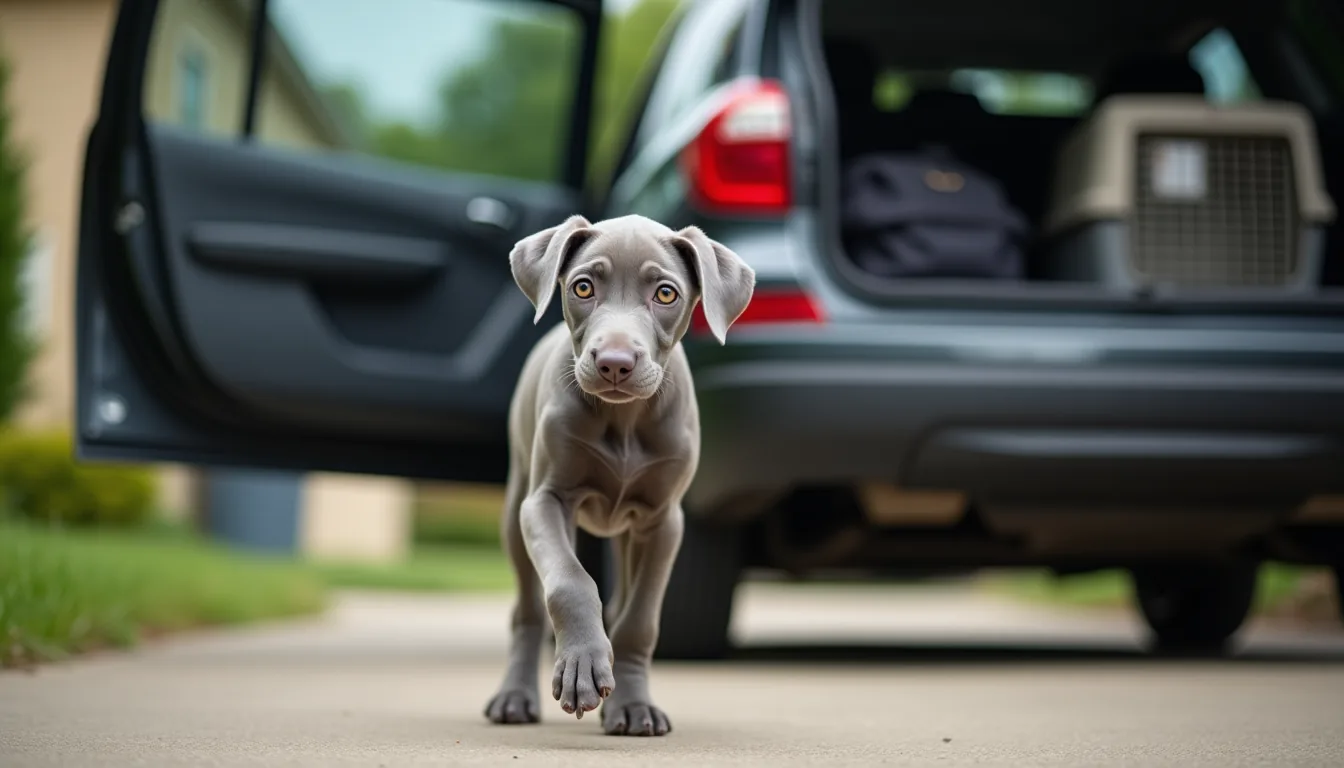
Figuring out how to travel with a puppy in a car gets real the moment you’re parked outside a breeder’s house with a ten-week-old dog who has never seen a vehicle before. Whether it’s a 20-minute drive home or a cross-state trip to visit family, the decisions you make in the first few rides shape how your dog handles cars for the rest of its life. These 10 tips cover safety, comfort, and the small logistics that most guides skip over.
Why the First Car Ride Sets the Tone
A puppy’s first car ride — often the trip home from a breeder or shelter — happens before it has any positive associations with vehicles. At 8 weeks old, a puppy’s brain is in a sensitive socialization window. A stressful ride during that period can create a lasting negative link between cars and anxiety. That’s not a small thing to undo later.
The good news: one calm, uneventful ride does more than a dozen corrective ones. If you’re picking up a puppy from a breeder, ask whether the pup has had any car exposure at all. Some breeders do short practice rides; most don’t. Either way, plan for the worst and you’ll be ready.
For the drive home specifically, bring a second person if at all possible. One person drives; the other sits in the back seat with the puppy. A puppy alone in an unfamiliar crate during its first car ride is more likely to cry and panic than one that can smell and hear a familiar human nearby.
Keep the first ride short if you have any choice. If you’re picking up a puppy from a breeder and the drive is two hours or more, plan a rest stop at the 45-minute mark regardless of how the puppy seems to be doing. Puppies tire fast, and a brief break to sniff grass and drink water can reset the mood entirely.
For a broader look at what to pack before you even get in the car, our road trip packing checklist covers 15 essentials worth reviewing the night before pickup day.
How to Travel with Puppy in Car Safely
An unrestrained puppy in a moving car is a hazard — to itself and to you. At 30 mph, even a sudden brake sends a small dog airborne. The AKC recommends that dogs travel in a secured crate or with a crash-tested harness attached to a seat belt tether for every car ride, regardless of trip length.
For puppies, you have three practical options:
- Hard-sided travel crate secured to the back seat or cargo area — the safest option in a crash, and doubles as a familiar den if your puppy is already crate-trained at home.
- Soft-sided carrier with a seat belt loop — works well for very small puppies on short trips; less impact protection than a hard crate.
- Harness with a seat belt tether — a good option for puppies who have outgrown a carrier but aren’t ready to settle in a crate. Make sure the harness is rated for vehicle use, not just walking.
Avoid letting the puppy ride on someone’s lap in the front seat. Beyond the crash risk, an airbag deployment can seriously injure a dog. Back seat only.
If you’re wondering how to transport a puppy in a car without a crate, a crash-tested harness clipped to a rear seat belt is the closest alternative. It’s not as protective as a crate in a rollover, but it keeps the puppy from becoming a projectile and prevents distracted driving. Our detailed breakdown of securing your dog in the car covers each method with the tradeoffs spelled out.
Building Car Confidence Before a Long Drive
Three short sessions across three days can prevent months of car anxiety. This isn’t elaborate — it’s just exposure in small, manageable doses before you ask the puppy to handle a full trip.
Session 1: The Parked Car
Put the puppy in the car while it’s parked and off. Let it sniff the crate or the seat. Give a treat, stay calm, and take it back inside after five minutes. That’s it. No engine, no movement.
Session 2: Engine On, Still Parked
Repeat the setup, but start the engine. Some puppies react to the vibration and sound; others don’t notice. Stay in the back seat with the puppy, give a few treats, and turn the engine off after five minutes.
Session 3: A Short Loop
Drive around the block or to the end of the street and back. Keep it under five minutes. End with something the puppy enjoys — a short play session or a meal — so the car ride is followed immediately by something good.
If you don’t have time for these sessions before pickup day, do at least one parked-car session at the breeder’s home before loading up. Even two minutes of sniffing the car before the door closes makes a difference.
Managing Motion Sickness in Young Puppies
Motion sickness is more common in puppies than in adult dogs, partly because the inner ear structures that govern balance aren’t fully developed yet. The PetMD veterinary team notes that most puppies outgrow car sickness as they mature — but that doesn’t help you on today’s drive.
Signs to watch for:
- Excessive drooling or lip-licking
- Yawning repeatedly
- Whining or restlessness when the car is moving
- Vomiting (obviously)
Practical steps that reduce the likelihood of nausea:
- Don’t feed the puppy a full meal within two hours of the drive. A small snack is fine; a full stomach is not.
- Crack the windows an inch or two. Fresh air and equalizing the pressure inside the car helps.
- Face the crate or carrier forward — rear-facing travel increases nausea in some dogs.
- Keep the car cool. Heat makes nausea worse.
If the motion sickness is severe or the trip is unavoidably long, talk to your vet before the drive. There are safe anti-nausea options available for puppies, but the right choice depends on age and weight. For a full breakdown of what works, our guide on helping dogs with car sickness goes into each option in detail.
Supplies to Pack for Any Puppy Car Trip
A small bag packed the night before saves a lot of scrambling. Here’s what actually gets used on a puppy car trip versus what just takes up space.
The Non-Negotiables
- Water and a collapsible bowl — puppies dehydrate faster than adults; offer water at every stop.
- Puppy-safe cleaning wipes and a spare towel — for drool, accidents, or vomit.
- A worn t-shirt or small blanket from home — familiar scent reduces stress in the crate.
- Leash and collar with ID tag — even for a puppy that can’t be vaccinated yet; rest stops happen.
Nice to Have on Longer Drives
- A few small treats for reward moments at rest stops.
- Puppy pads in case of accidents in the crate.
- A copy of vaccination records — some rest stops and pet-friendly hotels ask for them.
For a more complete list organized by trip length, the dog travel packing list on this site breaks it down by category.
Our Picks
These are the product categories worth having before the first trip — not specific brands, but the type of product that does the job reliably.
- Hard-sided plastic travel crate with ventilation panels — provides the most structural protection in a sudden stop and doubles as your puppy’s sleeping crate at home, so it already smells familiar on travel day.
- Crash-tested dog travel harness with seat belt clip — for puppies that need to be restrained without a crate; look for one with a padded chest plate that distributes force across the torso rather than the neck.
- Leak-proof travel water bottle with attached bowl — single-handed operation matters when you’re managing a puppy at a rest stop; a bottle with a built-in trough means no separate bowl to lose.
FAQ
When can puppies travel by car safely?
Puppies can ride in a car from the day you bring them home — there’s no minimum age for car travel itself. The key is that they’re properly restrained and not left alone in a hot vehicle. Vaccination status matters more for where you stop than for whether you drive.
How do I keep an 8-week-old puppy calm in the car?
Sit in the back seat with the puppy for the first few rides rather than isolating it in the cargo area. A worn item of clothing in the crate adds familiar scent. Keep the cabin quiet — no loud music — and avoid sudden braking by driving smoothly.
How long can a puppy ride in a car without a break?
Puppies under 12 weeks generally need a stop every 45 minutes to an hour for water, a brief stretch, and a bathroom opportunity. Older puppies (3–6 months) can usually go 1.5 to 2 hours between stops. Watch for restlessness or whining as a cue that a stop is overdue.
How do I transport a puppy in a car without a crate?
A crash-tested harness attached to a rear seat belt tether is the safest crate-free option. Avoid lap riding in the front seat entirely. A booster seat designed for small dogs can add visibility and comfort, but it still needs a harness clip to count as a restraint.
What should I bring when picking up a puppy from the breeder?
Bring a secured crate or carrier, a spare towel, water and a small bowl, and puppy cleaning wipes. A worn t-shirt placed in the crate before you arrive can help — ask the breeder to put it near the litter for an hour so it picks up familiar scents before the drive home.
The One Thing to Do Before Your Next Drive
If your puppy hasn’t ridden in a car yet, do the parked-car session today — not on pickup day. Ten minutes in a stationary vehicle with a few treats costs almost nothing and meaningfully reduces the chance of a stressful first ride. Once you’ve done that, the rest of how to travel with a puppy in a car falls into place: restrain properly, skip the pre-trip meal, bring a cleanup kit, and stop more often than you think you need to. The puppy that rides calmly at 10 weeks becomes the dog that naps through road trips at two years.