Knowing how to keep a dog from getting car sick is the difference between a road trip you look forward to and one you dread before you even back out of the driveway. Your dog isn’t being dramatic — car sickness in dogs is a real physiological response, and it hits some dogs harder than others. The good news is that most cases respond well to a handful of practical changes, and you don’t always need a prescription to see results.
Why Some Dogs Get Car Sick More Than Others
Puppies under one year old are the most common sufferers — their inner ear structures, which govern balance and spatial orientation, aren’t fully developed yet. That’s why many owners notice the problem fades as the dog matures. If you’re dealing with a young dog, there’s a reasonable chance they’ll grow out of car sickness by 12–18 months, though some dogs carry it into adulthood.
The mechanics are similar to human motion sickness: the inner ear senses movement while the eyes may be focused on a stationary interior, and the brain receives conflicting signals. Stress compounds the problem. A dog that has only ever ridden in the car to go to the vet will associate the vehicle with anxiety, which triggers nausea even before the engine starts.
Certain breeds with longer, lower bodies — like Basset Hounds and Dachshunds — may be more prone simply due to their center of gravity and sensitivity to movement. Brachycephalic breeds (flat-faced dogs like Bulldogs and Pugs) can also struggle more because they already have compromised respiratory systems, and nausea makes breathing harder.
Watch for these dog car sickness symptoms before they escalate:
- Excessive drooling or yawning in the car
- Lip-licking and swallowing repeatedly
- Whining or pacing in their crate or seat
- Lethargy or glazed eyes shortly after the car starts moving
- Vomiting — often without much warning
Catching the early signs (the drooling and yawning) gives you time to pull over before things get messier. According to the AKC, anxiety and motion-related nausea often overlap in dogs, which is why addressing both simultaneously tends to work better than treating just one.
How to Keep a Dog from Getting Car Sick with Positioning
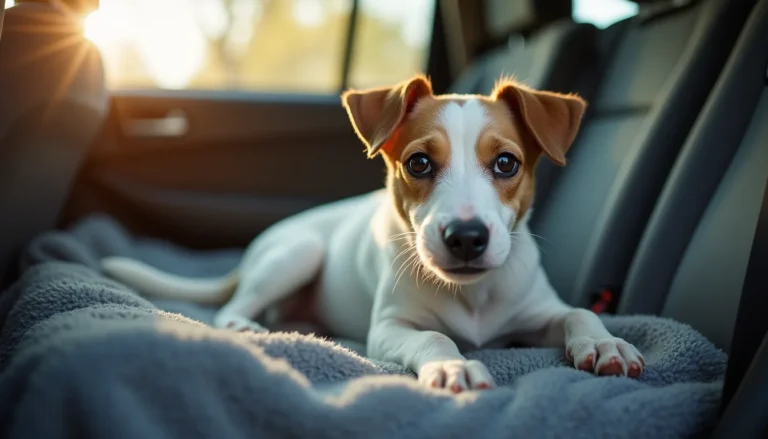
One of the most underestimated fixes costs nothing: where your dog sits in the car. A dog riding in the back cargo area of an SUV — facing backward, with no view of the road — is getting the worst possible combination of movement signals. Moving them to the back seat and turning them to face forward makes a measurable difference for many dogs.
The center of the back seat is the sweet spot — it experiences the least lateral sway compared to the sides. If your dog rides in a crate, position the crate so the dog faces forward. Crack a window two to three inches. Fresh outside air helps stabilize the sensory input and reduces the stuffy, recirculated cabin air that can worsen nausea.
Keeping your dog secured also reduces the rolling and sliding that amplifies motion sickness. A dog that’s sliding around in a crate or on a seat is essentially experiencing exaggerated movement on top of the car’s actual movement. Our guide on securing your dog safely in a car covers the specific restraint options worth considering.
A few other positioning adjustments that help:
- Lower the car’s temperature — a cooler cabin reduces nausea triggers
- Use a window shade if your dog fixates on fast-moving scenery
- Avoid placing the crate directly over the wheel wells, where vibration is highest
Feeding and Hydration Before the Ride
A dog that ate a full meal 20 minutes before a car ride is far more likely to vomit than one that hasn’t eaten for a few hours. The stomach needs time to settle, and motion disrupts digestion. For most dogs, withholding food for 3–4 hours before a car trip is enough to reduce the risk significantly.
That said, an empty stomach isn’t the same as a calm stomach. Some dogs do better with a very small, bland snack — a few plain crackers or a small piece of plain boiled chicken — about an hour before the trip. The small amount of food can actually help settle stomach acid without creating a full load for the digestive system to deal with.
Hydration matters too, but timing it right is important. Offer water before you leave, and bring a portable water bottle for the road so you can hydrate your dog during stops rather than in motion. Drinking while the car is moving can tip a borderline dog over the edge.
Avoid these before a car trip:
- High-fat treats or rich chews
- Large meals within 3 hours of departure
- Bones or chews that require intense chewing (they increase saliva and stomach acid)
Natural Remedies Worth Trying First
Ginger is the most well-documented dog car sickness natural remedy, and it’s one that veterinarians often mention before recommending medication. It works by calming the stomach lining and reducing the nausea signal. You can offer a small amount of plain ginger snap cookies (check that they contain no xylitol), ginger powder mixed into a treat, or commercially made ginger dog chews about 30 minutes before the trip.
Lavender is another option worth trying. A few drops of diluted lavender essential oil on a bandana around your dog’s neck, or on a small cloth near the crate, can reduce anxiety-driven nausea. This works better for dogs whose car sickness is primarily stress-related rather than purely vestibular.
Desensitization is slower but often the most durable fix. Start by sitting with your dog in a parked car for five minutes with no engine. Then run the engine without moving. Then drive around the block. Build up over days or weeks. Dogs that have only experienced the car as a stressful event need repeated low-stakes exposures before their nervous system stops treating every ride as a threat.
Calming aids like pheromone sprays (DAP/Adaptil) or anxiety wraps can also help dogs for whom stress is the primary driver. These aren’t sedatives — they work by reducing baseline anxiety, which lowers the nausea threshold. For a broader look at keeping your dog calm on longer drives, see our tips on managing dog anxiety on road trips.
When to Use Medication for Dog Car Sickness
If positioning adjustments, feeding windows, and natural remedies haven’t made a dent after two to three weeks of consistent effort, it’s worth talking to your vet. There are both over-the-counter and prescription options that work well for dogs.
Diphenhydramine (the active ingredient in Benadryl) is the most commonly used over-the-counter option. It has mild anti-nausea and sedating properties. Dosing is weight-dependent and the formulation must be plain — no decongestants, no xylitol. Always confirm the correct dose with your vet before giving it, as some dogs react poorly to antihistamines.
For dogs with more severe motion sickness, veterinarians can prescribe Cerenia (maropitant citrate), which is specifically approved for motion sickness in dogs. It works differently from antihistamines — it targets the vomiting center in the brain rather than causing sedation. VCA Animal Hospitals notes that Cerenia is generally well-tolerated and can be used for trips up to 24 hours with appropriate dosing.
A few things to keep in mind with medication:
- Most anti-nausea medications need to be given 1–2 hours before travel to be effective
- Medication doesn’t replace desensitization — it’s most useful as a bridge while you build positive car associations
- Never give your dog medication intended for humans without vet guidance
For a deeper look at the full range of remedies — from ginger to prescription options — our dedicated post on car sickness remedies for dogs walks through each one in detail.
Our Picks
These three product categories address the most common car sickness triggers. No brand names — just the type to look for when you shop.
- Forward-facing dog car seat with raised bolster sides — keeps your dog elevated, facing forward, and contained without restricting airflow, which tackles both the vestibular conflict and the anxiety of feeling unsecured.
- Ginger-based dog calming chews — formulated specifically for dogs with motion sickness, these combine ginger with calming botanicals and are sized for easy pre-trip dosing without the guesswork of human ginger products.
- Pheromone-infused travel spray for dog crates — a synthetic calming pheromone that mimics what mother dogs produce; spritz the crate 15 minutes before loading your dog for a measurable reduction in stress-related nausea.
Frequently Asked Questions
How do I get my dog to stop getting car sick?
Start with the basics: withhold food for 3–4 hours before the trip, move your dog to the center of the back seat facing forward, and crack a window. If those changes don’t resolve it within a few trips, add a ginger chew 30 minutes before departure or begin a desensitization program with short, low-stress rides. Persistent cases may need a vet-prescribed anti-nausea medication like maropitant.
What dog breeds are most prone to car sickness?
Puppies of any breed are the most commonly affected group. Among adult dogs, brachycephalic breeds (Bulldogs, Pugs, Boxers) and long-bodied, low-to-the-ground breeds (Dachshunds, Basset Hounds) tend to struggle more. Anxious breeds — like some herding and working dogs — can also be more susceptible when stress amplifies the physical nausea response.
What can I give my dog for motion sickness in the car?
For mild cases, plain ginger (in dog-safe form, no xylitol) is a reasonable first step. Diphenhydramine (plain Benadryl) is a common over-the-counter option, but confirm the dose with your vet first. For dogs with moderate to severe motion sickness, ask your vet about Cerenia (maropitant citrate), which is specifically approved for this use in dogs.
Does car sickness in dogs go away on its own?
Many puppies do outgrow it as their inner ear matures, typically by 12–18 months of age. Adult dogs whose car sickness is primarily anxiety-driven can often improve significantly with consistent desensitization — short, positive car experiences repeated over several weeks. Dogs with a purely vestibular cause may need ongoing management rather than a permanent cure.
Why is my dog drooling and shaking in the car but not vomiting?
Drooling and shaking are early-stage nausea and anxiety symptoms — your dog is nauseated but hasn’t crossed the threshold into vomiting yet. Car sick dog drooling treatment starts with the same steps as prevention: reduce the trip duration, improve ventilation, and address the anxiety component. Catching these signs early and pulling over for a short break can prevent vomiting from occurring.
The One Thing to Do Before Your Next Drive
Before your next car trip, shift your dog to the center of the back seat facing forward and skip the pre-trip meal. That single combination — forward-facing position plus an empty stomach — resolves mild car sickness in a surprising number of dogs without any supplements or medication. If you’re planning a longer journey, our complete guide to traveling with a dog in a car covers everything else you’ll need to make the trip smooth from start to finish. Knowing how to keep a dog from getting car sick means you can stop dreading the drive and start looking forward to wherever you’re going together.