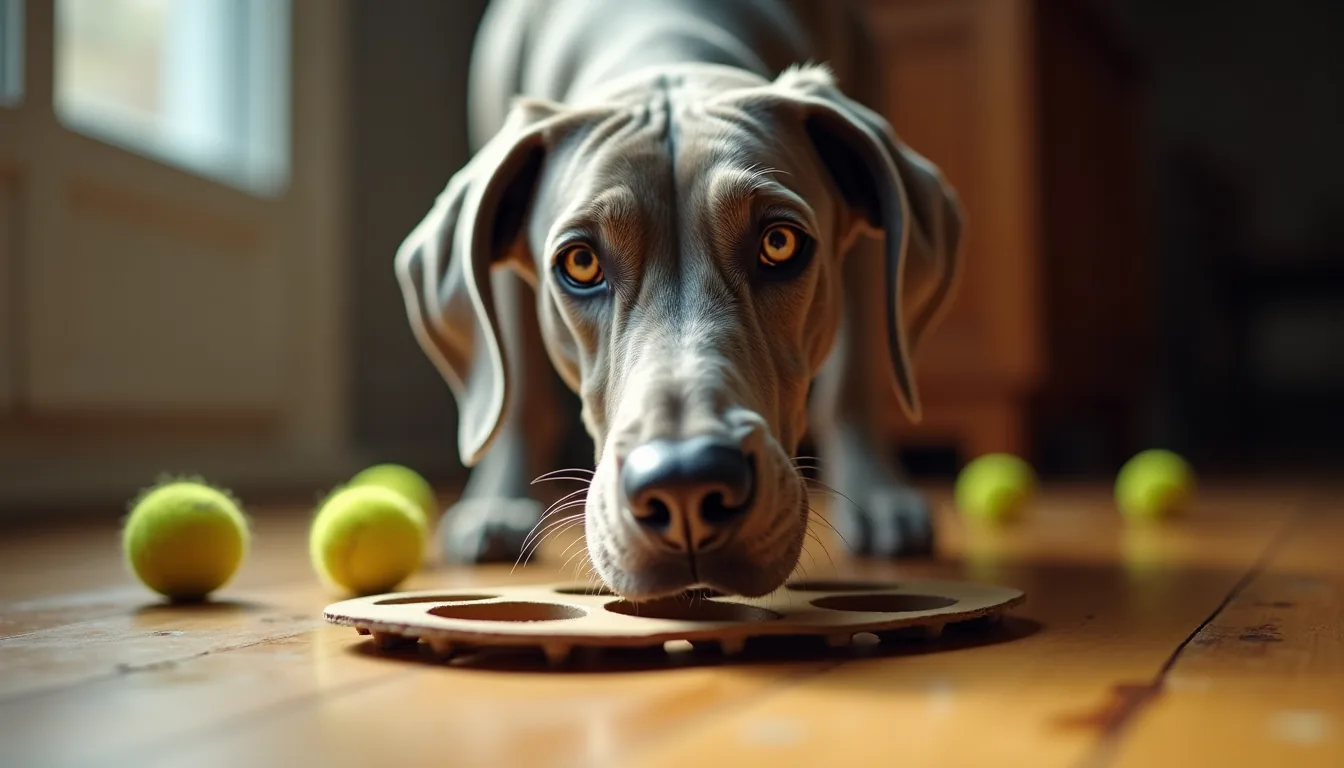
It’s Tuesday evening, your dog has been staring at you for 40 minutes, and the best DIY mental stimulation for dogs you can think of is tossing a tennis ball down the hallway again. There’s a better way — and it costs almost nothing. A muffin tin, a handful of kibble, and a few toilet paper rolls are enough to keep most dogs occupied for longer than a walk around the block.
Why Mental Work Tires Dogs Out Faster Than a Walk
A 20-minute sniff-heavy walk leaves most dogs calmer than a 45-minute jog on a leash. That’s not an accident. Problem-solving and scent work activate different neural pathways than physical movement — and they burn through mental energy fast. The AKC notes that nose work in particular taps into a dog’s most developed sense, making it one of the most satisfying activities you can offer.
The practical takeaway: a 15-minute sniff session or a short puzzle feeding session can take the edge off a restless dog more reliably than adding another lap around the block. That’s especially useful on rainy days, after surgery, or when you’re working from home and can’t give your dog your full attention. If you’re looking for more ideas specifically for those low-movement days, our rainy day enrichment guide covers a solid range of options.
The goal isn’t exhaustion — it’s satisfaction. A dog who has worked for its food, sniffed out hidden treats, or solved a simple puzzle is a dog who settles voluntarily. That’s the outcome worth building toward.
High-energy breeds like border collies, Belgian Malinois, and Weimaraners may need 30–60 minutes of combined mental and physical activity daily, while a senior basset hound might be content with two 10-minute sessions. Pay attention to how your individual dog behaves after each activity — that’s the most accurate feedback you’ll get.
DIY Mental Stimulation for Dogs: 5 Kitchen Staples
Before you order anything online, open your kitchen cabinets. Five items you almost certainly already own can become your dog’s favorite brain games.
The Muffin Tin Game
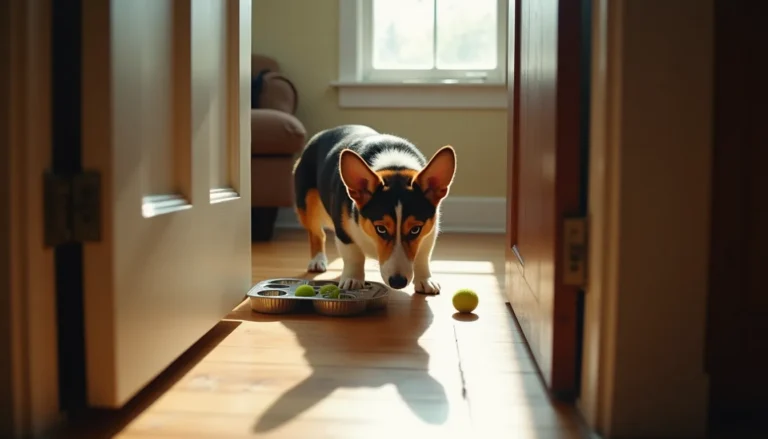
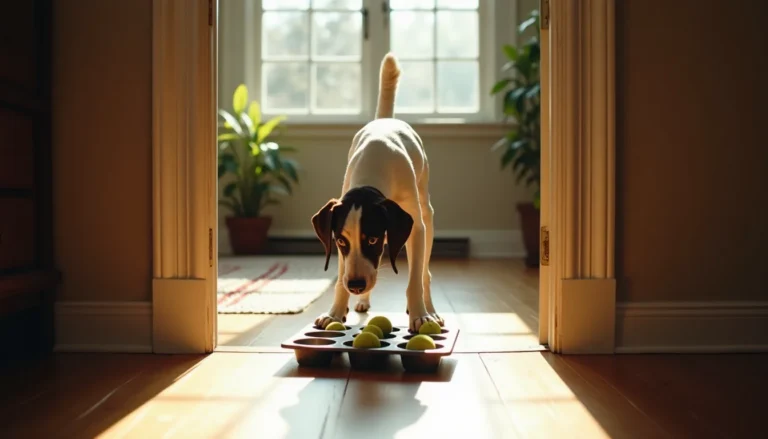
Place kibble or small treats in some cups of a standard 12-cup muffin tin, then cover all the cups with tennis balls. Your dog has to lift each ball to find the reward. Start with treats under every ball, then gradually reduce the number of loaded cups to increase difficulty. Most dogs figure out the basic version in one session and stay engaged for 5–10 minutes.
Crinkled Paper Foraging
Scatter kibble inside a shallow cardboard box lined with crinkled newspaper or paper bags. Your dog roots through the texture to find food. This mimics natural foraging behavior and is especially good for dogs who bolt their meals — it slows eating while adding a mental layer. Supervise the first few sessions to make sure your dog isn’t eating the paper.
The Towel Roll
Lay a hand towel flat, scatter treats across it, then roll it up loosely. Your dog unrolls it to reach the food. Once they master the basic roll, fold the ends under to add a second step. This is a good starting point for dogs new to puzzle-style feeding.
Egg Carton Puzzle
Drop a few treats into a cardboard egg carton and close the lid. Your dog has to paw, nose, or bite it open. Use the 12-count carton for beginners; tape it lightly shut for dogs who’ve already mastered the open version.
Frozen Kong Alternative
If you don’t have a Kong, stuff a toilet paper roll, fold the ends closed, and freeze it with a peanut butter and kibble mixture inside. Works the same way — the frozen filling extends the work time significantly. For more filling ideas that freeze well, check out our lick mat filling recipes.
Scent Games That Require Zero Equipment
Nose work is the single highest-value mental activity you can offer your dog, and the most basic version costs nothing. Hide a piece of kibble under one of three overturned plastic cups and let your dog sniff out which one. That’s it. That’s the whole game to start.
Once your dog understands the cup game, scale up. Hide treats in different rooms and send your dog to find them with a release cue like “go find it.” The ASPCA recommends scent-based enrichment as a low-stress activity suitable for dogs recovering from illness or injury, since it requires minimal physical exertion while keeping the brain fully engaged.
Start small and make it easy enough that your dog succeeds on the first attempt. If your dog gets frustrated and gives up, the hiding spot was too hard. Build confidence first, then add difficulty over days or weeks.
Scent Discrimination
Place a worn sock or a piece of cloth with your scent on it among three or four neutral objects. Reward your dog for sniffing the correct item. This is a foundation skill used in formal nose work classes — and you can teach the basics at home in a week.
The Which Hand Game
Hold a treat in one closed fist, present both fists, and let your dog choose. When they nose or paw the correct hand, open it and reward. Simple, quick, and mentally engaging for dogs at any age. Great for short dog enrichment activities during commercial breaks.
Building DIY Dog Puzzles From Recycled Materials
A cardboard box, some empty plastic bottles, and a length of rope are enough to build a rotating puzzle station your dog won’t tire of for weeks. The key is novelty — rotating through different configurations keeps the challenge fresh.
Bottle Spinner
Thread a wooden dowel through the center of two or three plastic bottles (punch holes through the caps and bottoms). Fill each bottle with kibble. Mount the dowel horizontally between two stacks of books or boxes so the bottles spin freely. Your dog noses the bottles to spin kibble out. This is a solid option for DIY dog puzzles for large dogs — scale up to 2-liter bottles for bigger breeds.
Cardboard Box Maze
Cut holes in the sides of a medium cardboard box just large enough for your dog’s nose. Drop treats inside. Your dog has to figure out the angles to get the treats out. Reinforce the box with packing tape if your dog tends to destroy things quickly — it extends the life of the puzzle by several sessions.
PVC Pipe Feeder
Cap one end of a short PVC pipe, fill with kibble, and cap the other end loosely. Your dog rolls it around to dispense food. This works especially well on hardwood or tile floors. For a detailed walkthrough of similar builds, our guide to making enrichment toys at home covers materials and safety notes.
Muffled Treat Box
Place a treat inside a small box, wrap it in a second box, and let your dog unwrap the layers. This “Russian nesting” format works well for dogs who are already comfortable with destruction-style puzzles. Use plain cardboard with no ink-heavy printing to keep it safe if your dog ingests small pieces.
Structured Training as Mental Stimulation
Ten minutes of focused training tires a dog out more than most people expect. Teaching a new behavior — even a simple one like “touch” (nose-targeting your hand) — requires concentration, impulse control, and memory. That combination is genuinely exhausting for most dogs.
You don’t need a formal training plan. Pick one new behavior per week and work on it in two or three 5-minute sessions. “Spin,” “back up,” “go to your mat,” and “find it” are all practical behaviors that double as mental workouts. Dogs who already know basic obedience can work on duration, distance, and distraction — adding those three dimensions to a known behavior is harder than learning something new.
End every session before your dog loses interest. Stopping on a success keeps the training association positive and makes your dog eager for the next session. If you notice your dog yawning, looking away, or sniffing the ground during training, that’s a signal to wrap up — not to push through.
For dogs who need more challenge than basic training provides, combining training with scent work or puzzle feeding creates a multi-layered session. Ask your dog to sit and stay while you hide a treat, then release them to find it. That sequence adds impulse control to the nose work, doubling the cognitive load.
Our Picks
Sometimes a store-bought tool makes the DIY work easier or safer. These three categories are worth having alongside your homemade setups:
- Adjustable-difficulty sliding tile puzzle — the tray format lets you increase complexity by adding more compartments, and it’s dishwasher-safe, which matters when you’re using wet food or peanut butter.
- Rubber treat-dispensing ball with variable opening — the adjustable hole size means you can make the same toy harder as your dog improves, extending its useful life significantly.
- Snuffle mat with layered fleece strips — foraging through fabric is slower and more scent-intensive than a bowl, making it a reliable 10–15 minute activity that requires zero setup once you’ve loaded it.
FAQ
How do I mentally stimulate my dog at home without buying anything?
Start with what’s in your kitchen: a muffin tin and tennis balls, a rolled-up towel with treats inside, or kibble scattered in a cardboard box with crinkled paper. Scent games like “find it” (hiding treats around a room) require nothing at all. Five to ten minutes of any of these activities provides genuine mental engagement for most dogs.
How much mental stimulation does a dog need each day?
Most adult dogs benefit from 20–40 minutes of combined mental activity spread across the day — this can be split into two or three shorter sessions. High-drive working breeds may need more; senior dogs or those recovering from illness often do well with shorter, gentler sessions. Watch your dog’s behavior after each session: a dog who settles and rests has had enough.
Can 15 minutes of mental stimulation really make a difference?
Yes — a focused 15-minute puzzle feeding session or nose work game can take the edge off a restless dog more effectively than a longer walk, because it targets mental fatigue rather than just physical tiredness. The key is that the activity should require your dog to actively problem-solve, not just chew passively.
What DIY dog enrichment ideas work best when I’m away at work?
Frozen stuffed toys (toilet paper rolls or repurposed containers packed with kibble and peanut butter, then frozen) are the safest option because they don’t require supervision. A snuffle mat loaded before you leave is another reliable choice. Avoid cardboard puzzles or anything with small detachable parts when you’re not home to monitor. For more dog enrichment ideas while at work, our indoor enrichment guide has a dedicated section on unsupervised setups.
Are DIY dog puzzles safe for dogs who destroy toys quickly?
They can be, with the right materials. Avoid thin plastic, rubber bands, staples, tape with strong adhesive, and anything with ink-heavy printing. Cardboard is generally safe in small amounts if ingested, but monitor your dog the first few times. For heavy chewers, the bottle spinner and PVC pipe feeder are sturdier options than paper-based puzzles.
Start With One Thing Tonight
Pick the muffin tin game or the towel roll — both take under two minutes to set up. Run one session tonight and watch how your dog responds. That single observation will tell you more about what level of DIY mental stimulation for dogs your specific dog needs than any general guide can. Once you see how quickly a focused 10-minute puzzle session settles your dog, you’ll have all the motivation you need to keep building on it. For a broader look at what’s working for other owners, our full list of top enrichment activities is a good next stop.