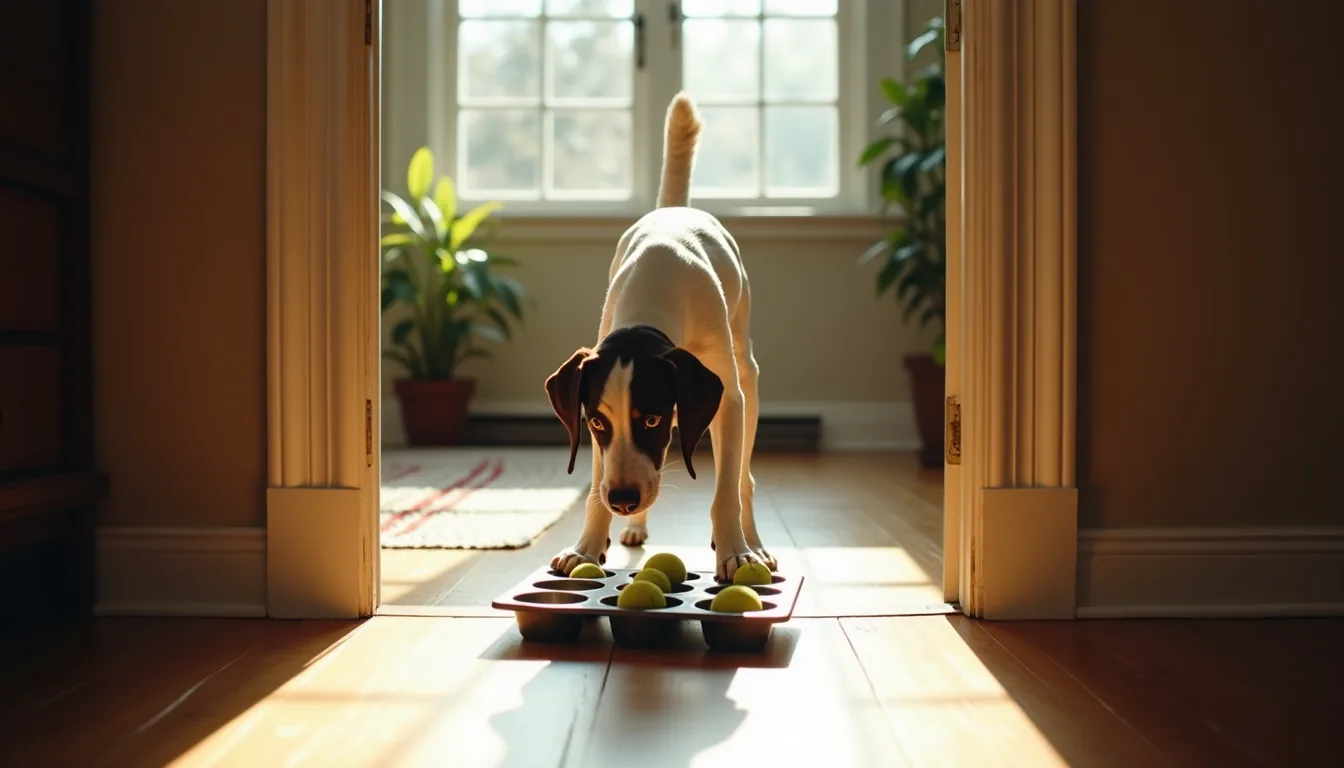
The moment you realize you need diy enrichment toys for dogs is usually when your dog has already chewed through the third cardboard box this week or started herding the cat for the second time before noon. The good news: most of what your dog needs to stay mentally occupied is already sitting in your kitchen, recycling bin, or linen closet — and none of it requires a craft store run.
Why Mental Work Tires Dogs Out Faster Than Walks
A 20-minute sniff-and-search session can leave a high-energy dog calmer than a 45-minute leash walk. That’s not an exaggeration — it reflects how much cognitive effort scent processing and problem-solving demand from a dog’s brain. The AKC notes that mental stimulation is just as important as physical exercise for overall canine wellbeing, particularly for working and herding breeds that were bred to think on the job.
The reason store-bought puzzle toys often stop working after a week is that dogs learn the solution and repeat it from muscle memory rather than actually problem-solving. Homemade toys have a natural advantage here: you can change them up every time, making the challenge genuinely novel. A muffin tin with tennis balls covering the kibble cups is a different puzzle the moment you rearrange which cups have food and which don’t.
This matters especially if your dog is home alone during the day. Rotate toys every two to three days so your dog encounters something unfamiliar rather than something already solved. Even swapping the same toy to a different room counts — the new scent environment resets the challenge.
If your dog is particularly high-drive, our guide on enrichment for high-energy dogs covers how to layer mental and physical outlets without burning yourself out as the provider.
12 Easy DIY Enrichment Toys for Dogs to Make Today
Kitchen and Pantry Builds (Toys 1–4)
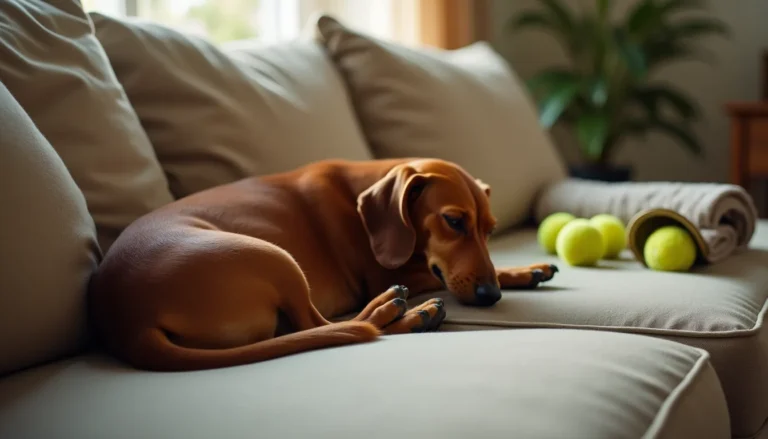
1. Muffin tin puzzle. Press kibble or small treats into a 12-cup muffin tin, then cover each cup with a tennis ball. Your dog has to nose or paw the balls off to reach the food. Start with only a few cups covered if your dog is new to puzzles.
2. Plastic bottle spinner. Punch a hole through the center of a clean plastic water bottle, thread a wooden dowel through it, and rest the dowel across two stacked books or a shoebox frame. Fill the bottle with kibble through the mouth, then let your dog bat it to dispense food. Supervise this one — if your dog is a power chewer, swap to a thick cardboard tube instead.
3. Egg carton scatter. Drop treats into a cardboard egg carton, close the lid, and hand it over. Most dogs figure out the flap system within a minute, but the crinkle and smell keep them engaged even after the food is gone.
4. Ice cube treat block. Fill an ice cube tray with low-sodium broth, tuck a small treat into each cube, and freeze overnight. Works especially well in summer. For more frozen filling ideas, check out our homemade lick mat recipes — the same fillings translate perfectly to ice trays.
Fabric and Towel Builds (Toys 5–7)
5. Snuffle towel. Lay a bath towel flat, scatter kibble across it, then fold and roll it loosely. Your dog unrolls it with their nose and paws to find the food. This is one of the best dog enrichment ideas without food too — hide a favorite toy or a worn sock with your scent inside instead.
6. Knotted fleece strip puzzle. Cut an old fleece blanket or t-shirt into 2-inch strips, tie them in loose knots around a few treats, and hand the bundle over. The texture, smell, and resistance of the knots keep dogs working for several minutes.
7. DIY snuffle mat. Push fleece strips through a rubber sink mat (the kind with drainage holes) until the surface is densely covered. Scatter kibble into the strips. This is a longer build — about 30 minutes — but it lasts for years and is machine washable. The DIY dog enrichment towel and snuffle mat concepts overlap here; both tap the same foraging instinct.
Cardboard and Paper Builds (Toys 8–10)
8. Box-in-a-box puzzle. Put a treat inside a small box, seal it loosely with tape, then place it inside a larger box with crumpled paper. Your dog has to work through two layers to reach the reward. Use paper tape rather than packing tape so there’s no risk of your dog ingesting plastic adhesive.
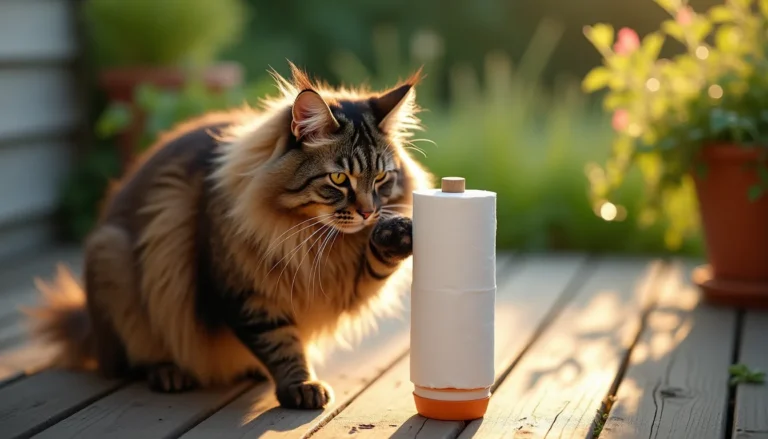
9. Toilet paper roll treat bundle. Fold the ends of an empty toilet paper roll closed, stuff a few treats inside, and hand it over. For large dogs, use a paper towel roll or stuff three toilet paper rolls inside a cereal box for a DIY dog enrichment idea that scales to bigger snouts.
10. Paper bag crinkle hunt. Drop treats into a paper grocery bag, fold the top closed, and let your dog figure out entry. The crinkle noise and the effort of tearing through paper adds sensory stimulation beyond just the food reward.
Outdoor and Yard Builds (Toys 11–12)
11. Garden scatter search. Toss your dog’s entire meal portion into a patch of grass and let them sniff it out one piece at a time. No building required — this is pure nose work, and it slows fast eaters significantly.
12. Sand or dirt dig box. Fill a plastic storage bin with clean sandbox sand, bury a few chews or toys at different depths, and let your dog excavate. This is especially useful as a DIY dog enrichment idea for large dogs who need something physically engaging alongside the mental challenge.
How to Scale Difficulty as Your Dog Gets Smarter
Start every new toy at the easiest level — treats visible, containers open, no layers. Once your dog solves it in under 30 seconds two sessions in a row, add one layer of difficulty. That might mean covering the muffin tin cups with a towel on top of the tennis balls, or adding an extra box layer to the box-in-a-box puzzle.
Three principles keep homemade puzzles challenging over time:
- Change the container, not just the treat. The smell of a new material resets the difficulty even if the mechanism is the same.
- Reduce the treat-to-effort ratio gradually — fewer treats per puzzle, more work per treat.
- Combine toy types: a snuffle towel stuffed inside a box inside a bag creates three layers of problem-solving in sequence.
Puppies and senior dogs both benefit from enrichment, but the difficulty ceiling is different. Puppies get frustrated quickly, so keep sessions under five minutes and make success easy. Senior dogs often have slower problem-solving but benefit enormously from the mental engagement — just watch for fatigue and keep sessions short. Our roundup of dog puzzle ideas at home has more on adapting difficulty by age and breed.
Safety Rules Before You Hand Over a Homemade Toy
Three things to check before every session: no sharp edges on cardboard or plastic, no strings or rubber bands that could be swallowed, and no toxic materials like styrofoam peanuts or dyed tissue paper. The ASPCA recommends supervising any toy interaction where pieces could be torn off and swallowed, which applies to most of the cardboard and paper builds above.
Specific rules worth following:
- Always remove destroyed toys before your dog can eat the fragments.
- Avoid plastic bottles with power chewers — a punctured bottle creates sharp shards.
- Don’t use rubber bands, twist ties, or staples anywhere near the toy.
- Check that any fabric strips are at least 1 inch wide — thinner strips can become a swallowing hazard if bitten through.
Supervise every session until you know how your dog interacts with a new material. Some dogs lick and sniff; others immediately try to destroy. The destruction style determines which builds are safe for unsupervised use.
Our Picks
Sometimes a homemade toy needs a commercial anchor to work best. These three product categories pair well with the DIY builds above:
- Rubber treat-dispensing base toy — acts as a chassis you can stuff differently every session, so the same toy never delivers the same challenge twice.
- Silicone lick mat with suction base — sticks to a wall or floor during the snuffle mat session, giving your dog a stationary target that slows eating and extends engagement time.
- Adjustable snuffle mat with washable base — a step up from the DIY fleece version once your dog has mastered the homemade prototype, with tighter pockets that hold smaller kibble pieces securely.
FAQ
What are some good DIY enrichment toys for dogs I can make right now?
The muffin tin puzzle (muffin tin + tennis balls + kibble) and the snuffle towel (rolled bath towel + scattered treats) are both zero-prep builds you can assemble in under two minutes from things most households already have. Both work for dogs of any size and require no tools.
How do I mentally stimulate my dog at home without buying anything?
Scatter feeding — tossing your dog’s entire meal into a patch of grass or across a carpet — is the simplest option. Hide-and-seek with kibble hidden in different rooms, and basic nose work (hiding a treat under one of three cups) are equally effective and completely free. Varying the location and container each session keeps the challenge fresh.
What can keep a dog entertained for hours, especially when I’m at work?
No single toy sustains a dog for hours without a break, and that’s actually fine — dogs naturally rest between activity bouts. A frozen broth block in the morning, a snuffle mat mid-morning, and a knotted fleece bundle in the afternoon gives your dog three separate engagement windows. Rotating three or four toys so none feel stale is more effective than leaving out one complex puzzle all day.
How can I enrich my dog’s life on a budget?
Cardboard, old towels, and empty plastic bottles cover most of the enrichment spectrum for free. The muffin tin puzzle costs nothing if you already own one. If you want to buy one item, a rubber base toy or a silicone lick mat under $15 extends the usefulness of every homemade filling idea you already have.
Are DIY dog enrichment toys safe for puppies and senior dogs?
Yes, with adjustments. For puppies, avoid small pieces that could be swallowed and keep sessions to five minutes or less — frustration sets in fast. For senior dogs, choose softer materials (towels over cardboard) and lower the difficulty so success comes quickly. Always supervise until you know how your individual dog handles a new material.
Start With One Toy Today
Pick the muffin tin puzzle or the snuffle towel — whichever requires fewer items you need to gather — and run one five-minute session before dinner tonight. Watch how your dog approaches the problem: nose-first, paw-first, or straight to destruction. That tells you exactly which toy types to build next. The best diy enrichment toys for dogs are the ones actually sitting in your house right now, waiting to become something your dog has never seen before.