10 Best Cat Enrichment Ideas for Indoor Cats
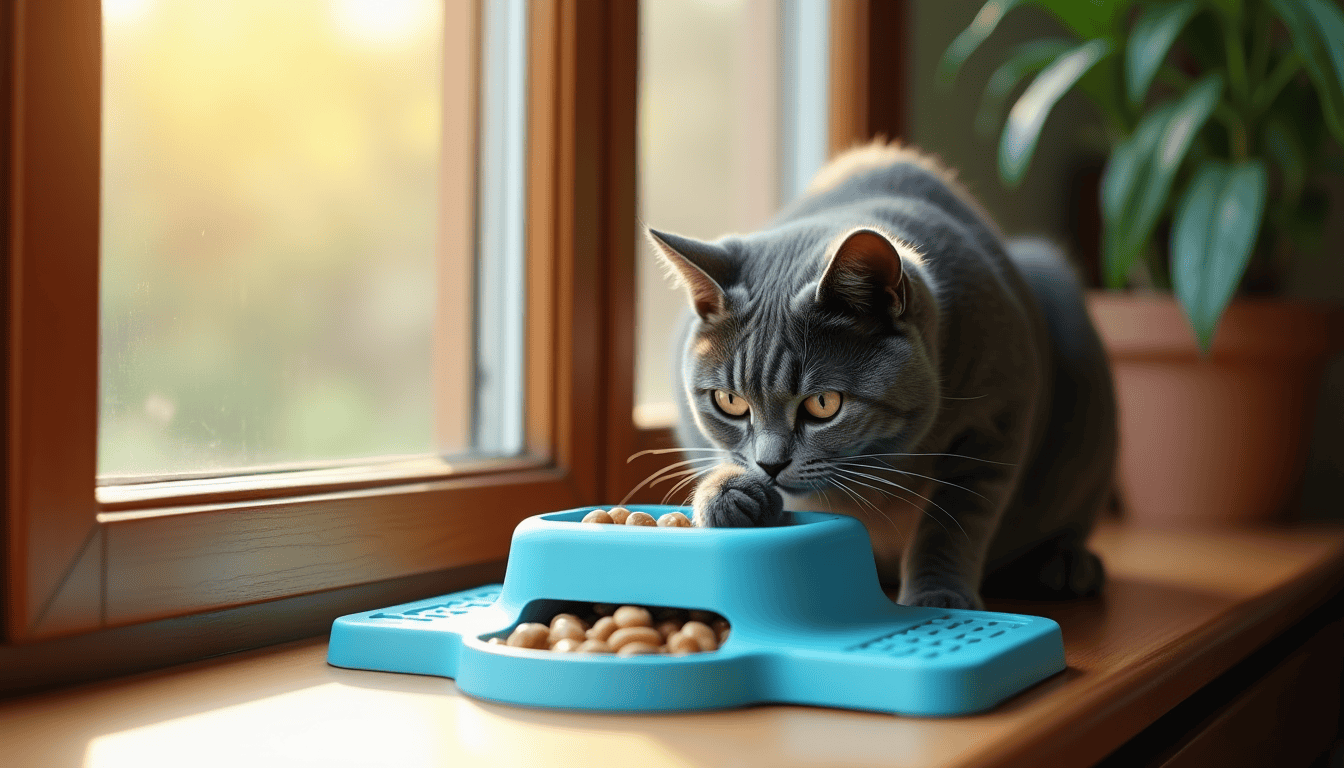
The best cat enrichment ideas for indoor cats aren’t complicated — but your cat is bored right now, and the shredded corner of your couch is proof. An indoor cat with nothing to hunt, climb, or problem-solve will find its own entertainment, and it’s rarely the kind you’d choose. Whether your cat is a relentless 3 a.m. zoomies machine or a couch lump who’s slowly stopped grooming, the fix is the same: more structured mental and physical stimulation built into the day.
Why Indoor Cats Get Bored Faster Than You Think
A domestic cat’s natural activity cycle involves somewhere between 8 and 16 short hunting bursts per day — stalk, pounce, catch, eat, groom, sleep, repeat. Inside a 900-square-foot apartment with no prey and a full food bowl, that cycle collapses. The stalking and pouncing have nowhere to go, so they get redirected: onto your ankles, your other cat, or the curtains.
Boredom in cats doesn’t always look like hyperactivity. It can look like over-grooming, weight gain from stress-eating, or a cat that sleeps 20 hours a day and seems disengaged. ASPCA notes that environmental enrichment is a core component of feline behavioral health, not an optional upgrade.
The mistake most owners make is buying one expensive cat tree, placing it in the corner, and calling it done. A single static structure doesn’t replicate the variability of an outdoor environment. Your cat needs novelty, challenge, and — critically — the ability to make choices about how it spends its time.
Start by auditing your space: count how many distinct “activities” your cat can independently choose between at any given hour. If the answer is fewer than four, that’s your baseline problem. The sections below give you a concrete way to change it.
Foraging and Food Puzzle Cat Enrichment Ideas for Indoor Cats
A flat bowl delivers 30 calories in 45 seconds. A puzzle feeder with three difficulty levels can stretch that same meal to 15 minutes of active problem-solving. That’s not a trivial difference — it’s the single highest-ROI swap you can make for an indoor cat’s daily routine.
You don’t need to buy anything to start. Roll your cat’s dry kibble inside a paper towel tube with the ends folded shut. Place it on the floor and watch what happens. Most cats will bat it, roll it, and work out the food within a few minutes. That’s foraging behavior — exactly what their brain is wired for.
Scatter Feeding
Instead of a bowl, toss kibble across a textured mat or a patch of carpet. Your cat has to use its nose and paws to locate each piece. Do this for one meal a day and you’ve added 10–15 minutes of low-intensity enrichment at zero cost.
Puzzle Feeders by Difficulty
Start at Level 1 (sliding panels, simple holes) and only move up when your cat solves the current feeder in under two minutes. Jumping straight to a Level 3 puzzle can frustrate a cat that hasn’t built the skill yet, and a frustrated cat walks away — defeating the purpose entirely.
Wet Food Lick Mats
Freeze a thin layer of wet food or plain pumpkin puree onto a textured silicone mat overnight. A frozen lick mat takes 3–5 times longer to finish than a room-temperature one and provides a calming, repetitive licking behavior that some behaviorists associate with stress reduction.
Vertical Space: The Most Underused Resource in Any Home
Cats are vertical animals. Given the choice between floor-level and ceiling-level, most cats choose height — it’s a safety and surveillance instinct. Yet the average indoor setup gives cats maybe 6 feet of climbable height before they hit a flat surface and stop.
A single wall-mounted shelf at 5 feet, positioned near a window, will get more use than a $300 cat tree placed in the middle of a room. The window is the key variable. A cat that can watch birds, squirrels, or passing cars from a high vantage point is getting passive enrichment every hour it’s awake.
Install at least two shelves at different heights to create a route, not just a destination. A cat that can travel a path — shelf to shelf to top of bookcase — is getting both physical and cognitive exercise. One isolated perch just becomes another sleeping spot.
If wall mounting isn’t an option, use the tops of existing furniture as waypoints and add a tall, stable bookcase near the window. The goal is vertical distance and a reason to move between levels.
Play Sessions: Timing and Type Matter More Than Duration
Ten minutes of wand toy play twice a day outperforms 30 minutes of leaving a toy on the floor. The difference is interactivity and the hunting sequence. A wand toy that you move unpredictably — darting behind furniture, pausing, moving in short bursts — mimics prey behavior. A static toy on the floor is just an object.
The timing of play matters too. Cats are crepuscular, meaning they’re naturally most active at dawn and dusk. A 10-minute wand session 30 minutes before your cat’s evening meal lines up with its biological peak and ends with the “catch” (the meal), completing the hunt cycle. Many owners report that cats who get this sequence are significantly calmer at night.
Rotate toys on a weekly basis. A feather wand that’s been out for three weeks is invisible to your cat. Put it in a drawer for 10 days and bring it back — it becomes interesting again. Keep three to four toys in active rotation and store the rest.
Solo toys matter too for the hours you’re not home. Crinkle balls, small mylar balls, and spring toys placed at the base of a cat tree give your cat something to bat and chase independently. Avoid toys with small parts that can be chewed off and swallowed — per AKC pet safety guidance, ingested foreign objects are a leading cause of emergency vet visits across all companion animals.
Sensory Enrichment: Smell, Sound, and Texture
A pinch of dried valerian root placed inside a knotted sock gives most cats 10–20 minutes of rolling, rubbing, and sniffing behavior — no catnip required (and valerian works on many cats that don’t respond to catnip). Sensory enrichment is one of the most overlooked categories in the standard cat enrichment ideas for indoor cats conversation, because it doesn’t look dramatic. But smell is your cat’s dominant sense, and stimulating it costs almost nothing.
Scent Enrichment
Rotate small amounts of dried herbs — valerian, silver vine, or catnip — inside fabric pouches. Refresh them every few days. You can also rub a small amount of tuna juice on a cardboard scratcher to encourage use and create a new scent experience.
Auditory Stimulation
Bird and squirrel videos on a tablet or TV, specifically designed for cats, produce genuine visual tracking and chirping responses in many cats. Leave one playing during your workday. Not every cat responds, but the ones that do can stay engaged for 30–45 minutes at a stretch.
Texture Variety
Offer at least three different scratching surfaces: vertical sisal, horizontal cardboard, and a rough fabric surface. Cats have texture preferences that are individual — a cat that ignores a sisal post may go wild for a flat cardboard pad. Providing options lets your cat self-select, which itself is a form of enrichment.
Our Picks
These three product categories consistently deliver results for indoor cats and earn their place in a rotation-based enrichment setup.
- Multi-level adjustable puzzle feeder with sliding compartments — the adjustable difficulty means one feeder grows with your cat’s skill level instead of becoming obsolete after two weeks.
- Wall-mounted cat shelf set with sisal-wrapped ledge inserts — the built-in sisal surface doubles as a scratch target, so the shelf serves two enrichment functions in one footprint.
- Telescoping wand toy with interchangeable feather and ribbon attachments — swapping attachments weekly keeps the toy novel without buying a new one, which matters for cats that habituate quickly.
FAQ
How many hours of enrichment does an indoor cat need per day?
Most behaviorists recommend a minimum of two 10-minute interactive play sessions plus passive enrichment available throughout the day (puzzle feeders, window access, scratch surfaces). The total isn’t as important as the variety — a cat that can make choices across multiple enrichment types fares better than one with a single long session.
My indoor cat seems happy sleeping all day — do I still need to add enrichment?
Yes. Cats are very good at adapting to low-stimulation environments, but adaptation isn’t the same as thriving. Excessive sleep, weight gain, and reduced grooming can all be signs of under-stimulation even in a cat that appears content. Adding enrichment gradually often reveals a more active, engaged cat that was simply waiting for something to do.
What are the best cat enrichment ideas for indoor cats that live alone?
Solo cats benefit most from foraging feeders, window perches with bird feeders placed outside, and a consistent daily play schedule. Because there’s no feline companion to interact with, the environment itself has to carry more of the stimulation load. Rotating toys weekly and scatter feeding at least once a day covers the basics well.
How do I know if my cat is bored versus sick?
Boredom tends to present as behavioral changes — destructiveness, attention-seeking, or lethargy — without physical symptoms. If your cat has stopped eating, is hiding more than usual, or shows changes in litter box habits, those warrant a vet visit before you assume it’s enrichment-related. When in doubt, rule out medical causes first.
Can I make DIY cat enrichment at home without spending money?
Absolutely. Paper bags with the handles removed, cardboard boxes with holes cut in the sides, paper towel tubes filled with kibble, and crinkled aluminum foil balls are all zero-cost options that provide real stimulation. The key is rotating them — leave them out too long and they become furniture your cat ignores.
Start With One Change Today
Pick one meal today and scatter-feed it across a mat instead of using a bowl. That single swap — taking about 30 seconds of your time — immediately adds foraging behavior to your cat’s day and gives you a concrete baseline for what engaged eating looks like. Once you see your cat actively working for food, the rest of these cat enrichment ideas for indoor cats will make a lot more sense to build on.