Your cat has been staring at the wall for twenty minutes — that’s not zen, that’s boredom. The good news is that the best indoor cat enrichment ideas don’t require a big budget or a lot of space. A cardboard box, a muffin tin, or a window perch can shift your cat from restless to genuinely engaged, and this guide walks through exactly what works and why.
Why Indoor Cats Need More Stimulation Than You Think
A domestic cat typically sleeps 12–16 hours a day — but the hours they’re awake are wired for hunting, exploring, and problem-solving. When none of that happens, you get overgrooming, aggression, furniture destruction, or a cat that wakes you up at 3 a.m. by knocking things off shelves. These aren’t personality quirks; they’re signs of an understimulated animal.
According to the ASPCA, environmental enrichment is one of the most effective ways to reduce stress-related behavior in indoor cats. The goal isn’t to wear your cat out — it’s to give their brain and body something meaningful to do during their active windows.
The key insight most owners miss: cats don’t need longer play sessions, they need more varied ones. A 5-minute wand session before breakfast, a puzzle feeder at lunch, and a new cardboard box in the afternoon does more than a single 30-minute play marathon. Frequency and variety matter more than duration.
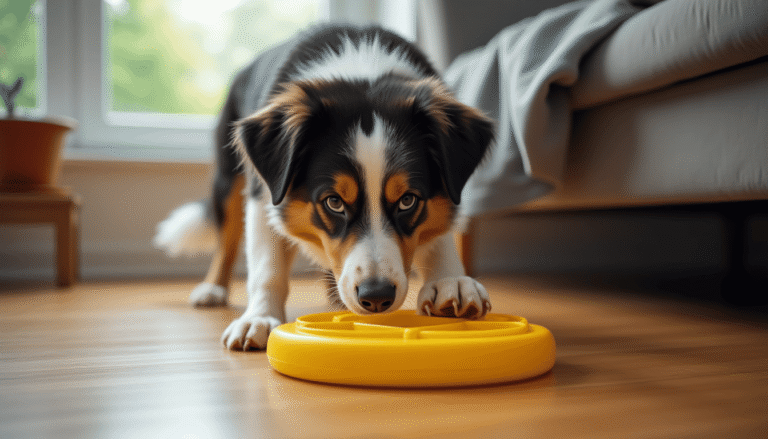
If you share your home with a dog as well, you already know how much mental work changes behavior — the same principle applies here. Our guide on indoor enrichment ideas for dogs covers the parallel logic for canine housemates, and many of the timing strategies translate directly.
15 Indoor Cat Enrichment Ideas That Actually Work
These ideas are organized by category — sensory, hunting, cognitive, and social — so you can rotate through them rather than repeating the same activity until your cat loses interest.
Sensory Enrichment (What They Smell, Hear, and See)
- Window bird feeder: A suction-cup feeder mounted on the outside of a window your cat can reach gives them a live “TV channel” of birds and squirrels. Pair it with a padded window perch so they can watch comfortably for extended periods.
- Herb pots: Cat grass, valerian, and silver vine each produce different reactions — some cats roll, some chew, some just sniff. Growing two or three small pots lets your cat choose their intensity level.
- Nature soundscapes: Low-volume recordings of birds or running water played during the day can hold a cat’s attention in ways that silence doesn’t. This works especially well for cats in apartments without outdoor sound exposure.
- Rotating scent objects: A sock filled with dried catnip, silver vine, or even a pinch of dried valerian root, swapped out every few days, keeps the novelty factor alive. Cats habituate quickly to static scents.
Hunting and Movement Play
- Wand toys on a schedule: The mistake most owners make is leaving wand toys out permanently. When they’re stored away and only appear at specific times — ideally before meals — your cat’s prey drive stays sharp and the toy stays exciting.
- Crinkle tunnels: A collapsible fabric tunnel gives cats a place to ambush, hide, and sprint. Most cats engage with these independently once they’ve been introduced with a wand toy dragged through the opening.
- Paper bag crinkle stations: A flat paper grocery bag (handles removed for safety) on the floor. Toss a small toy inside. That’s it. The crinkle sound triggers hunting behavior in most cats within seconds.
Cognitive Enrichment for Cats
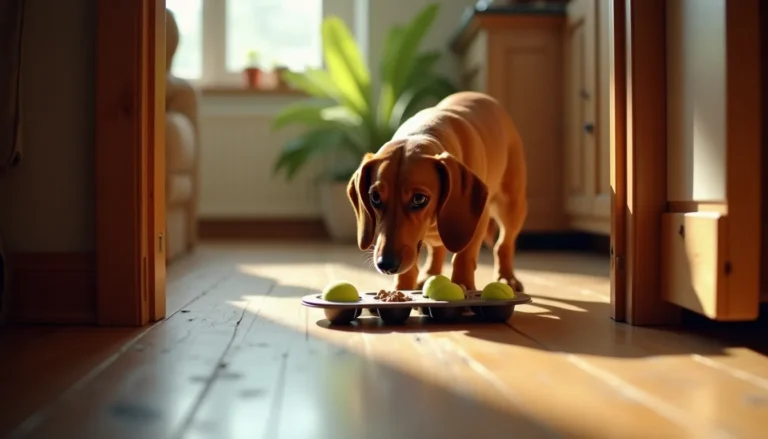
- Muffin tin puzzle: Put a few pieces of kibble or a small treat in the cups of a muffin tin, then cover each cup with a tennis ball. Your cat has to remove each ball to access the food. This is one of the best free cat enrichment ideas available — you likely already own everything needed.
- Ice cube treats: Freeze a small piece of tuna or a few kibble pieces inside an ice cube. The melting process extends engagement and adds a sensory challenge. Works especially well for cats that eat too fast.
- Box mazes: Tape together three or four cardboard boxes with holes cut between them. Hide a toy or treat at the end. The exploration itself is the enrichment — most cats will revisit the maze multiple times even after finding the reward.
DIY Cat Enrichment Ideas You Can Build in Under 10 Minutes
Three materials cover most of the best DIY cat enrichment builds: cardboard, toilet paper rolls, and PVC pipe. None of them require tools beyond scissors and tape.
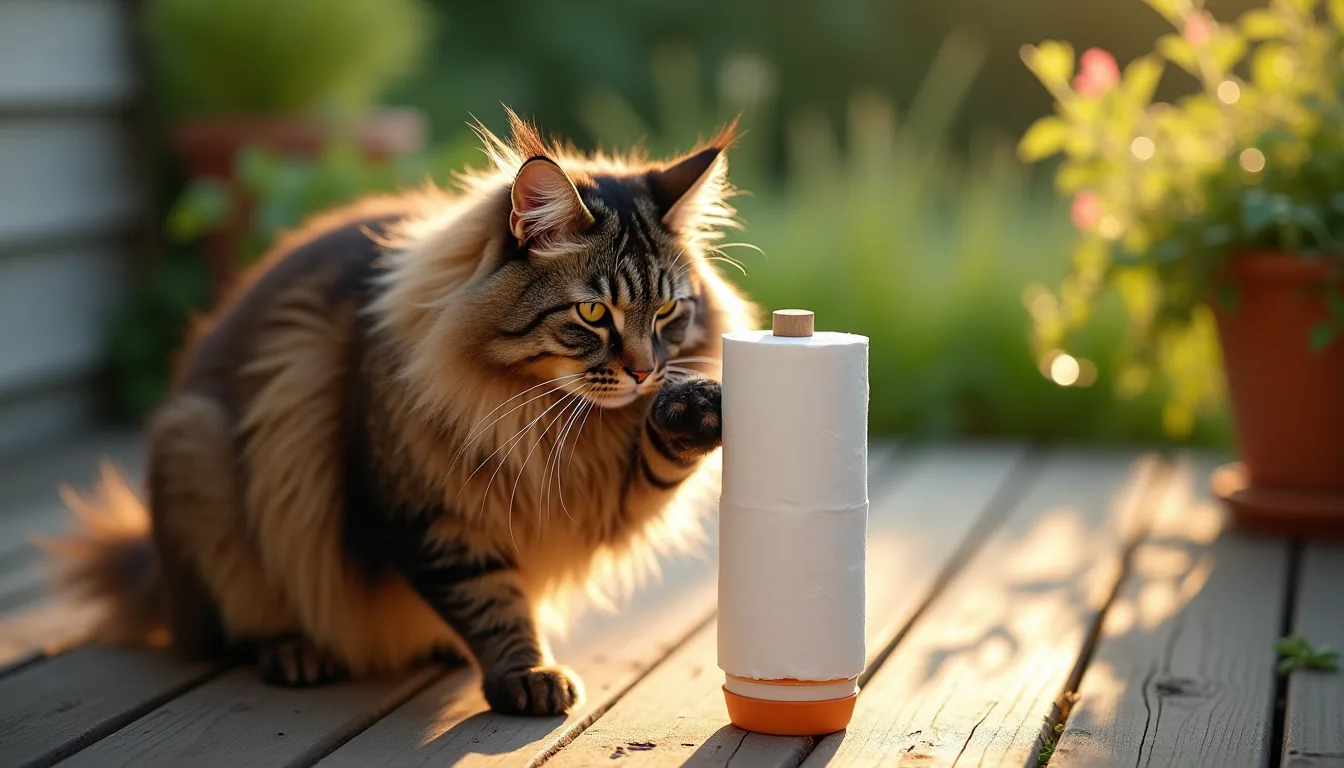
The toilet paper roll treat dispenser is the simplest: fold both ends closed, put 5–6 pieces of kibble inside, and set it on the floor. Your cat bats it around until the treats fall out. It’s disposable, free, and most cats figure it out within a minute. For a harder version, use a paper towel roll with smaller folds — the treats take more effort to extract.
A wall-mounted shelf system made from basic floating shelves creates a vertical highway that costs under $30 in materials. Cats are vertical animals by nature; giving them height options reduces competition between cats in multi-cat households and gives anxious cats an escape route from floor-level stressors.
The cardboard scratcher-plus-feeder combo is worth building once: cut a corrugated cardboard sheet into strips, roll them into a circle, and hide treats between the layers. Your cat scratches to uncover the food. It addresses scratching behavior, feeding enrichment, and tactile stimulation simultaneously.
If you want to go further with DIY builds for your pets, our roundup of homemade enrichment toys for dogs has overlap in materials and construction logic — many of the same techniques scale down for cats.
How to Keep Your Cat Entertained for Hours With Puzzle Feeders
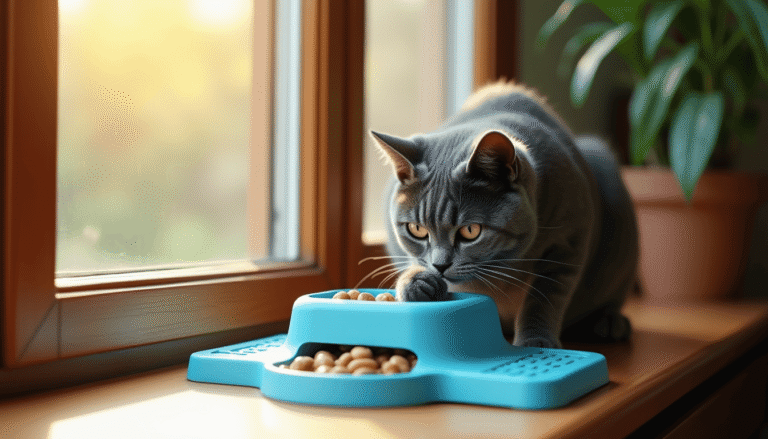
Puzzle feeders are the single highest-return enrichment investment for most indoor cats. A cat that eats from a flat bowl finishes their meal in 90 seconds. The same amount of food in a puzzle feeder can take 15–20 minutes to extract — and the mental effort involved is genuinely tiring in the best way.
Start with a Level 1 feeder: a simple tray with raised pegs or a divided surface. Some cats refuse to engage with a puzzle that’s too hard right away and will just walk away from their food. Once your cat is consistently solving Level 1 in under 5 minutes, step up to a feeder with sliding compartments or rotating discs.
According to AKC behaviorists, cognitive enrichment that mimics foraging behavior can reduce anxiety-related behaviors in companion animals — and puzzle feeding is one of the most accessible forms of that. For cats, the foraging instinct is deeply tied to the hunt-catch-eat-groom cycle; a puzzle feeder satisfies the “catch” phase when actual hunting isn’t possible.
Rotate between 2–3 different feeders rather than using the same one every day. Novelty is what keeps the engagement high. A feeder your cat has solved 40 times is no longer enriching — it’s just a slightly annoying food bowl.
For households with both cats and dogs, the cognitive enrichment principle is identical. Our post on cat enrichment ideas for indoor cats goes deeper on feeder selection and rotation schedules if you want a more structured approach.
Setting Up an Indoor Cat Enrichment Routine That Sticks
A single enrichment activity used once doesn’t change behavior — a rotation used consistently does. The goal is a loose daily structure that hits at least three enrichment categories per day without requiring a lot of effort from you.
A practical starting framework:
- Morning: Puzzle feeder for breakfast. Takes you 30 seconds to fill, occupies your cat for 15–20 minutes.
- Midday: A new scent object or a fresh herb pot moved to a different location. Novelty of placement matters as much as novelty of the object.
- Evening: 10 minutes of wand play before dinner, then a regular meal. The hunt-eat sequence mirrors natural behavior and helps cats wind down for the night.
The biggest mistake in enrichment routines is front-loading the effort on day one — buying five new toys, setting up a maze, and rearranging the furniture — and then burning out by day three. Start with one new thing per week and add from there. Your cat’s engagement will actually be higher with gradual introduction than with a sudden overwhelming change.
Rotate toys in and out of a storage bin. A toy that’s been “away” for two weeks is effectively new again to a cat. This is one of the most underused free cat enrichment ideas: you already own the entertainment, you just need to manage access to it.
Our Picks
These three product categories consistently outperform generic options when it comes to sustained engagement:
- Multi-level rotating puzzle feeder with adjustable difficulty — the ability to increase challenge as your cat improves means a single feeder stays relevant for months instead of weeks.
- Wall-mounted cat shelf set with sisal-wrapped platforms — vertical space is the most underutilized enrichment resource in most homes, and a dedicated shelf system is safer and more stable than improvised alternatives.
- Wand toy with interchangeable attachment heads — swapping the attachment (feather, foil crinkle, fabric mouse) changes the sensory experience of the same play session, keeping prey drive engaged longer than a single-attachment wand.
FAQ
How many enrichment activities does an indoor cat need per day?
Most indoor cats benefit from at least three distinct enrichment interactions per day — one sensory, one movement-based, and one cognitive. These don’t need to be long; a 5-minute wand session and a puzzle feeder covers two of the three with minimal effort on your part.
What are the best free cat enrichment ideas that don’t require buying anything?
Cardboard boxes, paper bags (handles removed), toilet paper rolls filled with kibble, and ice cube treats made from tuna water are all zero-cost and genuinely effective. Rotating which rooms your cat has access to is another free option — new territory to explore provides significant mental stimulation.
My cat ignores puzzle feeders. What am I doing wrong?
The most common issue is starting at too high a difficulty level. Begin with a flat tray or muffin tin where the food is clearly visible and easy to extract. Once your cat understands the concept of “food is in here somewhere,” they’ll engage with harder feeders. Hunger timing matters too — offer the puzzle feeder when your cat is actually hungry, not right after a regular meal.
Is there a difference between enrichment for kittens versus adult cats?
Kittens have higher energy and shorter attention spans, so shorter and more frequent sessions work better than longer ones. Adult cats often prefer activities with a clear reward at the end — puzzle feeders and treat-dispensing toys. Senior cats may have reduced mobility, so focus on ground-level sensory enrichment like scent objects and easy-access feeders rather than climbing structures.
How do I know if my cat’s enrichment is actually working?
Look for a reduction in the behaviors that signal boredom or stress: less furniture scratching in inappropriate spots, fewer 3 a.m. wake-up incidents, less overgrooming, and a cat that settles more easily after active periods. Increased engagement with their environment — sniffing, exploring, playing independently — is the positive signal you’re looking for.
Start With One Thing Today
Pick one idea from this list — the muffin tin puzzle, a paper bag on the floor, or moving a window perch to face the bird feeder — and run it consistently for a week before adding anything else. The best indoor cat enrichment ideas are the ones you’ll actually maintain, not the most elaborate setup you can build in an afternoon. One small change, repeated daily, is what shifts your cat’s baseline from bored to engaged. Start there, then build.