Homemade dog enrichment toys saved my sanity on a Tuesday afternoon when my dog had already barked at the mailman twice and chewed through a pen cap. I had a muffin tin, a tennis ball, and about eight minutes — and that was enough to buy an hour of focused, quiet sniffing. This guide covers 12 builds that range from a thirty-second snuffle setup to a slightly more involved puzzle box, all using things you probably already own.
Why Homemade Dog Enrichment Toys Outperform Store-Bought Ones
A $40 puzzle feeder sat untouched in my living room for three weeks. A cardboard egg carton filled with kibble? Gone in four minutes, with my dog fully locked in the whole time. That gap in engagement isn’t unusual. Store-bought toys are designed for the average dog — homemade versions can be calibrated to your dog’s exact skill level, scent preferences, and attention span.
There’s also a freshness factor. Dogs are novelty-driven when it comes to problem-solving. Rotating through a dozen cheap or free builds keeps the challenge feeling new. A toilet paper roll stuffed with treats one week, a knotted t-shirt soaked in broth the next — each one presents a slightly different sensory puzzle. The goal isn’t complexity; it’s just enough friction to make your dog work for the reward.
Safety is the one area where homemade toys require more attention than commercial ones. According to the AKC, any toy material that can be broken into pieces small enough to swallow is a choking hazard — that includes cardboard tubes once a dog has chewed them down to a soggy nub. Always supervise the first session with any new build, and retire a toy the moment it starts falling apart.
The other advantage is cost. Most of the builds in this guide cost nothing. A few require a dollar-store item or a cup of dry kibble. If you’re already exploring DIY enrichment options, you’ll find that the materials you need are already in your recycling bin.
5 Builds Using Only Kitchen Supplies
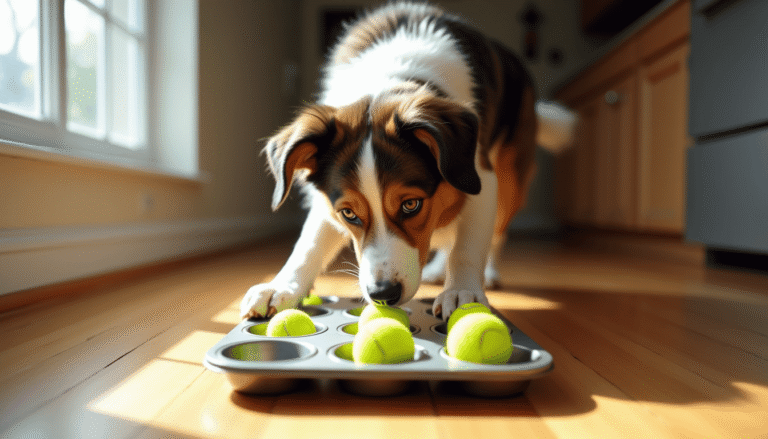
The muffin tin game is the entry point for most owners — drop kibble or small treats into the cups, cover each with a tennis ball, and let your dog figure out the lift-and-sniff sequence. It takes about ninety seconds to set up and runs about five to ten minutes depending on your dog’s nose work experience.
Muffin Tin and Ball Puzzle
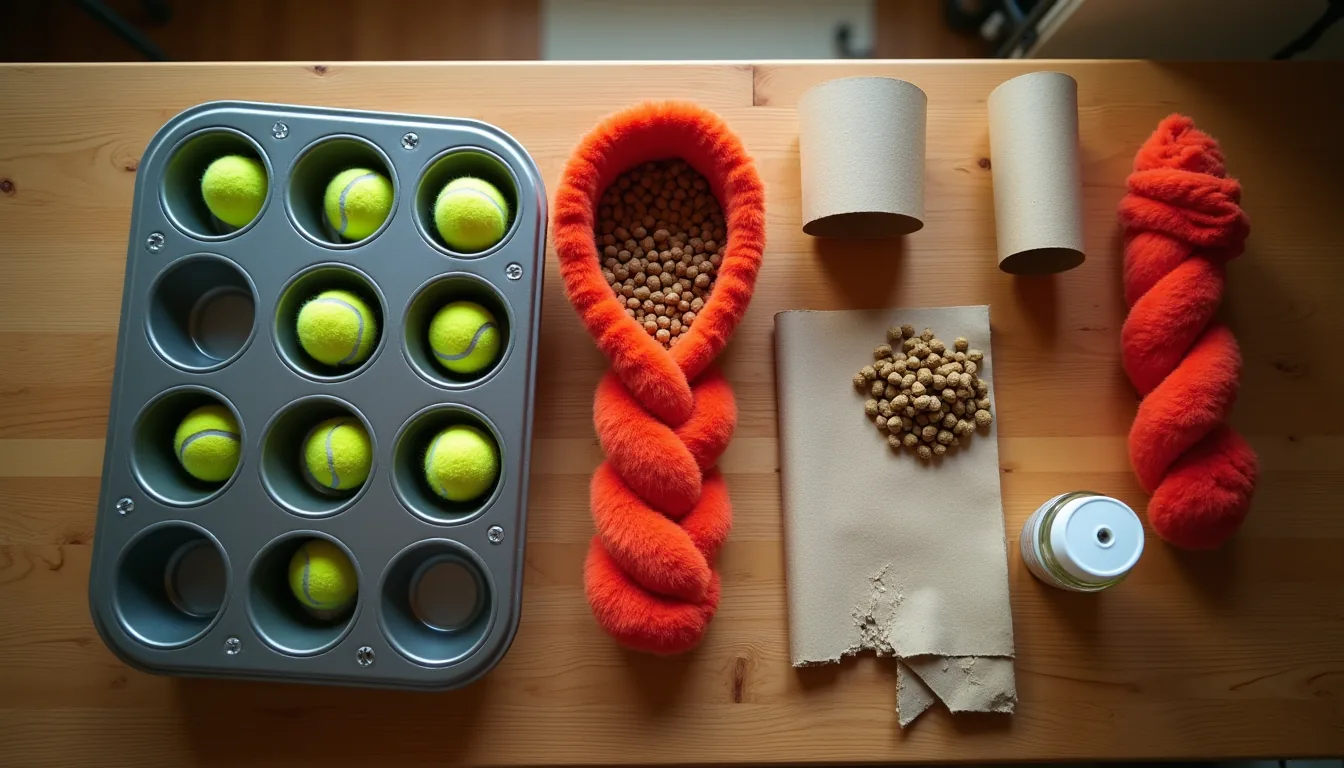
Use a standard 12-cup muffin tin. Fill 4–6 cups with treats and leave the rest empty. Cover all 12 with tennis balls. The randomness of which cups hold food is the actual puzzle — your dog has to check every one. Increase difficulty by using silicone cupcake liners as an extra layer under the balls.
Ice Block Forager
Fill a plastic container with water, drop in kibble, small pieces of carrot, or a smear of peanut butter (xylitol-free — the ASPCA lists xylitol as toxic to dogs), and freeze overnight. The resulting block turns a meal into a 20-minute licking session. Works especially well in summer or after high-energy play. If you want to go further with frozen formats, our guide on making lick mat fillings has a dozen variations worth trying.
Snuffle Muffin
Line a muffin tin with strips of fleece fabric cut into 4-inch pieces. Tuck kibble between the strips in random cups. The fleece creates a dense foraging surface that mimics snuffling through grass. Wash the fleece strips weekly.
Cardboard Box Dig
Take a shoebox, fill it halfway with crumpled newspaper or paper bags, and bury treats throughout. Your dog has to dig and root through the paper to find every piece. This one is loud but extremely satisfying for terrier-type dogs who are wired to dig.
Frozen Kong Alternative
No Kong? A cleaned-out peanut butter jar works. Smear the inside with a thin layer of dog-safe spread, add a few pieces of kibble, and freeze for two hours. The narrow opening slows down even fast eaters.
Scent-Based Homemade Dog Enrichment Toys
Three toilet paper rolls, some tape, and a handful of treats — that’s a scent tube puzzle. Fold one end of each roll shut, drop in treats, fold the other end, and arrange them upright in a shoebox. Your dog noses through the tubes to find which ones have food. It sounds simple because it is, but scent work at this level is genuinely tiring for dogs in a way that a twenty-minute walk often isn’t.
Scent-based toys tap into your dog’s primary sense. A dog’s nose processes smell with roughly 300 million olfactory receptors compared to a human’s 6 million — meaning a sniff-based game engages their brain at a level that visual or physical toys simply don’t match. For dogs who can’t get outside due to weather or injury, nose work toys are the single most efficient way to burn mental energy.
Some other scent-forward builds worth trying:
- Scent boxes: Three identical cardboard boxes, one with treats hidden underneath. Shuffle them and let your dog indicate the correct one.
- Herb sachets: Sew a small fabric pouch filled with dried herbs like rosemary or thyme (dog-safe options only). Hide it around the house and let your dog track it by scent.
- Snuffle mat from a rubber mat and fleece: Cut fleece strips and tie them through the holes of a rubber sink mat. Sprinkle kibble throughout. This is the most durable homemade snuffle surface and can be machine-washed.
If your dog is particularly high-drive, nose work toys alone may not be enough — check our breakdown of enrichment strategies for high-energy dogs for builds that layer physical and cognitive challenge together.
Puzzle Feeders Made From Recycled Materials
A PVC pipe section — 12 inches long, capped at both ends with removable plugs — is one of the most durable homemade puzzle feeders you can build. Drill a few holes slightly larger than your dog’s kibble size, fill the tube, and let your dog roll it across the floor to dispense food. Total build time: about fifteen minutes. Total cost: under $3 if you buy the pipe offcuts from a hardware store.
Recycled plastic bottles (lids removed, edges sanded smooth) work on the same rolling principle. A water bottle with a few holes punched in the sides becomes a scatter feeder that rolls unpredictably. The irregular motion keeps dogs engaged longer than a straight-rolling tube.
For dogs who are new to puzzle feeders, start with a very easy version — holes that are large and plentiful, so treats fall out quickly. Then gradually reduce hole size or quantity over several sessions. Jumping straight to a hard puzzle can frustrate a dog into giving up entirely, which defeats the point. This same progression principle applies to the puzzle ideas you can set up at home without any building at all.
A few more recycled builds:
- Egg carton feeder: Standard 12-egg carton, treats in each cup, lid closed. Your dog paws it open cup by cup.
- Cardboard tube tower: Stand six toilet paper rolls upright inside a shoebox, treat in each. Dog has to tip or pull each tube.
- Plastic bottle in a sock: Slide an empty plastic bottle into a long sock and knot the end. The crinkling sound and unpredictable movement make it a tug-and-forage hybrid.
Fabric and Textile Toys You Can Sew or Knot
A braided t-shirt tug toy takes four minutes to make and lasts most dogs several weeks. Cut three long strips from an old t-shirt, braid them tightly, and knot both ends. That’s it. The fabric holds scent well, which makes it more interesting to dogs than synthetic rope — your scent on the fabric is actually a draw, not a downside.
For dogs who like to shred, a fleece strip bundle works well. Cut a dozen strips of fleece, tie them together at the center with a tighter strip, and fan out the ends. Tuck treats into the bundle before offering it. The dog has to work through the fabric to find the food, and the shredding instinct gets a legal outlet. Use fleece rather than terry cloth or jersey — fleece doesn’t fray into long threads that could be swallowed.
Other textile builds:
- Knotted sock ball: Roll a tennis ball inside two old socks, knotting the outer sock at the top. Adds texture and unpredictable bounce.
- Snuffle strip roll: Roll up a strip of fleece with treats tucked inside the folds, then tie both ends. Dog unrolls it to find the food.
- Braided treat braid: Braid three strips of fleece but tuck treats into the braid every few inches before finishing. Harder to get to than a simple tug.
Our Picks
These three product categories pair well with the homemade builds above — they fill the gaps that DIY toys can’t always cover.
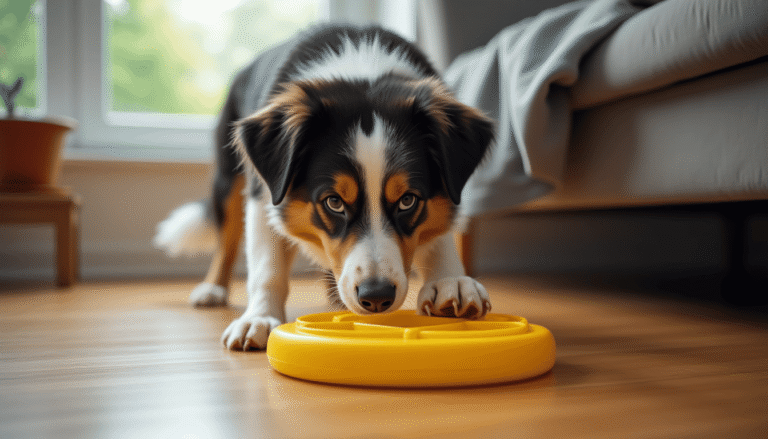
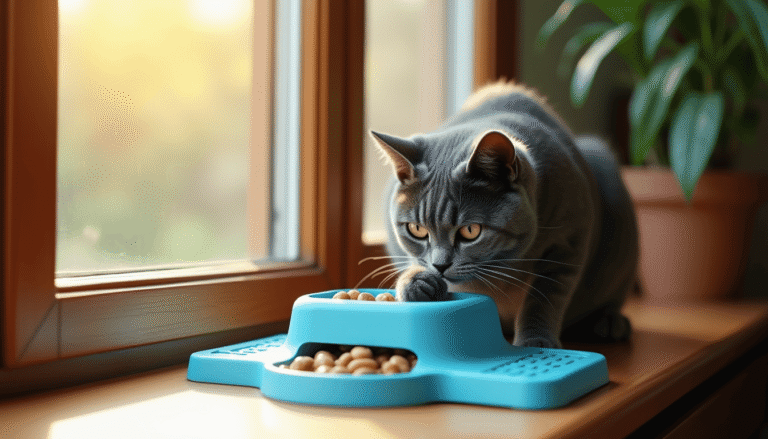
- Adjustable-difficulty sliding tile puzzle feeder — When your dog has mastered every homemade version, a sliding tile puzzle introduces a manipulation mechanic (pushing tiles sideways) that cardboard can’t replicate.
- Rubber lick mat with suction base — Freezes flat, sticks to surfaces, and survives aggressive lickers far longer than a DIY silicone alternative; ideal for pairing with the frozen filling ideas in this guide.
- Durable rubber treat-dispensing ball — The rolling dispenser concept from the recycled-bottle build, but in a material that holds up to power chewers and can be sanitized in the dishwasher.
FAQ
Are homemade dog enrichment toys safe for aggressive chewers?
Most cardboard and fabric builds are not suitable for dogs who chew through materials rather than interact with them — those dogs tend to ingest pieces rather than puzzle through the toy. Stick to the PVC pipe roller or rubber-based builds for power chewers, and always supervise the first few sessions with any new toy regardless of material.
How long should a homemade enrichment session last?
Ten to twenty minutes is a reasonable target for most dogs. Mental work is genuinely tiring, and a dog that finishes a puzzle session and then naps for an hour has gotten real value from it. You don’t need to run multiple sessions back-to-back — one focused session per day is enough for most dogs.
What household materials should I never use in a homemade dog toy?
Avoid rubber bands, staples, tape with strong adhesive, foam rubber that crumbles, and any plastic with sharp edges after cutting. String and yarn are also risky — if swallowed, linear foreign bodies can cause serious intestinal damage. Stick to fleece, cardboard, untreated wood, and food-grade plastics with smooth edges.
How do I know if a homemade toy is too hard or too easy for my dog?
If your dog solves it in under two minutes without pausing, it’s too easy — add a layer of difficulty (more covering, smaller holes, deeper hiding). If your dog sniffs once and walks away, it’s too hard or the reward isn’t motivating enough — reduce friction and use higher-value treats. The sweet spot is visible effort followed by success.
How often should I rotate homemade enrichment toys?
Rotate every two to three days at minimum. Dogs habituate quickly to the same puzzle, and a toy that was engaging on Monday is background furniture by Thursday. Keeping six to eight builds in a rotation — offering two or three at a time — maintains novelty without requiring you to constantly build new ones.
Start With One Build Today
Pick the muffin tin game or the cardboard tube tower — whichever uses materials you already have — and run it before your dog’s next meal instead of just dropping food in a bowl. That single swap, meal delivery through a puzzle rather than a dish, is the fastest way to see whether homemade dog enrichment toys are worth building into your regular routine. Most dogs make the answer obvious within the first thirty seconds.