The best mental stimulation games for dogs don’t require a trip to the pet store or a yard full of agility equipment — most of them need nothing more than what’s already in your kitchen or living room. If your dog has been pacing, barking at nothing, or systematically destroying the mail, that’s not a behavior problem. That’s a brain looking for work. Give it some.
Why Mental Games Tire Dogs Out Faster Than Walks
A 20-minute sniff session on a new trail will exhaust your dog more thoroughly than a 45-minute leash walk on the same block. That’s not a coincidence — it’s how dogs are wired. The nose alone has roughly 300 million olfactory receptors (compared to about 6 million in humans, according to AKC), and activating that system burns real mental energy. The same principle applies to any game that forces your dog to make decisions, track information, or solve a problem.
This is especially useful on days when outdoor exercise isn’t possible. Whether it’s extreme heat, heavy rain, or a post-surgery recovery week, mental work fills the gap. Our full guide on rainy day enrichment covers this in depth if you’re working with weather constraints.
The key principle: make your dog think, not just move. A dog who has to figure something out — where the treat is hidden, which cup covers the reward, what scent trail leads to the toy — is using cognitive resources that leave them genuinely satisfied and calm afterward. Physical exercise alone rarely achieves that same settled-down quality.
Start with just one or two games and watch your dog’s behavior in the hour after. Most owners notice a measurable difference in restlessness within the first session.
5 Nose Work Games That Require Nothing Extra
Nose work is the fastest entry point into mental stimulation because the equipment list is: your dog’s nose, a treat, and a room. Start here if you’ve never done structured brain games before.
The Muffin Tin Game
Place treats in a few cups of a standard muffin tin, then cover all cups with tennis balls. Your dog has to sniff out which cups have the reward and figure out how to remove the ball. Start with treats in every cup so the dog understands the game before you make it harder by leaving some cups empty.
Scatter Feeding
Instead of putting kibble in a bowl, scatter it across a patch of grass or a snuffle mat. Your dog will spend 10–15 minutes working through every blade or fiber to find each piece. This is one of the best mental stimulation games for dogs who eat too fast and need to slow down.
The Shell Game
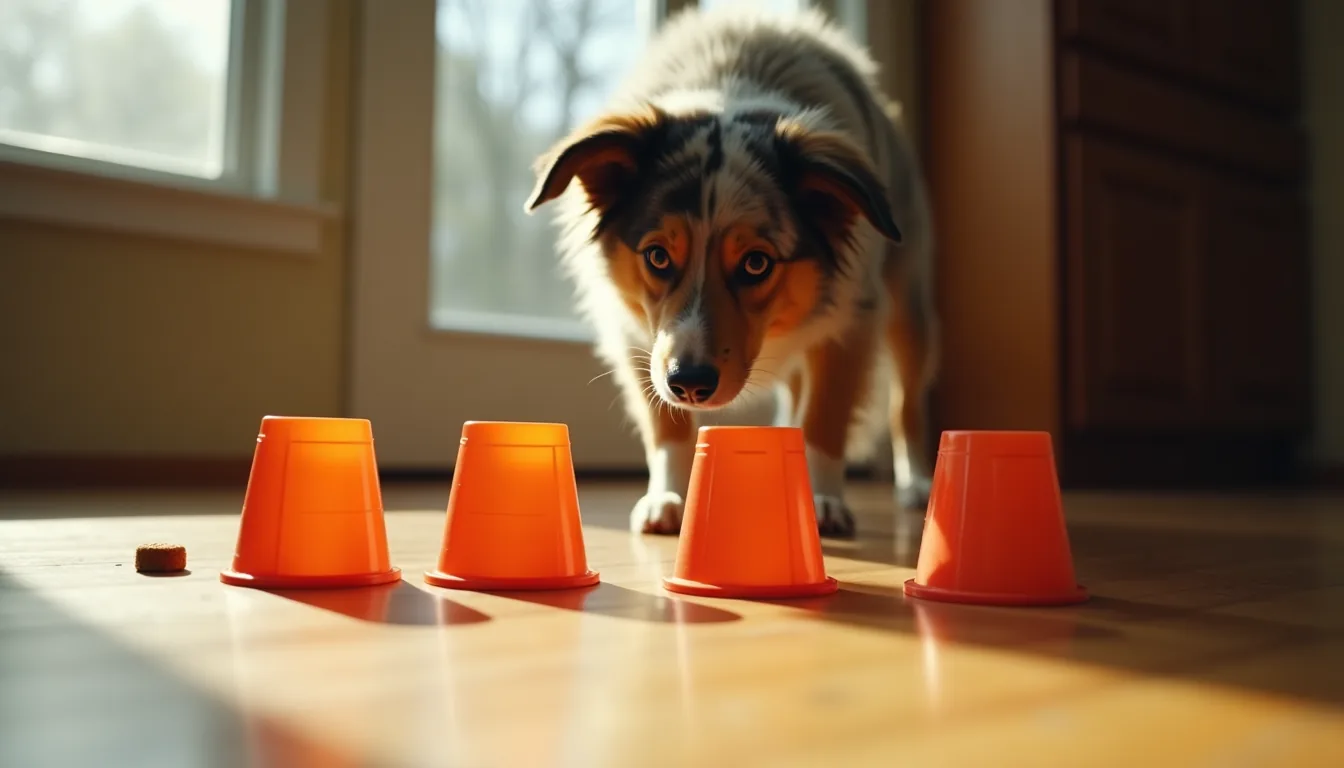
Three cups, one treat. Show your dog the treat going under a cup, then slowly shuffle the cups. Let your dog nose or paw the correct one. Increase speed gradually over sessions. Dogs who’ve done this for a few weeks get impressively accurate.
Scent Trails
Drag a treat or a favorite toy across the floor in a winding path, then hide it at the end. Let your dog follow the trail from the starting point. You can do this inside or out, and the trail length is entirely scalable.
Which Hand
Hold a treat in one closed fist, offer both fists to your dog, and let them sniff and choose. This sounds simple, but it builds focus and impulse control simultaneously. It’s also one of the few solid brain games for dogs without treats if you swap the food reward for a quick game of tug instead.
Mental Stimulation Games for Dogs Using Household Items
A cardboard box, a muffin tin, and a rolled-up towel are the foundation of dozens of effective brain games — no purchase required. These homemade brain games for dogs work because novelty itself is stimulating. A new object with an unknown smell and an unpredictable shape is already interesting to a dog before you’ve hidden anything inside it.
- The Towel Roll: Lay a towel flat, scatter treats across it, and roll it up loosely. Your dog has to unroll it to access the food. Increase difficulty by folding the towel before rolling.
- Box Dig: Fill a cardboard box with crumpled newspaper or old fabric scraps and hide a few treats inside. Let your dog dig and forage. Supervise to prevent ingesting paper.
- Bottle Spin: Thread a wooden dowel or sturdy stick through an empty plastic bottle. Rest the ends of the dowel on two stacks of books so the bottle hangs and spins freely. Put kibble inside. Your dog nudges the bottle to release pieces. Check our guide on DIY enrichment toys for step-by-step builds like this one.
- Ice Block Foraging: Freeze kibble or small treats in a block of water. The ice block becomes a slow-release puzzle that also works as a cooling activity in summer.
- Stacked Cups: Nest treats inside stacked plastic cups. Your dog has to knock or paw the stack apart to reach the reward. Start with two cups and build up.
Rotate these regularly — a game your dog has solved completely stops being stimulating. Introducing a new configuration every few days keeps the challenge fresh without requiring new materials.
Training-Based Mental Stimulation Games for Dogs
Teaching your dog a new behavior is one of the most efficient forms of mental work available. A single 10-minute training session — focused, reward-based, with a new skill — can leave a high-energy dog noticeably calmer for hours. This is particularly true for breeds like border collies, Australian shepherds, and Belgian Malinois, who were developed to make decisions independently, not just follow motion. For more on this, see our breakdown of enrichment strategies for high-energy dogs.
Name That Toy
Pick one toy and say its name every time you hand it to your dog over several sessions. Then place it among two other toys and ask your dog to fetch it by name. Dogs can learn to distinguish a surprising number of named objects with consistent repetition.
Go Find It (Hidden Object)
Have your dog sit-stay while you hide a named toy in another room. Release with “go find it.” Start with easy hides — just around a corner — and work toward genuinely concealed spots. This combines obedience, scent work, and problem-solving in one game.
Trick Chains
String three known behaviors together into a sequence: sit → shake → spin. Ask for the chain as one cue. The cognitive load of remembering and executing a sequence is meaningfully higher than performing each trick in isolation.
Impulse Control Games
“It’s Yer Choice” (an open-hand treat game where the dog learns that grabbing gets nothing but waiting gets everything) is deceptively tiring. The sustained self-control required to resist an obvious reward is hard mental work, especially for young dogs and puppies.
Even 15 minutes of mental stimulation built around training — especially with a young or adolescent dog — can produce the kind of calm that a 30-minute walk sometimes doesn’t.
Puzzle Feeders and Structured Games for Daily Routines
The most sustainable mental enrichment isn’t a special Saturday activity — it’s built into the daily feeding routine. Swapping a bowl for a puzzle feeder adds 5–15 minutes of cognitive work to every meal with no extra effort from you. According to ASPCA enrichment guidance, environmental complexity and food-based problem-solving are among the most effective daily interventions for reducing stress-related behaviors in dogs.
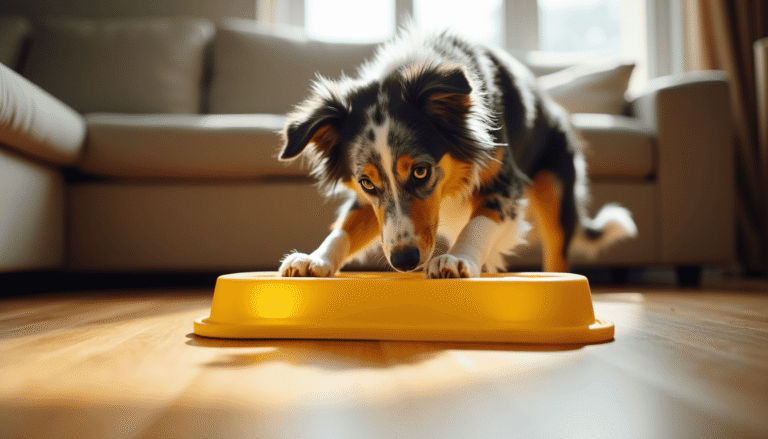
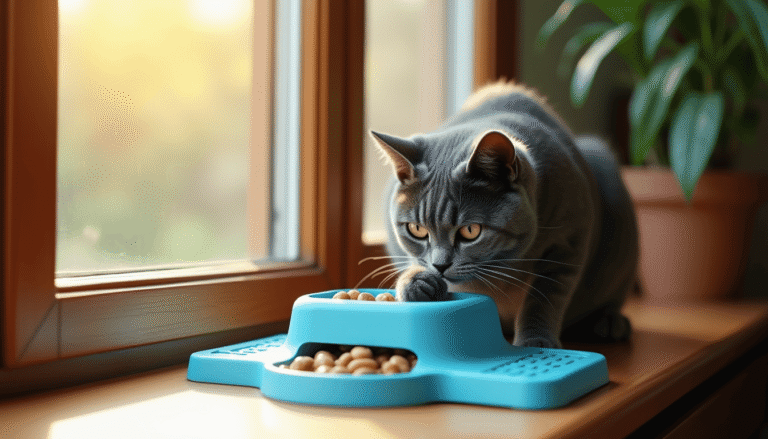
Puzzle feeders range from simple sliding tiles to multi-step mechanisms with compartments that must be opened in sequence. Match the difficulty to your dog’s experience level — a dog new to puzzles who can’t solve the feeder will give up and disengage, which is the opposite of what you want. Start one level below what you think your dog can handle, let them succeed, then increase difficulty over weeks.
For dogs who have already mastered commercial puzzles, the DIY puzzle ideas on this site offer new challenges without a new purchase. A cardboard egg carton with the lid taped shut, for example, functions as a level-1 puzzle that most dogs find genuinely engaging the first few times.
Use puzzle time consistently — same meal, same spot — and your dog will begin to anticipate it, which itself creates positive arousal and focus before the game even starts.
Our Picks
These three product categories give you the most versatility across different game types and energy levels:
- Adjustable-difficulty sliding puzzle feeder — A feeder with multiple compartments and movable covers lets you increase challenge as your dog improves, so one product scales across months of use.
- Snuffle mat with varied-height fabric strips — The uneven texture hides kibble at different depths, making every scatter-feed session slightly different and extending foraging time significantly.
- Treat-dispensing wobble ball — A weighted base means the ball rights itself unpredictably, so your dog can’t solve it by finding a fixed tipping angle — the challenge stays fresh longer than a standard treat-dispensing toy.
FAQ
How long should a mental stimulation session last for dogs?
For most adult dogs, 10–20 minutes of focused mental work is enough to produce a noticeable calming effect. Puppies and senior dogs do better with shorter sessions of 5–10 minutes. Multiple short sessions throughout the day are more effective than one long one.
Can mental stimulation replace physical exercise for dogs?
It supplements physical exercise but doesn’t fully replace it for most breeds. A dog still needs regular movement for cardiovascular health and joint function. That said, on days when physical exercise is limited — illness, extreme weather, recovery — mental games can cover a significant portion of the enrichment need.
What are the best mental stimulation games for puppies specifically?
Puppies do well with short, low-frustration games: which-hand, scatter feeding on a snuffle mat, and simple name-recognition training. Avoid complex multi-step puzzles until around 5–6 months — early frustration can make puppies reluctant to engage with enrichment activities later. Keep sessions under 10 minutes.
Are there good brain games for dogs at home that don’t use treats?
Yes — tug, fetch variations, and toy-based nose work all work without food. The “go find it” game works equally well with a favorite toy as the hidden object. Training-based games can use play rewards (a quick game of tug) instead of treats, which is especially useful for dogs on restricted diets.
How do I know if a mental stimulation game is too hard or too easy for my dog?
Too easy: your dog solves it in under 30 seconds and immediately loses interest. Too hard: your dog sniffs once, tries once, then walks away or shows frustration (pawing aggressively, vocalizing, giving up entirely). The right difficulty keeps your dog engaged for 5–15 minutes with occasional successes that motivate continued effort.
What to Do Next
Pick one game from this list — ideally a nose work game since those need zero prep — and run it before your dog’s next meal instead of using a bowl. That single swap introduces mental stimulation games for dogs into your routine with no extra time investment. Once you see how your dog responds, adding a second game to a different part of the day becomes obvious. For a broader look at what else you can layer in, our full list of top enrichment activities covers everything from scent work to outdoor adventures.