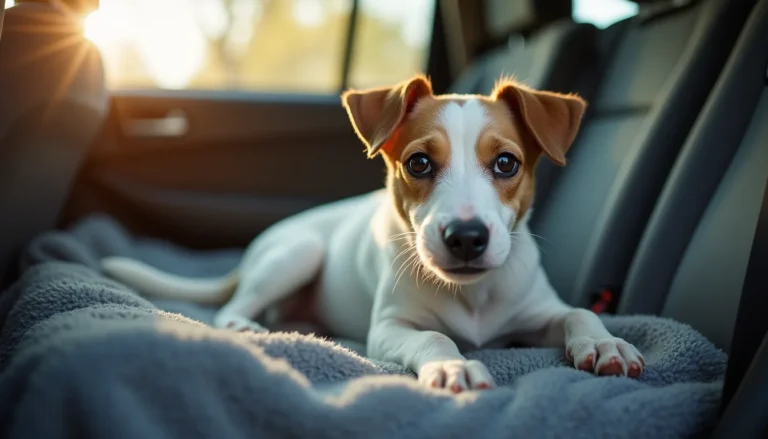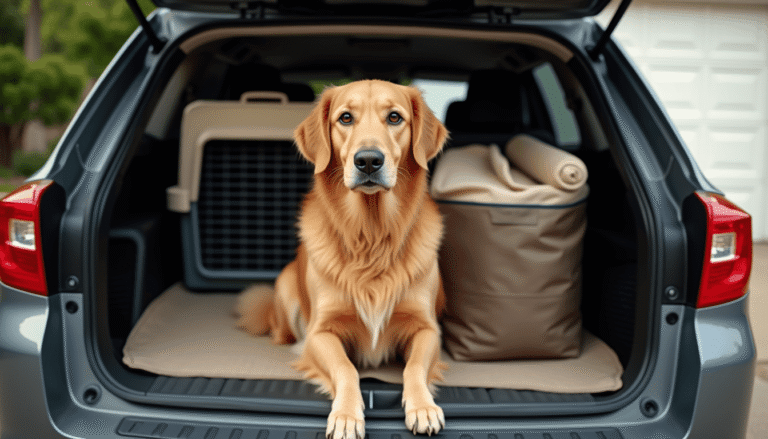
Knowing how to transport dog in car safely is one of those things most pet owners figure out on the fly — usually after the dog has climbed into the front seat at 60 mph or knocked over a water bottle on a hot July afternoon. Whether you’re heading to the vet three miles away or tackling a cross-country road trip, the method you choose for restraining and settling your dog makes a real difference in both safety and comfort.
Why an Unrestrained Dog Is a Crash Risk
A 60-pound dog becomes a 2,700-pound projectile in a 35 mph collision — that’s basic physics, and it applies to your dog, your passengers, and your ability to control the vehicle. Yet the majority of dog owners drive with their pets completely loose in the car. An unrestrained dog can distract the driver, interfere with the steering wheel, or be thrown through the windshield in a sudden stop.
Beyond crash forces, a loose dog in the back seat can jump into the front, step on the gear shift, or block the driver’s view of mirrors. Restraining your dog every single trip — even a five-minute errand — is the single most impactful habit you can build. The ASPCA recommends keeping pets secured in a carrier or with a seat belt harness during all car travel, not just long trips.
If you’ve been meaning to read up on the specifics of which restraint style works best for your dog’s size and temperament, our breakdown of methods to secure your dog in the car covers crash-tested harnesses, barriers, and crate anchoring in detail.
How to Transport Dog in Car: Restraint Options Compared
Three main systems exist, and each has a real use case — none is universally best for every dog or every vehicle.
Crash-Tested Safety Harness
A crash-tested harness clips into the seat belt buckle and distributes force across your dog’s chest rather than the neck. Look for harnesses that have passed the Center for Pet Safety’s testing protocol — not all products marketed as “safety harnesses” have been independently tested. This option works well for medium and large dogs who are already comfortable wearing a harness on walks. Always attach the tether to a chest-clip harness, never a collar, to avoid neck injury in a sudden stop.
For more detail on what makes a harness actually safe versus just marketed that way, the dog seat belt safety facts guide walks through the key differences.
Hard-Sided or Soft Crate
A crate secured to the cargo area or back seat gives your dog a contained, den-like space and prevents ejection in a rollover. Hard-sided aluminum or plastic crates offer the most protection; soft-sided crates are lighter and easier to store but offer less crash protection. The crate must be anchored — a loose crate becomes its own projectile. Use cargo straps or a purpose-built anchor system.
Dog Barrier
A cargo barrier keeps your dog in the rear cargo area of an SUV or wagon but does not restrain them within that space. It’s a step up from nothing — it prevents the dog from reaching the driver — but it won’t stop your dog from being thrown forward within the cargo area. Pair a barrier with a tethered harness for better protection.
How to Transport a Dog in a Car Without a Crate
Not every dog tolerates a crate, and not every car has room for one. The good news: a crate is not the only safe option. A properly fitted crash-tested harness with a short seat belt tether is a legitimate alternative that many dogs accept more readily than confinement.
For small dogs, a crash-tested carrier that belts into the seat is another solid choice — it functions like a crate but is sized for the back seat rather than the cargo area. The key word in both cases is “crash-tested.” A soft bag that sits on the seat unanchored offers almost no protection.
If your dog is anxious about restraints, introduce the harness or carrier at home first, before any car trip. Let your dog wear the harness during a meal or a short walk so it becomes a neutral piece of equipment rather than a signal that something stressful is about to happen.
For dogs who are new to car travel or who have shown anxiety in the past, our tips on keeping dogs calm on road trips offer a step-by-step desensitization approach that works well alongside any restraint method.
Temperature, Windows, and Leaving Your Dog in the Car
On a 70°F day, the inside of a parked car can hit 100°F within 20 minutes. On an 85°F day, it can reach 120°F. These aren’t worst-case estimates — they’re consistent with measurements taken across multiple vehicle types and parking conditions. Dogs cool themselves primarily through panting, which is far less efficient than sweating, making them especially vulnerable to heat buildup.
A useful reference is a dog-in-car temperature chart: at any ambient temperature above 70°F, leaving a dog in a parked car — even with windows cracked — carries real risk within a short window. The practical rule: if you can’t bring your dog inside, don’t bring your dog on that errand.
As for legality — many US states have laws that allow citizens or law enforcement to break a car window to rescue a dog in distress. The specific states and conditions vary, but the legal trend is toward protecting the animal. Check your state’s statutes before assuming cracked windows make it acceptable.
The AKC recommends never leaving a dog unattended in a parked car during warm weather, regardless of window position.
Preparing for Long-Distance Car Travel With Your Dog
A two-hour drive and a 12-hour drive require different levels of preparation. For anything over three hours, plan rest stops every two to three hours so your dog can stretch, eliminate, and drink water. Dogs traveling long distances need more hydration than usual — pack more water than you think you’ll need, and use a spill-proof travel bowl rather than a standard dish.
Feed your dog a light meal two to three hours before departure rather than right before getting in the car. A full stomach increases the likelihood of motion sickness, especially in dogs who don’t travel regularly. If your dog has a history of nausea in the car, talk to your vet about anti-nausea options before a long trip — our full guide on car sickness remedies for dogs covers both behavioral and veterinary approaches.
Bring your dog’s regular food, any medications, vet records, and a recent photo in case of separation. For a comprehensive checklist, the road trip packing list for pets covers every category from first aid to comfort items.
Book pet-friendly accommodations before you leave, not at the last minute — availability varies widely and some properties have weight or breed restrictions that aren’t always obvious online.
Our Picks
These three product categories address the most common gaps in dog car safety setups:
- Crash-tested dog safety harness with chest clip — the only harness type that has been independently tested to hold in an actual collision; standard walk harnesses are not equivalent.
- Anchored hard-sided dog travel crate — provides containment and rollover protection when properly strapped to the cargo area; sized to allow your dog to stand and turn around.
- Spill-proof dog travel water bottle with attached bowl — eliminates the need to stop and find a water source; keeps your dog hydrated on long stretches without soaking the back seat.
FAQ
What is the safest way to transport my dog in the car?
A crash-tested harness clipped to the seat belt or a hard-sided crate anchored to the cargo area offers the most protection in a collision. The key is that whatever you use must be secured to the vehicle itself — a loose carrier or unanchored crate provides very little protection. Independent crash-test ratings from organizations like the Center for Pet Safety are a reliable filter when choosing between products.
How do I transport a dog in a car without a crate?
A crash-tested safety harness with a short seat belt tether is the most practical crate-free option for most dogs. Small dogs can also ride in a crash-tested, belted carrier that functions like a crate but fits on the back seat. The critical factor is that the restraint must be attached to the vehicle — simply placing a dog on the seat or in a soft bag that isn’t anchored provides no meaningful protection.
How often should I stop on a long car trip with my dog?
Plan a stop every two to three hours for a dog on a long-distance drive. Each stop should give your dog a chance to eliminate, drink water, and move around for at least five to ten minutes. Dogs who are crated for the journey may need slightly longer breaks to decompress from the confinement.
Can I leave my dog in the car with the windows open?
Cracked windows do not meaningfully slow the rate at which a car heats up — the temperature inside a parked car rises rapidly regardless of window position. On any day above 70°F, a parked car can reach dangerous temperatures within 20 minutes. Many US states also have laws permitting law enforcement or bystanders to intervene when a dog is left in a hot car, with or without open windows.
Should my dog eat before a car trip?
A light meal two to three hours before departure is better than a full meal right before getting in the car. Traveling on a full stomach increases the risk of motion sickness, particularly for dogs who don’t ride frequently. For long trips, maintain your dog’s normal feeding schedule as much as possible and offer water at each rest stop rather than giving large amounts at once.
What to Do Next
Start with restraint — pick one method (harness, crate, or belted carrier) and use it consistently on every trip, starting with short local drives. Once your dog is comfortable being secured in the car, the longer trips and the logistics around them become much easier to manage. Check our complete guide on traveling with a dog in a car for the next layer of preparation, including rest stop strategy and what to do if your dog refuses to settle.