Dog Seat Belt for Car Safety: 7 Essential Facts
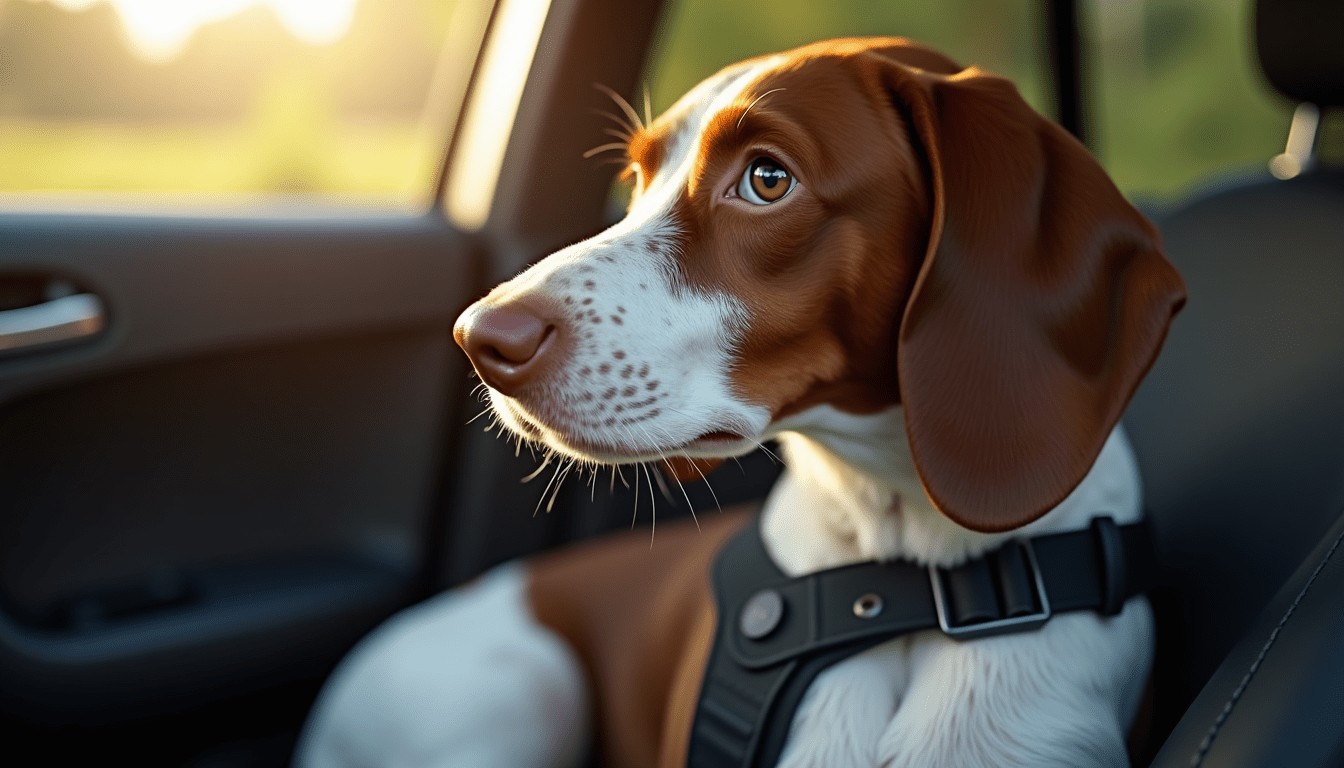
Using a dog seat belt for car safety on your last road trip might have felt like an afterthought — clip it in, move on — but at highway speed, an unrestrained 50-pound dog becomes a 1,500-pound force on impact. That’s not a scare tactic; it’s physics. If you’ve ever hit the brakes hard and watched your dog slam into the back of the front seat, you already know the restraint conversation is overdue.
Why Most Dog Car Restraints Fail When It Matters
The Center for Pet Safety ran crash tests on dog harnesses and found that the majority of products on the market — even popular ones — failed at 30 mph. Straps snapped, buckles released, and test dummies flew forward. This matters because most owners assume “harness + seat belt clip” equals safety. It often doesn’t.
The problem is that the pet restraint industry isn’t federally regulated the same way child car seats are. Manufacturers can print “crash tested” on packaging without meeting any standardized benchmark. That phrase alone tells you almost nothing useful.
Look specifically for products that have been tested by an independent third party using sled-test methodology — the same protocol used for child safety seats. A handful of harnesses on the market have passed this standard; most haven’t.
Beyond the harness itself, the attachment point matters. Clipping a leash to a collar and looping it through the seat belt latch is one of the worst setups possible — in a crash, the collar concentrates all force on the dog’s neck. A chest-and-shoulder harness distributes that load across a much larger surface area, which is why harness design and attachment point are inseparable decisions.
For a broader look at how restraints fit into your overall travel kit, our guide to essential dog travel accessories covers the full picture of what’s worth packing.
The 3 Main Restraint Types and When to Use Each
A 12-pound Chihuahua and a 90-pound Labrador have almost nothing in common when it comes to car restraint needs. Matching the restraint type to your dog’s size, behavior, and your vehicle layout is step one.
Crash-Tested Safety Harness
This is the gold standard for most dogs. A padded, multi-point harness attaches to the vehicle’s seat belt via a short, rigid or semi-rigid tether. The shorter the tether, the less momentum your dog builds before the tether goes taut in a stop. Aim for a tether no longer than 12 inches — longer ones allow too much forward movement.
Hard-Sided Travel Crate Secured to the Vehicle
For large breeds or dogs that won’t tolerate a harness, a rigid plastic crate strapped to the cargo area with tie-down anchors is a legitimate alternative. The crate itself absorbs some impact energy, and the dog can’t be ejected. The trade-off is space — this only works in SUVs, wagons, or trucks with a covered bed.
Soft-Sided Booster Seat with Harness Attachment
These work best for small dogs under 20 pounds. The booster elevates the dog so they can see out the window (which can reduce motion anxiety), while the internal tether clips to a harness. They’re not crash-tested to the same standard as standalone harnesses, so pair them with a well-fitted safety harness rather than a collar attachment.
How to Fit a Dog Seat Belt Harness So It Actually Holds
A harness adjusted too loosely is almost as useless as no harness at all. Here’s a concrete fitting sequence that takes about four minutes the first time.
- Start with the chest strap: Slide two fingers under it flat against the sternum. You should feel light resistance — not able to pull it away freely, but not cutting into skin.
- Check the shoulder straps: They should sit on the shoulder blades, not riding up toward the neck or slipping down toward the elbows.
- Confirm the back attachment point: On a safety harness, the tether clips to a reinforced back plate, not a simple D-ring sewn into thin webbing. Tug it hard. If the webbing puckers or shifts, the attachment point isn’t robust enough.
- Do a mock “brake” test at home: With your dog in the harness on the floor, hold the tether and apply steady forward pressure. Watch where the harness moves — it should stay on the torso, not ride up toward the throat.
If your dog has never worn a harness before, start with short sessions at home before ever clipping them into the car. A dog that fights the harness while you’re driving is a distraction hazard on its own. If anxiety in the car is already an issue, our tips on keeping your dog calm on road trips are worth reading before you introduce any new gear.
Dog Seat Belt for Car Safety: What the Law Actually Says
As of now, only a small number of US states — Hawaii, New Jersey, and a few others — have specific laws about transporting pets in vehicles. New Jersey’s law, for instance, can result in animal cruelty citations for unsecured pets in open truck beds. But “it’s not illegal where I live” is a thin justification when the alternative is a dog flying through a windshield.
Beyond legality, there’s liability. If you’re in an accident and your unrestrained dog injures a passenger or causes you to lose control, that’s a factor in fault determination in many states. Some insurance policies have exclusions tied to negligent pet transport.
Treat the legal question as a floor, not a ceiling. The minimum legal standard in most states is essentially nothing — your dog can ride in your lap at 75 mph and you won’t get a ticket. That doesn’t make it safe.
The AKC recommends that all dogs be restrained in vehicles, both for the dog’s safety and to prevent driver distraction — a dog moving freely in a car is a meaningful distraction risk even on a calm drive.
Common Mistakes That Undercut an Otherwise Good Setup
You bought a decent harness, you fitted it correctly — and then made one of these four errors that quietly negates the whole effort.
- Using the tether attachment on a collar instead of a harness: All crash force concentrates on the neck. Even a slow-speed stop can cause tracheal or cervical spine injury this way.
- Clipping the tether to the headrest instead of the seat belt latch: Headrests are not load-bearing anchor points. They’ll shear off under crash forces.
- Letting the tether run through the gap between the seat and the door: In a side-impact collision, this geometry can trap or crush a dog against the door panel.
- Leaving the harness on for the entire trip without a break: On drives over two hours, ASPCA guidelines suggest stopping every two hours for water and movement. A harness worn for six straight hours in summer heat can cause chafing and overheating, especially on short-coated breeds.
If you’re building out your full travel routine, our dog travel packing checklist includes a section on in-car safety gear that pairs well with this guide.
Our Picks
These are product categories, not brand names. Use these as your shopping filter rather than a brand loyalty decision.
- Crash-tested, sled-tested dog safety harness with rigid tether — the only category where independent crash-test certification is publicly documented; skip anything that can’t show third-party test results.
- Reinforced hard-sided travel crate with vehicle anchor straps — for large dogs or anxious dogs that won’t tolerate a harness; the crate-plus-anchor system is the closest equivalent to a child car seat in terms of containment.
- Elevated booster seat with internal harness clip for small dogs — reduces motion sickness triggers by giving small dogs a sightline out the window, while the internal tether keeps them from jumping to the front seat.
FAQ
Is a dog seat belt for car safety actually necessary if I’m only driving short distances?
Most accidents happen within a few miles of home, so trip length isn’t a reliable safety metric. A sudden stop at 25 mph still generates enough force to injure an unrestrained dog. Short trips are not low-risk trips.
Can I use a regular dog harness with a seat belt clip, or does it have to be a special car harness?
A standard walking harness is not designed to absorb crash forces — the webbing, stitching, and attachment points are built for leash pressure, not impact loads. Use a harness specifically engineered and tested for vehicle use. The attachment hardware and reinforced panels are structurally different.
What’s the safest place in the car for a dog — back seat, cargo area, or front seat?
The back seat is generally the safest for harnessed dogs. The front seat puts a dog in the airbag deployment zone, which can be fatal for small dogs. The cargo area of an SUV works well for crated dogs, provided the crate is anchored and not free-sliding.
How do I know if a dog car harness is actually crash tested vs. just marketed that way?
Look for documentation of sled-test methodology and the specific speed and weight parameters tested. Legitimate crash-tested products will reference the testing organization by name and often publish test footage. If the only “proof” is a logo on the packaging, treat it as unverified.
My dog hates wearing a harness — how do I get them used to it before a long trip?
Start by leaving the harness on the floor near the dog’s bed for a few days so it becomes a neutral object. Then practice putting it on indoors for five-minute sessions with high-value treats, before ever connecting it to a car tether. Rushing this process usually backfires — a dog that fights the harness in a moving car is a serious distraction.
What to Do Next
Pull out whatever you’re currently using to restrain your dog in the car — or acknowledge that you’re not using anything — and run it against the crash-test standard described above. If it doesn’t pass that filter, replace it before your next trip. A dog seat belt for car safety is a one-time purchase that costs less than an emergency vet visit. Pick the right restraint category for your dog’s size, fit it correctly, and use it every single time — not just on highway drives.