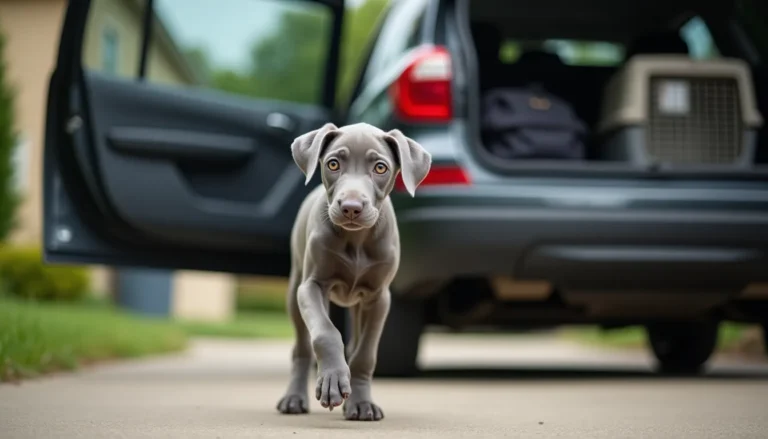

Knowing how to transport puppy in car safely starts before you ever pull out of the driveway — the decisions you make on that first ride shape how your dog feels about cars for years. You’ve just picked up an 8-week-old puppy, they’re shaking in the corner of a cardboard box, and you’ve got a 45-minute drive home. What you do in the next hour matters more than any training session you’ll run next month.
Why the First Car Ride Sets the Tone for Everything
A puppy’s brain is in its most impressionable window between 3 and 14 weeks. One genuinely frightening experience during that period — loud noise, sudden braking, overwhelming motion — can create a negative association that takes months to undo. That’s not a reason to panic; it’s a reason to be deliberate.
Think of the first car ride like an introduction, not a transportation task. The puppy doesn’t understand where they’re going. They only know whether the experience feels safe or threatening. A crate lined with a worn t-shirt from the breeder, placed on the back seat with someone sitting next to it, is a completely different experience from a puppy loose on a slippery back seat with no anchor point.
Keep the first ride short if you have any choice at all. If you’re picking up a puppy from a breeder two hours away, consider meeting halfway. Even 20 minutes less in the car on day one can reduce the stress load on a nervous pup.
Play soft, low-volume music or keep the car quiet. Avoid highways with loud truck traffic if there’s a reasonable surface-road alternative. Roll down the windows just slightly — fresh air can help with nausea — but not so much that the noise becomes overwhelming.
According to the AKC, puppies who have positive early experiences in the car are significantly more likely to remain calm travelers as adults. The investment in a good first ride pays forward every vet visit, road trip, and errand run for the next decade.
How to Transport Puppy in Car: Restraint Options Compared
A 10-pound puppy bouncing around an unrestrained back seat isn’t just stressful — it’s a safety hazard for both the puppy and the driver. At 30 mph, an unrestrained pet becomes a projectile in a sudden stop. Here’s how the main restraint options actually compare in real-world use:
Hard-sided travel crate
This is the gold standard for puppies under six months. A hard-sided crate secured against the back seat (or in a cargo area with a barrier) keeps the puppy contained, reduces visual overstimulation, and gives them a den-like enclosure that most puppies find naturally calming. Line the bottom with a non-slip mat and a piece of fabric that smells like the litter.
Soft-sided carrier
Better for very small breeds or short trips. Soft carriers compress slightly on impact, which makes them less protective in a crash, but they’re easier to carry in and out of the car and often feel more enclosed to a nervous pup. Always secure the carrier with a seat belt threaded through the handle loop — don’t just set it on the seat.
Booster seat with tether
Designed for small dogs, these elevate the puppy so they can see out the window while keeping them tethered to a short leash attached to a harness. Not ideal for the very first ride (too much visual stimulus), but useful once your puppy is comfortable in the car. For a deeper look at how to secure your dog properly, our guide on securing a dog in the car covers every restraint method with safety ratings.
Harness and seat belt clip
Crash-tested harnesses clipped to the car’s seat belt anchor are appropriate for larger puppies who’ve outgrown a carrier. Never clip a seat belt to a collar — the force of a sudden stop can cause serious neck injury. Always use a chest harness designed for vehicle use.
Setting Up the Car Before Your Puppy Gets In
Five minutes of prep before you load the puppy saves a lot of cleanup and stress. Start with the temperature: a car that’s been sitting in the sun is 20–30°F hotter inside than outside. Pre-cool the car before you put the puppy in, and never leave a puppy unattended in a parked vehicle.
Lay a non-slip surface inside the crate or carrier. Puppies on slick plastic scramble and panic; a folded towel or rubber-backed mat gives them traction and something to grip.
Bring a small ziplock bag of the puppy’s regular food — not as a meal, but as a distraction tool. A few kibbles scattered in the crate right before you close the door gives the puppy something to sniff and find, which is calming and occupying.
Pack a roll of paper towels, a small trash bag, and a change of clothes within arm’s reach of the driver’s seat. Puppies vomit. It happens even on short trips, especially if they’ve just eaten. Feeding a full meal right before a car ride is one of the most common mistakes new puppy owners make — hold off on feeding for at least two hours before a ride if you can plan around it.
For a complete list of what to bring on any car trip with a dog, our dog travel packing checklist covers everything from cleanup supplies to comfort items.
Recognizing and Preventing Car Sickness in Puppies
Puppies are more prone to motion sickness than adult dogs because the inner ear structures that regulate balance aren’t fully developed yet. Most puppies grow out of it — but that doesn’t mean you should just power through and hope for the best.
Early signs to watch for: excessive yawning, drooling more than usual, lip-licking, and a sudden stillness that looks like the puppy is trying very hard not to move. Vomiting is the obvious sign, but by then the experience is already unpleasant. Catching the earlier signals lets you pull over, let the puppy out for fresh air, and reset before things escalate.
Positioning matters. Puppies in a forward-facing crate tend to do better than those facing sideways or backward. If you have a choice, place the crate so the puppy is oriented toward the direction of travel.
Cracking a window 1–2 inches equalizes air pressure and brings in fresh air, both of which reduce nausea. Keep the car cool — a warm car makes motion sickness worse.
If your puppy is consistently sick on car rides even after several short practice trips, talk to your vet. There are safe, effective options available. The ASPCA recommends consulting your veterinarian before giving any over-the-counter medication to a puppy. For a broader look at managing this issue as your dog grows, our deep-dive on car sickness remedies for dogs covers both behavioral and medical approaches.
Building Positive Car Associations Over Time
The puppy who survives the first car ride without trauma still needs practice. A single neutral experience doesn’t build confidence — repetition does. The goal is to make “getting in the car” feel like a normal, even pleasant, part of life before your puppy is 16 weeks old.
Start with the car parked in the driveway, engine off. Let the puppy explore the back seat or sniff around the crate with the door open. Feed a few treats. Get out. That’s the whole session. Do it twice a week for a week.
Next, sit in the car with the engine running but don’t move. Let the puppy get used to the vibration and noise. Then do a 3-minute loop around the block. Then a 10-minute drive to somewhere the puppy enjoys — a park, a friend’s house — so the car doesn’t only mean the vet.
The destination matters. If every car ride ends at the vet’s office, your puppy will start showing stress signs before you even leave the driveway. Mix in fun destinations deliberately and early.
For ongoing car travel tips as your puppy grows into an adult dog, our guide on traveling with a dog in a car covers long-haul trips, rest stops, and keeping any dog calm on the road.
Our Picks
These three product categories consistently make car travel easier for puppies and their owners:
- Hard-sided plastic travel crate with ventilation panels — The rigid walls prevent crushing in a sudden stop and the enclosed design reduces visual overstimulation, which is exactly what an anxious puppy needs on a first ride.
- Crash-tested dog harness with seat belt attachment loop — Once your puppy outgrows a crate or carrier, a harness rated for vehicle use is the only restraint that holds in an actual impact; collar clips do not.
- Non-slip crate liner mat with waterproof backing — Puppies scramble on slick surfaces and that scrambling spikes anxiety; a grippy, washable liner solves both the traction problem and the inevitable cleanup.
FAQ
How long can a puppy be in a car without a break?
Young puppies (8–12 weeks) should stop every 45–60 minutes at minimum — both for a bathroom break and to reduce stress from sustained motion. Their bladder control is limited and their stress tolerance is low. As your puppy matures past 6 months, you can extend stretches to 2 hours, matching the rule of thumb used for adult dogs.
Should I hold my puppy on my lap during a car ride?
No. A puppy on your lap during a moving car is unrestrained and puts both of you at risk in a sudden stop or crash. It also reinforces the habit of being held in the car, which becomes harder to undo as the dog grows. A secured crate or carrier is safer for the puppy and less distracting for the driver.
What’s the safest spot in the car for a puppy?
The back seat is generally safer than the front, where airbag deployment poses a risk to small animals. A secured crate on the back seat floor or seat (with a seat belt through the handle) is the most stable position. In SUVs or wagons, a cargo area with a dog barrier is also appropriate for larger crates.
My puppy cried the whole way home — did I do something wrong?
Probably not. Crying on the first ride is very common; the puppy has just left their litter, everything smells unfamiliar, and the motion is new. Having someone sit next to the crate (not holding the puppy loose) and speaking calmly helps. The crying typically decreases significantly after a few more short, positive trips.
Can I give my puppy Benadryl for car anxiety?
Don’t give any medication — including over-the-counter antihistamines — without talking to your vet first. Dosing for puppies is weight-dependent and some medications that are safe for adult dogs are not appropriate for very young puppies. Your vet can recommend the right option if your puppy’s anxiety or nausea is severe enough to warrant medication.
Closing
The single most useful thing you can do right now is plan a short, low-stakes practice ride before the first necessary one — the vet visit, the groomer, the long drive. Learning how to transport puppy in car safely is less about gear and more about repetition: small, calm trips build the foundation that makes every future ride easier. Pick a destination your puppy will enjoy, secure them properly, and keep it under 15 minutes. That one trip does more than any amount of reading.