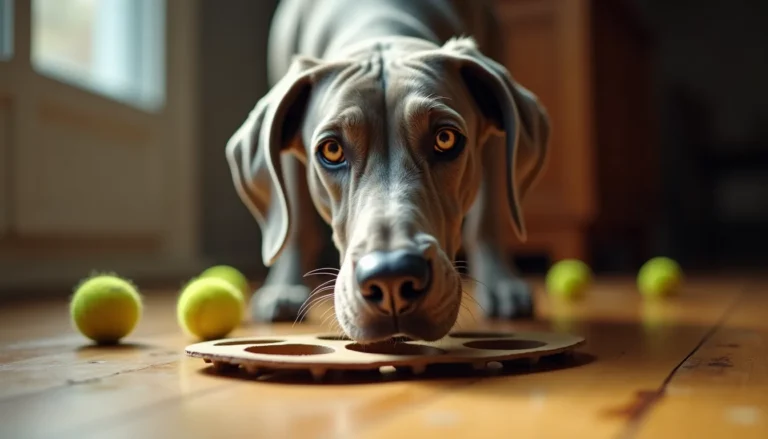
You’ve already walked your dog twice, and they’re still pacing the hallway — that’s the moment most owners realize that physical exercise alone isn’t enough. Mind stimulating games for dogs tap into a completely different kind of tired, the satisfied, settled kind that comes after real mental effort. Whether your dog is a high-drive working breed or a couch-loving senior, the games below are practical, low-cost, and actually work.
Why Mental Exercise Tires Dogs Out Faster Than Walks
A 15-minute nose work session can leave a dog calmer than a 45-minute leash walk. That’s not an accident — scent processing, problem-solving, and decision-making all draw on cognitive resources that physical movement alone doesn’t touch. According to the AKC, mental stimulation is a core component of a dog’s overall well-being, not a bonus add-on.
Think about what your dog’s brain is actually doing during a standard walk: following your lead, ignoring distractions on command, staying on a loose leash. Compare that to a game where they have to sniff out a hidden treat, flip a lid, or figure out which cup is hiding the kibble. The second scenario requires sustained focus and active problem-solving. That’s the difference.
This matters especially for dogs who are high-drive or easily bored — breeds like border collies, Belgian Malinois, or Jack Russell terriers. But senior dogs benefit too, since regular mental challenges help maintain cognitive sharpness as they age. Even 10 minutes of focused mental work per day makes a measurable difference in a dog’s behavior at home.
The good news: most of the best options qualify as brain games for dogs at home free — no special equipment required, just a few minutes and a handful of kibble.
5 Mind Stimulating Games for Dogs Using Only Household Items
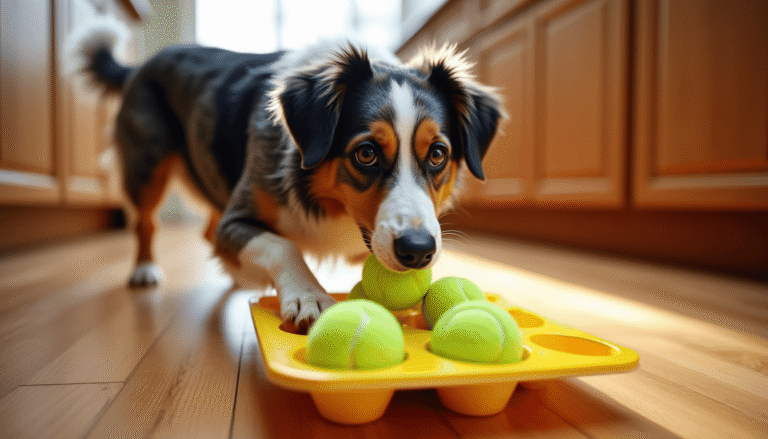
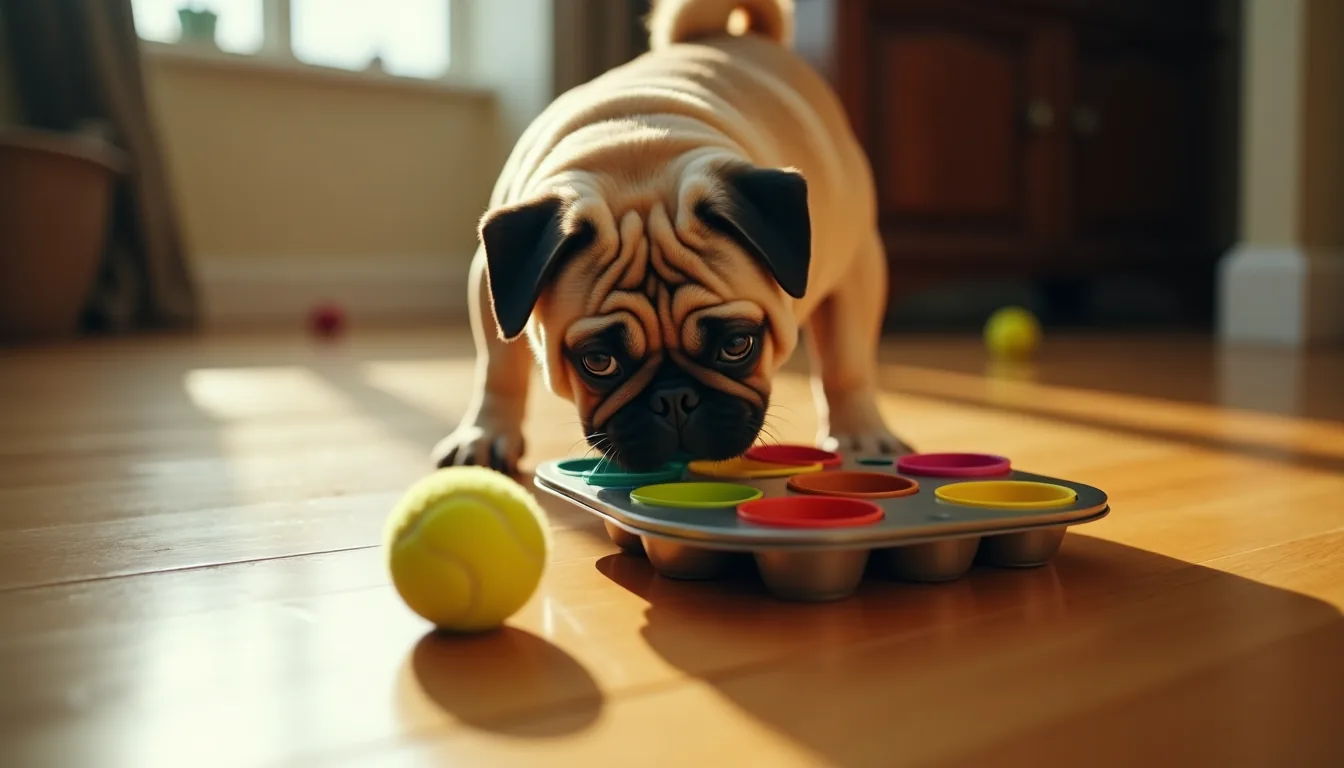
A muffin tin and a handful of tennis balls are all you need to build one of the most effective puzzle feeders in existence. Drop a piece of kibble or a small treat into each cup, cover with a tennis ball, and let your dog work out how to uncover each one. It’s simple, it’s free, and most dogs take to it immediately.
Here are five games you can run right now without buying anything:
- Muffin tin puzzle: As described above — muffin tin, tennis balls, treats. Scale the difficulty by leaving some cups empty so your dog has to sniff to find the right ones.
- Which hand: Hold a treat in one closed fist, present both fists, and wait for your dog to nose or paw the correct hand. This teaches impulse control alongside scent discrimination.
- Box dig: Fill a cardboard box with crumpled newspaper or old towels and hide treats throughout. Let your dog dig and forage. This is one of the best homemade brain games for dogs because it mimics natural foraging behavior.
- Cup shuffle: Three identical cups, one treat under one cup. Let your dog watch you place it, then shuffle slowly and let them find it. Gradually increase the speed.
- Sniff walk: On a regular leash walk, let your dog lead the sniffing entirely — no pulling them away from interesting spots. A 10-minute sniff walk is cognitively richer than a 30-minute power walk.
These brain games for dogs to tire them out work precisely because they require your dog to use their nose and brain simultaneously. For more ideas along these lines, our roundup of puzzle ideas you can make at home goes deeper on DIY options.
Nose Work and Scent Games: The Underrated Mental Workout
A dog’s nose contains roughly 300 million olfactory receptors — compared to about 6 million in a human nose. Scent work isn’t just a fun trick; it’s engaging the most powerful sensory system your dog has. That’s why even a short nose work session produces visible calm afterward.
How to Start Basic Nose Work at Home
You don’t need a formal class to begin. Start by hiding a few pieces of kibble around one room while your dog waits in another. Release them with a consistent cue like “find it” and let them search. Keep the hides easy at first — visible on the floor — then gradually move them to higher surfaces, inside containers, or under furniture.
Scent Discrimination Games
Once your dog has the hang of basic searching, introduce scent discrimination. Place several identical containers (small cardboard boxes work well) in a row. Put a treat under only one. Your dog has to sniff each one and indicate the correct container. Over time, you can replace the treat reward with a scented item, teaching your dog to find a specific odor — the foundation of formal nose work competition.
Scatter Feeding as a Low-Effort Scent Game
Scatter feeding is exactly what it sounds like: instead of serving your dog’s meal in a bowl, scatter it across the grass or a rug and let them forage. It takes the same amount of food and zero preparation, but transforms a 30-second meal into a 10-minute mental exercise. This is one of the most accessible mind stimulating games for dogs because it costs nothing and works for any age or mobility level.
Training Games That Double as Mental Enrichment
Five minutes of focused obedience training — not drilling the same command 20 times, but working through a short sequence of different behaviors — is one of the most effective mental workouts you can give your dog. The key word is “sequence.” Asking your dog to sit, then down, then spin, then touch your hand, then stay while you walk away creates a chain that requires sustained attention and memory.
Some specific training games worth trying:
- 101 Things to Do with a Box: Place an empty cardboard box on the floor and reward any interaction with it — sniffing, pawing, stepping in, nudging. This teaches your dog to offer behaviors and think independently, which is mentally demanding in a completely different way than following commands.
- Name that toy: Teach your dog the names of two or three toys, then ask them to retrieve a specific one from a pile. Border collies and retrievers often excel at this, but any dog can learn it with patience.
- Trick chains: Link 3-4 known tricks together into a sequence your dog performs on a single cue. The mental load of remembering and executing the chain is significant.
- Impulse control games: “It’s Yer Choice” — hold treats in an open palm and wait for your dog to look away before rewarding — builds self-regulation and focus simultaneously.
If you’re looking for a broader list of activities that combine training and enrichment, our guide to mental exercises for dogs covers structured approaches for different skill levels.
Note: always end training sessions before your dog loses focus. A short, successful session beats a long, frustrating one every time.
Puzzle Feeders and Interactive Toys: Choosing the Right Level
A Level 1 puzzle feeder — the kind where your dog just tips a single sliding panel — will bore a smart dog in under two minutes. A Level 4 puzzle with multiple steps, locks, and hidden compartments might frustrate a dog who’s never used one before. Matching the difficulty to your dog’s current skill level is the single most important variable in whether a puzzle feeder actually works.
Most puzzle feeders are rated on a 1-4 difficulty scale. Start one level below where you think your dog is. If they solve it in under 30 seconds, move up. If they give up and walk away, move down. The goal is 5-15 minutes of engaged problem-solving — not instant success and not frustrated abandonment.
Interactive toys that dispense kibble as your dog rolls or nudges them (often called treat-dispensing balls or Kongs) are a good middle ground — they’re harder than a bowl but easier than a multi-step puzzle. Freezing a stuffed Kong adds another layer of difficulty and extends the session significantly.
A note on supervision: ASPCA guidelines recommend supervising your dog with any new toy until you’re confident they won’t chew off and swallow small parts. This applies especially to puzzle feeders with small plastic pegs or sliding pieces.
For dogs who need more challenge, combining a puzzle feeder session with a short nose work hide afterward creates a compound mental workout that covers both problem-solving and scent processing in one sitting.
Our Picks
These three product categories consistently deliver results for mental enrichment without overcomplicating the routine:
- Multi-level sliding puzzle feeder — the tiered design forces your dog to work through several steps before accessing the reward, making it suitable for dogs who’ve outgrown basic puzzles.
- Rubber treat-dispensing ball with adjustable opening — the adjustable hole lets you dial up difficulty as your dog figures out the rolling pattern, extending the useful life of a single toy.
- Snuffle mat with varied pile heights — the uneven texture hides kibble at different depths, turning a meal into a 10-15 minute foraging session that works any dog’s nose and patience.
FAQ
How long should a mental stimulation session be for dogs?
For most adult dogs, 10-20 minutes of focused mental work per session is plenty. More than that can lead to frustration or overstimulation, especially with puzzle feeders. Two short sessions per day — one in the morning and one in the afternoon — tend to produce the calmest results.
Can you do brain games for dogs without treats?
Yes. Praise, play, and toy rewards all work as substitutes. The key is that the reward has to be genuinely motivating to your dog — if your dog is food-motivated, treats are the most efficient option, but a short game of tug after solving a puzzle works just as well for toy-driven dogs. Some dogs will also work for access to a favorite activity, like a brief off-leash run.
What are the best mind stimulating games for dogs that are seniors?
Scent games and scatter feeding are ideal for senior dogs because they require minimal physical effort but deliver strong mental engagement. Avoid puzzle feeders with small parts that require fine motor manipulation if your dog has arthritis in their paws. A simple “which hand” game or a snuffle mat is usually the most accessible starting point for older dogs.
Are there good touch screen games for dogs?
Touch screen games for dogs exist — there are tablet apps designed specifically for dogs to tap targets with their nose or paw — but the research on their effectiveness is still limited. They can provide a short burst of novelty, but most dogs lose interest quickly compared to scent-based games. They’re worth trying as a supplement, not a replacement, for hands-on enrichment.
How do I know if my dog is getting enough mental stimulation?
A well-stimulated dog typically settles more easily after exercise, shows less destructive behavior at home, and doesn’t pace or demand attention constantly. If your dog is still restless after a walk and a meal, that’s a reliable signal that mental enrichment is missing from the day. Adding even one 10-minute game per day usually produces noticeable changes in behavior within a week.
Building It Into Your Day
Pick one game from this list and run it before your dog’s morning meal tomorrow. Use their breakfast kibble as the reward — no extra treats needed. That single swap turns a 30-second bowl-drop into a 10-minute mind stimulating games for dogs session that costs nothing and starts the day with your dog already mentally engaged. For a ready-made daily structure, our full guide on mental stimulation routines for dogs lays out exactly how to build this into a weekly plan.