Your dog has been staring at you for 40 minutes, and the dog enrichment toys DIY solution you need is probably already sitting in your kitchen cabinet. A muffin tin, a few tennis balls, and a handful of kibble can occupy a bored dog for longer than most store-bought puzzles — and cost you nothing. This guide covers 12 builds, from two-minute towel rolls to multi-layer cardboard puzzles, so you can match the toy to your dog’s skill level and the time you actually have.
Why Homemade Toys Work as Well as Store-Bought Ones
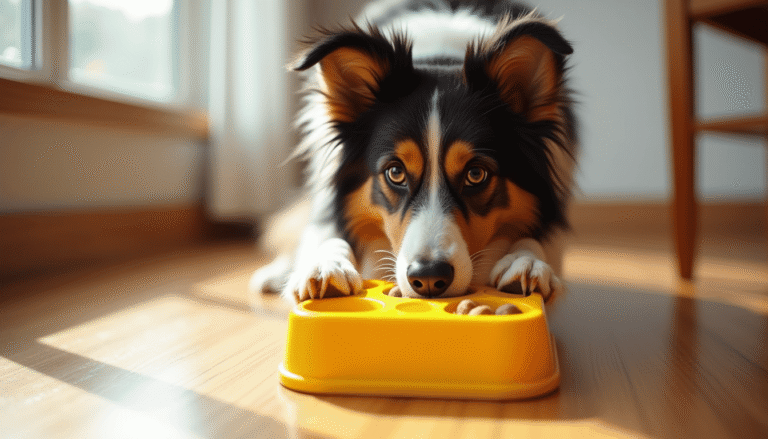
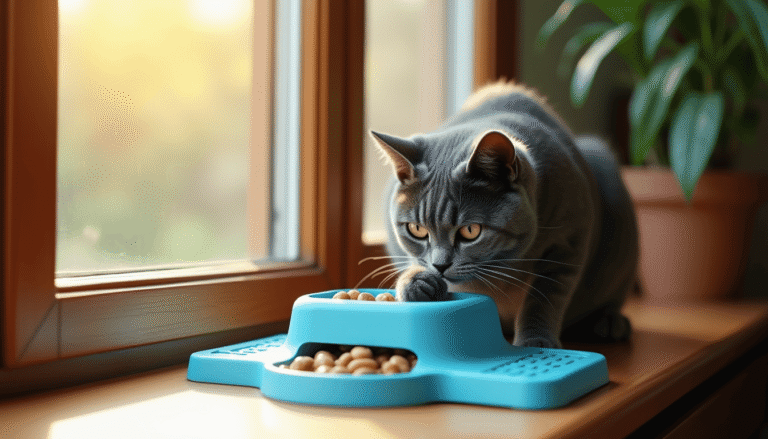
A $35 plastic puzzle feeder and a muffin tin filled with tennis balls both do the same thing: they make your dog use their nose and brain to get food. The mechanism matters less than the challenge level. Commercial toys are engineered to look appealing to owners, but your dog is evaluating by scent and difficulty — not aesthetics.
The AKC notes that mental stimulation is just as important as physical exercise for a dog’s overall wellbeing, and that nose work in particular tires dogs out efficiently. A 15-minute sniff session can leave a high-energy dog calmer than a 30-minute walk.
Homemade toys also have a practical advantage: you can rebuild them instantly when they’re destroyed, and you can adjust the difficulty mid-session. If your dog solves a toy in under two minutes, add more layers or switch to a smaller kibble size. No commercial toy gives you that kind of real-time control.
For dogs who need more structured challenge, our roundup of puzzle ideas you can set up at home pairs well with the builds in this guide.
Safe Materials for Dog Enrichment Toys DIY Builds
Before you start cutting cardboard, a quick materials check matters. Not everything in your recycling bin is safe for a dog who chews aggressively.
Materials That Work Well
- Cardboard (unbleached, no tape residue): Safe for most dogs. Supervise heavy chewers who might swallow large chunks.
- Fleece or old cotton t-shirts: Ideal for braided tug toys and snuffle mats. Wash before use.
- Muffin tins and silicone baking molds: Durable, easy to clean, and perfect for food-based puzzles.
- PVC pipe (food-safe, no glue joints): Good for rolling treat dispensers for large dogs. Sand any rough edges.
- Tennis balls: Useful as puzzle covers — cut a small slit for treats. Replace when the felt starts peeling.
Materials to Avoid
- Styrofoam — breaks into small pieces that can cause intestinal blockages.
- Rubber bands, zip ties, or staples — choking hazards.
- Newspaper with heavy ink — the ASPCA advises keeping dogs away from materials with unknown chemical coatings.
- Glass jars or ceramic — shatter risk if knocked off a surface.
Always supervise your dog with any new toy for the first few sessions, regardless of how simple the build looks. Once you know how your dog interacts with it — whether they nose it, paw it, or try to eat the whole thing — you can decide whether to leave it out unsupervised.
12 Dog Enrichment Toys DIY Builds by Difficulty
Beginner Builds (Under 5 Minutes)
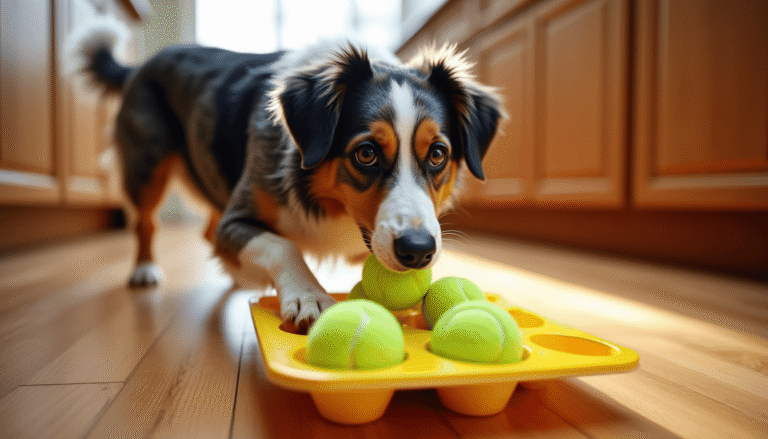
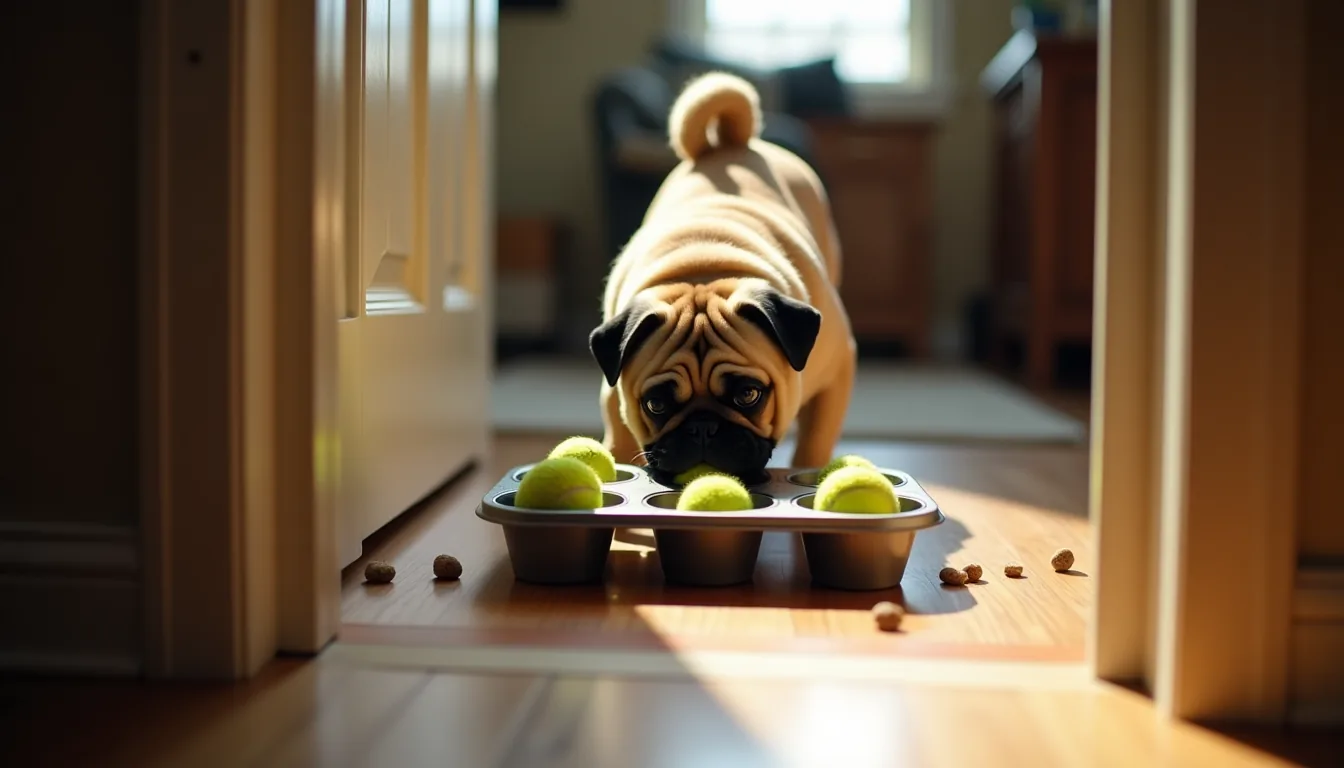
- Muffin tin puzzle: Drop kibble into each cup of a 12-cup muffin tin, then cover each cup with a tennis ball. Your dog noses the balls off to find the food.
- Towel roll: Lay a hand towel flat, scatter treats across it, then roll it up loosely. Your dog unrolls it with their paws and nose. This is one of the most popular dog enrichment ideas DIY beginners start with — zero prep, zero cost.
- Egg carton forager: Place kibble inside a cardboard egg carton and close the lid. Dogs figure out how to open it surprisingly fast.
- Bottle roller: Take an empty plastic water bottle (cap removed), cut a few small holes in the sides, and fill it with kibble. Your dog rolls it around to dispense food.
Intermediate Builds (5–15 Minutes)
- Snuffle mat from fleece: Cut a rubber sink mat (the kind with holes) into your base. Cut fleece strips about 1 inch wide and 6 inches long. Push each strip through a hole and tie it in a knot on the underside. Scatter kibble through the fleece tufts. This is one of the best dog enrichment ideas without food-bowl feeding — it slows down fast eaters significantly.
- Box-in-a-box puzzle: Nest three cardboard boxes inside each other with treats hidden between each layer. Great for dogs who already solve single-layer puzzles instantly.
- Toilet roll tower: Fold the ends of 10–15 toilet paper rolls, stuff treats inside, and stack them upright in a shoebox. Your dog tips the box and fishes out the rolls.
- Frozen towel chew: Wet an old hand towel, tie it in a loose knot, and freeze it overnight. Especially useful in summer — also works as a DIY dog enrichment towel for teething puppies.
Advanced Builds (15–30 Minutes)
- PVC treat roller for large dogs: Cut a 12-inch section of 2-inch PVC pipe. Drill 8–10 small holes along the length. Cap both ends with removable end caps. Fill with kibble and let your dog roll it across the floor. This build specifically addresses DIY dog enrichment ideas for large dogs — it’s heavy enough to hold up to pawing and body-checking.
- Cardboard city: Collect 6–8 boxes of different sizes. Cut doorways between them, hide treats throughout, and let your dog navigate the maze. Reassemble with different layouts each time.
- Multi-cup shell game: Place three identical cups upside down on the floor. Put a treat under one. Let your dog watch, then shuffle slowly. Tap the cup they choose. Increase speed as they get better.
- Braided fleece tug with hidden pocket: Braid three fleece strips together, leaving a small loop at one end. Tuck a treat inside the loop before each session. Your dog learns to bring the toy back to “open” it.
How to Keep Your Dog Engaged While You’re at Work
Three of the builds above — the bottle roller, the snuffle mat, and the frozen towel — are specifically designed to be left unsupervised with a dog who has already been assessed as safe with that material. If you’re gone 8 hours, you need toys that are durable, can’t be swallowed whole, and don’t require you to reset them mid-day.
Rotate two or three toys on a weekly schedule so novelty stays high. A snuffle mat that comes out every day loses its appeal within a week. The same mat appearing every third day stays interesting for months.
Combine physical toys with scent work: hide three or four small treats in different rooms before you leave. Your dog spends the first hour after you go working through the search. Pair this with a frozen lick mat stuck to the inside of the crate door, and most dogs settle within 20 minutes. For more dog enrichment ideas while at work, our guide on indoor enrichment setups covers the full rotation strategy.
If your dog is particularly high-drive, the builds in the advanced section above — especially the PVC roller and the cardboard city — burn more mental energy than beginner toys. Check our breakdown of enrichment strategies for high-energy dogs for a more targeted approach.
Scaling and Rotating Toys to Prevent Boredom
The biggest mistake owners make with enrichment toys — homemade or otherwise — is giving the same toy every single day. Within a week, even a good puzzle becomes background furniture. Dogs habituate fast.
A simple rotation system: keep six toys in circulation, but only two are available at any given time. Swap one out every three days. When a toy comes back after two weeks away, your dog treats it like it’s new.
Scaling difficulty matters too. A beginner muffin tin puzzle should eventually become a muffin tin with smaller kibble, covered cups, and a box placed on top of the whole thing. Each added layer extends the toy’s useful life by weeks.
For food-based builds, vary the fillings. Kibble is a starting point, but small pieces of carrot, a smear of plain pumpkin, or a few blueberries change the scent profile entirely. If you want ideas for what to put inside, our collection of homemade toy fillings and builds has specific combinations that work well together.
Track which toys your dog solves fastest — those are the ones to retire or upgrade first. Dogs who consistently crack every puzzle in under three minutes are ready for multi-step builds that require a sequence of actions, not just nose-bumping.
Our Picks: Products Worth Pairing With DIY Builds
Homemade toys cover most needs, but a few store-bought categories fill gaps that cardboard and fleece can’t.
- Silicone lick mat with suction cup base — sticks to tile or the inside of a crate door, holds frozen fillings without sliding, and survives the dishwasher indefinitely.
- Adjustable-difficulty sliding tile puzzle feeder — the tile resistance can be tightened as your dog improves, giving you months of escalating challenge from a single toy.
- Rubber treat-dispensing chew toy (hollow core) — stuffable with homemade frozen fillings, durable enough for power chewers, and compatible with the same recipes you’d use for a lick mat.
FAQ: Dog Enrichment Toys DIY
How do I make an enrichment toy for my dog at home?
Start with a muffin tin and tennis balls — place kibble in each cup, cover with a ball, and let your dog nose them off. It takes two minutes to set up and works for dogs at any skill level. Once your dog solves it quickly, add a layer of difficulty by placing the whole tin inside a cardboard box.
What household items can I use to make dog puzzle toys?
Muffin tins, toilet paper rolls, egg cartons, old fleece blankets, hand towels, cardboard boxes, and plastic water bottles (cap removed) are all safe starting points. Avoid anything with staples, tape residue, or styrofoam. Supervise your dog the first time they interact with any new material to see how they handle it.
Are DIY dog enrichment toys safe for unsupervised use?
Some are, some aren’t. The bottle roller, snuffle mat, and frozen towel are generally safe for dogs who don’t swallow non-food items. Cardboard builds — egg cartons, box puzzles — should be supervised because a determined chewer can eat them. Know your dog’s chewing style before leaving any toy unattended.
How do I make DIY enrichment toys for large dogs specifically?
Scale up the materials. A 12-cup muffin tin is fine for a large dog, but the PVC pipe roller (2-inch diameter, 12 inches long) handles the weight and force of a big dog better than a plastic bottle. Cardboard box mazes work well too — use moving boxes instead of shoeboxes so there’s room to explore.
How often should I rotate my dog’s enrichment toys?
Swap at least one toy every three days if you’re running a rotation of six. If you only have two or three toys, alternate them daily so no single toy appears more than every other day. Novelty is the main driver of engagement — the toy doesn’t need to be new, just unfamiliar enough to re-trigger curiosity.
Pick one build from the beginner list — the towel roll or the muffin tin puzzle — and try it tonight before dinner. Use your dog’s regular kibble portion so you’re not adding extra calories, just changing the delivery method. Watch how your dog approaches it, note how long it takes to solve, and use that as your baseline for choosing what to build next. The dog enrichment toys DIY approach works best when you treat it as an ongoing experiment, not a one-time project.