The moment you decide to make homemade enrichment toys for dogs, you realize how much raw material is already sitting in your kitchen — a muffin tin, a plastic bottle, an old towel, a cardboard egg carton. Your dog doesn’t need a trip to the pet store. What your dog needs is something that makes their brain work, and the twelve builds below deliver exactly that, most in under five minutes.
Why Homemade Enrichment Toys for Dogs Actually Work
A 2019 survey by the ASPCA found that destructive behavior — chewing furniture, excessive barking, digging — is one of the top reasons owners surrender dogs to shelters. In most cases, the dog isn’t “bad.” The dog is bored. Mental stimulation burns energy just as efficiently as a long walk, and a puzzle toy that takes your dog eight minutes to solve can leave them calmer for hours afterward.
Homemade options have one advantage over store-bought puzzles: you can calibrate the difficulty instantly. Too easy? Add more kibble barriers. Too hard? Remove one. A commercial puzzle stays at the same difficulty level forever. Your muffin tin doesn’t.
The builds below are organized loosely by complexity — start at the top if your dog is new to puzzle toys, or jump to the harder builds if your dog blows through beginner puzzles in under two minutes. If your dog is a heavy chewer, skip any cardboard builds and go straight to the bottle or towel options. For more structured ideas, our guide on indoor enrichment for rainy days covers additional setups that pair well with these toys.
5 Beginner Builds: Muffin Tin, Egg Carton, and More
These five builds require zero construction. You’re arranging, not assembling.
1. Muffin Tin Puzzle
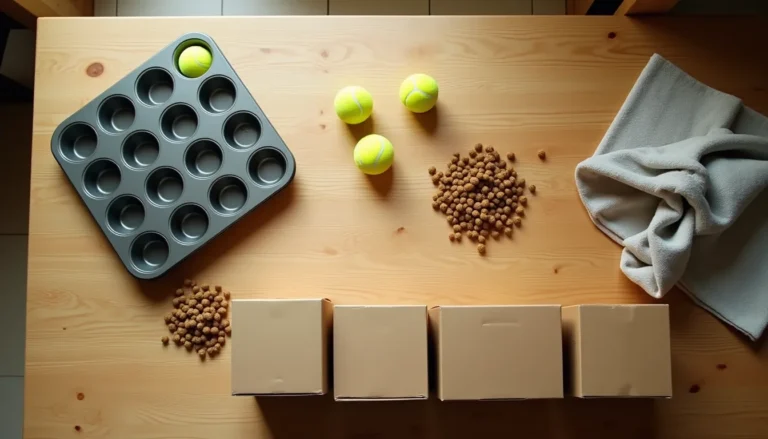
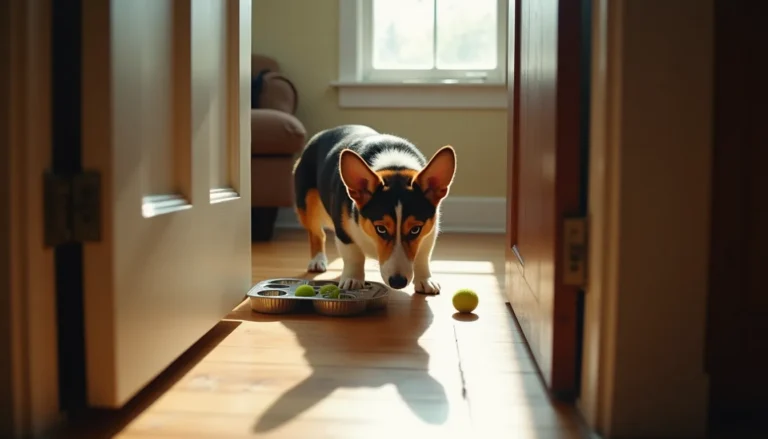
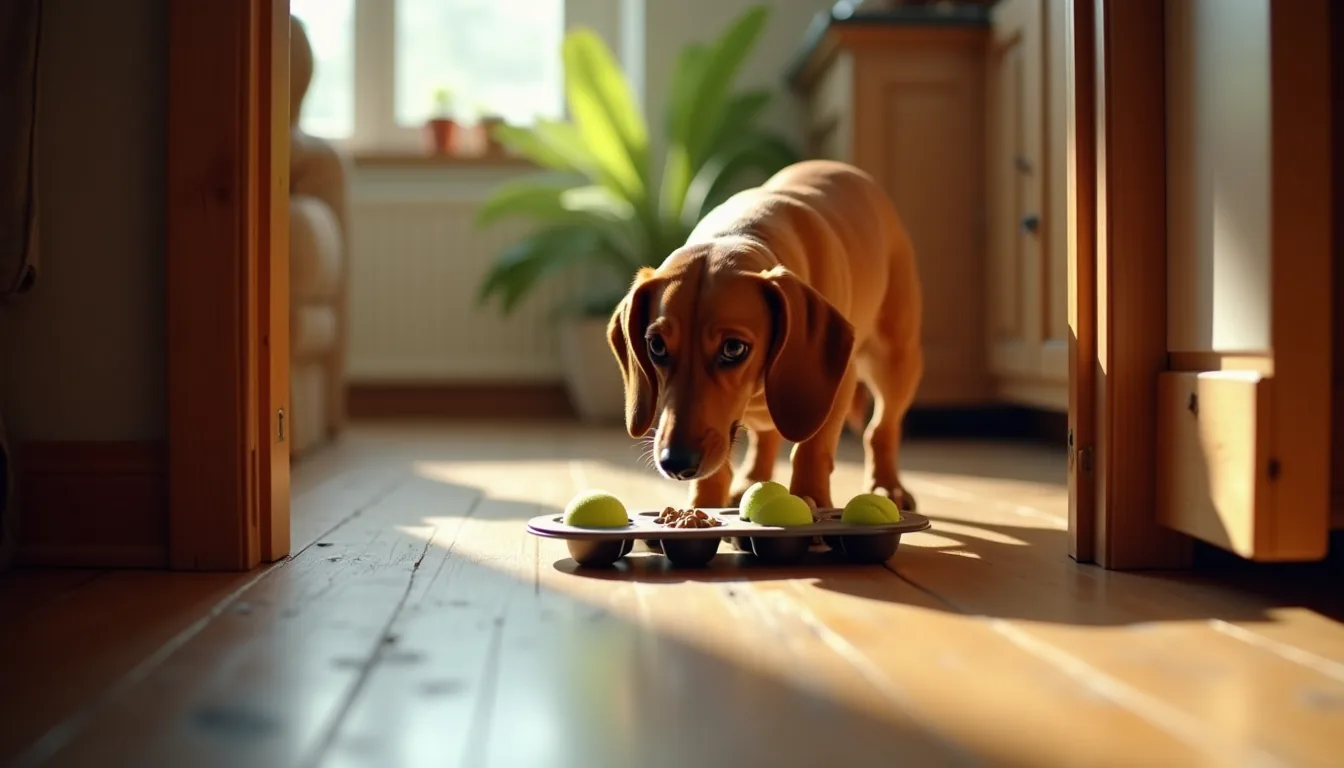
Drop a piece of kibble or a small treat into each cup of a standard 12-cup muffin tin. Cover each cup with a tennis ball. Your dog has to nose or paw each ball off to reach the reward. Start with only three or four cups covered so your dog learns the game before you add all twelve.
2. Egg Carton Snuffle
Tear the lid off a cardboard egg carton and scatter kibble across the cups. Crumple a few pieces of paper and wedge them in to block the treats. Best for dogs who don’t shred cardboard — supervise the first session to see how your dog handles it.
3. Ice Block Dig
Fill a plastic container with water, drop in a handful of kibble or small treats, and freeze overnight. Set it in a bowl so the melt doesn’t go everywhere. Dogs lick and paw at it for a surprisingly long time. This doubles as a cooling toy in summer. Check out our frozen lick mat filling ideas for combinations that work just as well frozen in a block.
4. Paper Bag Crinkle Toy
Drop treats inside a small paper lunch bag, fold the top over twice, and hand it to your dog. The crinkle sound is part of the reward. Supervise closely — paper bags are for dogs who won’t eat the bag itself.
5. Cupcake Tower
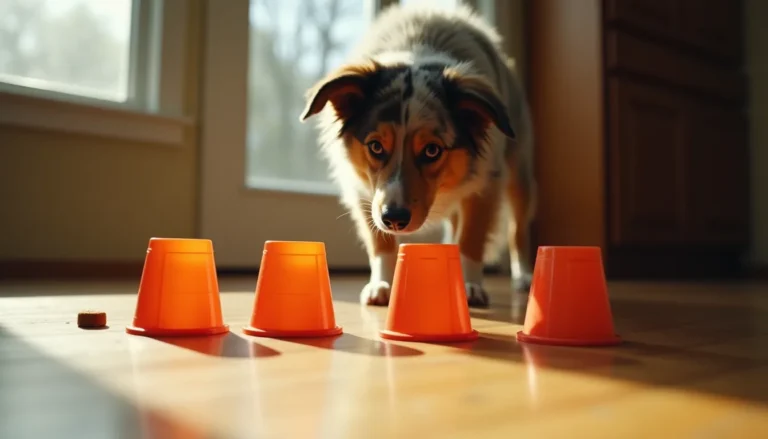
Stack three plastic cups upside down on a flat surface. Hide a treat under one. Let your dog watch you place it, then encourage them to find it. Gradually stop letting them watch, and rotate which cup hides the treat.
4 Intermediate Builds: Bottles, Boxes, and Towel Rolls
These builds take two to five minutes to set up and present a noticeably harder challenge.
6. Plastic Bottle Spinner
Take an empty plastic water or soda bottle and cut three or four small holes in the sides — just big enough for a kibble piece to fall through. Fill it with your dog’s meal and let them roll it around the floor. Remove the cap and the plastic ring under the cap before handing it over — both are choking hazards. This is one of the best dog enrichment ideas without food props because the bottle itself becomes the puzzle.
7. Towel Roll Snuffle
Lay a bath towel flat, scatter kibble across it, then roll it into a loose log. Tuck the ends under. Your dog has to unroll and paw through it to get every piece. The “dog enrichment ideas towel” approach is popular for good reason — it’s endlessly adjustable. Roll it tighter for a harder challenge, looser for a beginner session.
8. Cardboard Box Dig
Take a medium shipping box and fill it with crumpled newspaper, toilet paper tubes, and a handful of treats scattered throughout. Let your dog dig through it. Large dogs especially love this — it satisfies the natural urge to dig without destroying your backyard. This is one of the few enrichment toys for large dogs that scales without any modification.
9. Toilet Paper Tube Puzzle
Fold one end of an empty toilet paper tube closed, drop in three or four kibble pieces, and fold the other end shut. Hand it over. For a harder version, tape six or eight of these tubes together inside a shoebox so your dog has to extract each tube individually.
3 Advanced Builds for High-Drive and Power Chewer Dogs
If your dog demolishes the beginner builds in under a minute, these three options add layers of difficulty — or durability for dogs who chew everything.
10. Braided Fleece Tug With Hidden Kibble
Cut three strips of fleece (each about 18 inches long and 1.5 inches wide) from an old t-shirt or fleece blanket. Braid them loosely, knotting at both ends. Before you finish the braid, tuck a few small treats into the gaps. Fleece holds up far better than paper or cardboard for dogs who chew hard, and the texture gives them something satisfying to work on. This is a solid DIY dog toy for power chewers who destroy softer builds instantly.
11. Stuffed Kong Alternative (Cardboard Tube)
Take a wide cardboard tube — a paper towel roll works — and fold one end tightly shut. Pack it with a mix of kibble, a smear of peanut butter (xylitol-free only — the AKC notes xylitol is toxic to dogs even in small amounts), and a few pieces of freeze-dried meat. Fold the top closed and freeze for two hours. The frozen filling slows your dog down considerably.
12. Multi-Stage Box Puzzle
Nest three boxes inside each other — small inside medium inside large — with treats hidden in each layer. Your dog has to open or tear through each box to reach the next. Use plain cardboard with no tape or staples. This is the hardest build on the list and works well as a dog enrichment idea while at work if your dog is left with it in a contained space like a crate room. For more complex puzzle setups, our collection of puzzle ideas you can build at home goes deeper on multi-step challenges.
Our Picks: Products That Pair Well With DIY Builds
These three product categories complement the homemade builds above and are worth having on hand.
- Silicone lick mat with suction cup base — sticks to tile or a crate door so your dog works it vertically, which slows down fast eaters and adds a postural challenge.
- Rubber treat-dispensing ball with adjustable opening — the opening size controls difficulty, making it the one store-bought item that actually grows with your dog’s skill level.
- Snuffle mat with varied pile heights — hides kibble at different depths so your dog can’t develop a single nose-path strategy the way they do with flat snuffle mats.
FAQ: Homemade Enrichment Toys for Dogs
What are some DIY dog enrichment toys I can make right now?
The muffin tin puzzle (muffin tin plus tennis balls), the towel roll snuffle, and the plastic bottle spinner are all ready in under three minutes using things most households already have. Start with the muffin tin if your dog is new to puzzles — it’s the easiest to adjust on the fly.
Are homemade enrichment toys safe for puppies?
Most are, with supervision. Avoid small pieces that could break off and be swallowed, and skip any cardboard builds with a puppy who tends to eat non-food items. The ice block and fleece tug are the safest options for puppies under six months because neither has small detachable parts.
How long should a dog spend on an enrichment toy each session?
Ten to twenty minutes is a solid session for most dogs. Some dogs will disengage on their own when they’ve finished the puzzle; others will keep working past the point of frustration. If your dog starts pawing aggressively or whining at the toy, the difficulty is too high — simplify it next time.
Can I use these toys to keep my dog busy while I’m at work?
Yes, with some caveats. Stick to supervised-safe options like the frozen ice block, the stuffed cardboard tube, or the fleece tug when you’re not home. Avoid open cardboard boxes or paper bags unsupervised — a dog who eats cardboard can develop a blockage. Rotate two or three toys so novelty stays high across the week.
What enrichment toys work best for large or high-energy dogs?
The cardboard box dig, the multi-stage box puzzle, and the braided fleece tug all scale well for large dogs. High-energy dogs often need the challenge to be harder, not just bigger — adding more layers to the box puzzle or rolling the towel tighter is more effective than simply using a larger version of the same toy. Our full breakdown of enrichment strategies for high-drive dogs covers additional approaches for dogs who blow through standard puzzles.
Start With One Toy Today
Pick the single build that matches what you already have at home right now — a muffin tin, a towel, a plastic bottle — and run one session today. Making homemade enrichment toys for dogs isn’t a project you need to plan around; it’s a ten-minute activity that pays off immediately in a calmer, more settled dog. Once you see how your dog responds to the first toy, you’ll know exactly which direction to go next. The builds get more interesting from there.