The best indoor enrichment ideas for dogs aren’t complicated — but on a Tuesday afternoon when your Australian Shepherd has knocked over the recycling bin for the third time, you need something that actually works. Mental stimulation burns energy just as effectively as a long walk, and most of the activities below require nothing more than what you already have at home, plus maybe one low-cost tool. Here’s what’s worth your time.
1. Nose Work: The Fastest Way to Tire Out a Dog Indoors
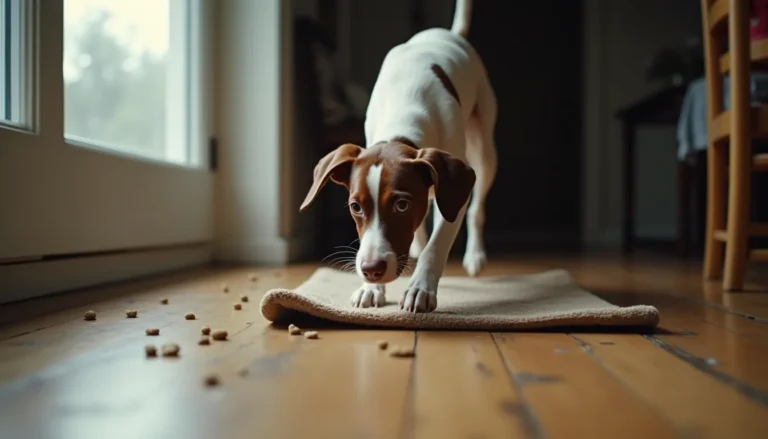
A ten-minute nose work session can wear out a high-energy dog more thoroughly than a thirty-minute walk. That’s not an exaggeration — scent processing is cognitively demanding, and dogs have up to 300 million olfactory receptors compared to a human’s roughly six million, according to the AKC. When your dog is working their nose hard, their brain is working just as hard.
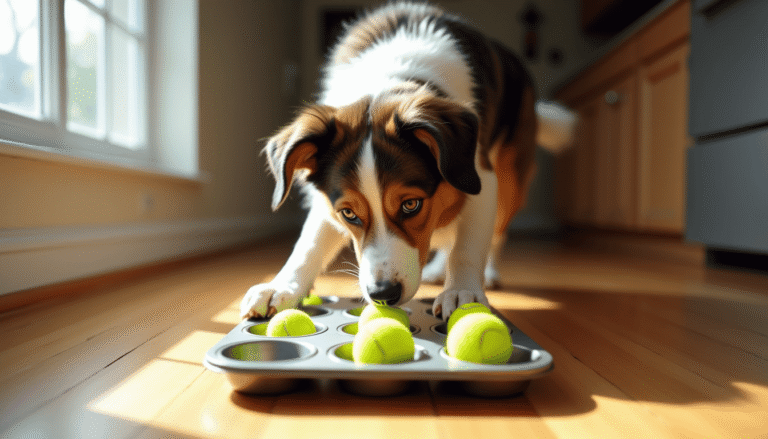
The simplest version: grab a muffin tin, drop a few small treats into three or four of the twelve cups, and cover all cups with tennis balls. Set it on the floor and let your dog figure it out. Most dogs crack it in under two minutes the first time, so rotate which cups hold treats every round to keep the challenge alive.
Once your dog has the muffin tin mastered, move to a box search. Scatter six to eight cardboard boxes around a room, hide a treat in one, and send your dog to find it. You can add a verbal cue like “find it” so the behavior becomes a trained skill. Over time, you can hide the treat inside a folded towel inside one of the boxes, adding another layer of difficulty.
Nose work also works well for anxious dogs. The focused sniffing activates the parasympathetic nervous system, which has a calming effect — something worth knowing if your dog gets wound up during thunderstorms or when guests arrive.
2. Puzzle Feeders Turn Every Meal Into a Brain Exercise
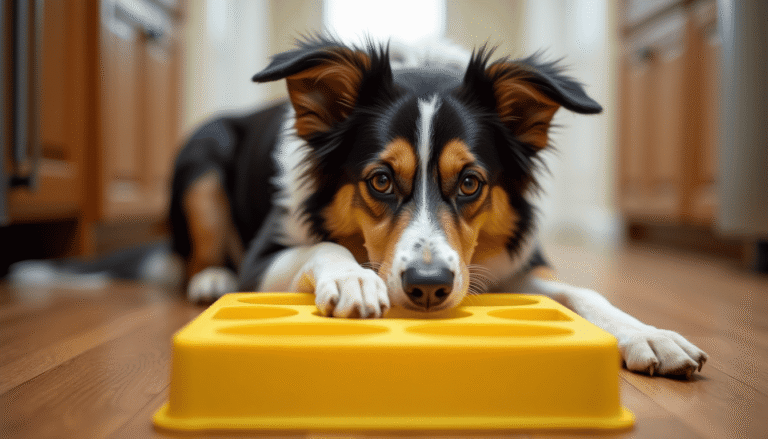
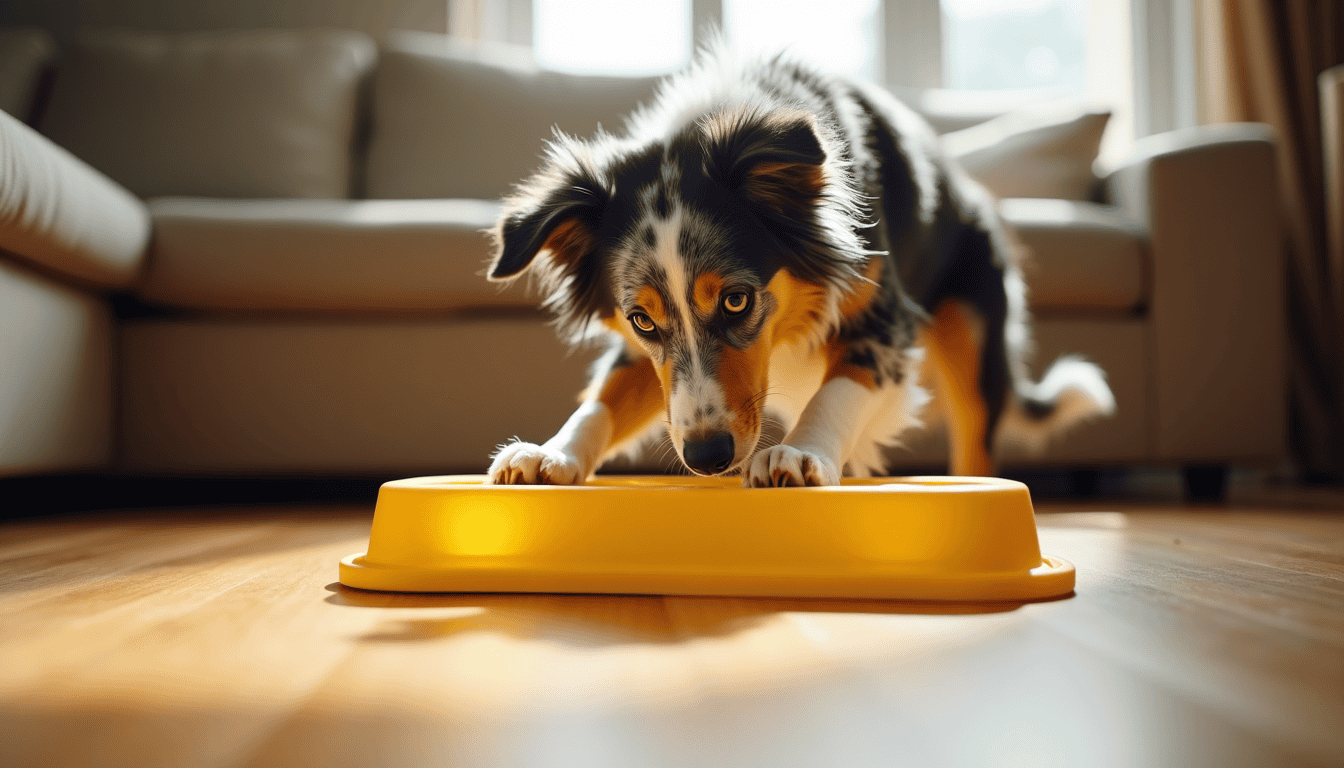
Swapping your dog’s bowl for a puzzle feeder at one meal per day is the single lowest-effort change you can make to your dog’s routine. Instead of inhaling kibble in thirty seconds, your dog spends five to fifteen minutes pawing, nudging, and sniffing out each piece. That’s fifteen minutes of mental work your dog would otherwise spend staring at the wall.
Beginner puzzles
Sliding tile puzzles with removable pegs are a good starting point. Your dog pushes a cover aside with their nose or paw to reveal a kibble pocket. These typically have two to three levels of difficulty on a single board. Start at the easiest setting and only move up once your dog solves it in under two minutes without frustration.
Intermediate puzzles
Flip-board puzzles require your dog to lift, flip, or spin pieces. These take more deliberate paw and nose coordination. If your dog starts slamming the board or trying to flip it over, that’s a sign they’re frustrated — drop back to something easier and rebuild confidence.
DIY options
You don’t need to buy anything to start. Roll kibble inside a towel and tie the ends loosely. Stuff a cardboard toilet paper tube, fold the ends shut, and hand it over. These low-cost alternatives work on the same principle: your dog has to manipulate an object to access food. The behavior — working for a reward — is what matters, not the price tag of the tool.
3. Indoor Enrichment Ideas for Dogs Who Need to Move
Not every dog is content with a stationary puzzle. Some dogs — herding breeds especially — need to move their body even when they can’t go outside. These indoor enrichment ideas for dogs keep them physically engaged without requiring a backyard or a long hallway.
Staircase fetch
If your home has stairs, you have a built-in workout machine. Toss a ball to the top landing and let your dog sprint up to retrieve it, then walk back down. Going uphill is harder than flat-ground running, and the descent requires controlled movement. Keep sessions to five to eight minutes to avoid joint strain, especially in dogs over seven years old.
Indoor agility with household objects
A broomstick balanced between two stacks of books makes a jump. A hula hoop held vertically is a target for your dog to step through. A line of plastic cups on the floor creates a weave course. You don’t need official agility equipment — you need objects that define a path and a dog who is willing to follow your hand signal or treat lure.
Tug games
A structured tug session — where your dog learns “take it” and “drop it” as part of the game — is both physical and mentally engaging. The “drop it” cue requires impulse control, which is one of the most useful skills a dog can practice. A thick rope toy or a fleece tug works well. Keep sessions short (three to five minutes) and end while your dog still wants to play.
4. Chew Time Is Enrichment, Not Just a Distraction
A bully stick or a frozen stuffed Kong is not just something to keep your dog busy while you work. Chewing releases endorphins, reduces stress hormones, and gives dogs an outlet for a behavior that is hardwired into them. The ASPCA notes that providing appropriate chew outlets can reduce destructive chewing on furniture and household items — which most owners figure out the hard way.
The key word is “appropriate.” Not every chew is safe for every dog. Hard chews like antlers and raw bones can fracture teeth, particularly in dogs who chew aggressively. A general rule from veterinary dentists: if you wouldn’t want to be hit on the kneecap with it, it’s too hard for your dog’s teeth.
For a frozen stuffed Kong, mix your dog’s regular kibble with a spoonful of plain canned pumpkin or unsweetened plain yogurt, stuff the Kong, and freeze it overnight. A frozen stuffed Kong takes most medium-sized dogs twenty to forty minutes to work through — significantly longer than the unfrozen version.
Rotate chew types to prevent boredom. A dog who gets the same bully stick every day will lose interest faster than one who alternates between a frozen Kong, a chew strip, and a marrow bone (with the marrow already removed to avoid richness-related stomach upset).
5. Training New Tricks Is One of the Most Underused Enrichment Tools
Five minutes of trick training before dinner is one of the most efficient indoor enrichment ideas for dogs that owners consistently overlook. Teaching your dog to spin, back up, touch a target stick, or identify toys by name requires focus, repetition, and impulse control — all of which are mentally tiring in the best possible way.
Pick one skill at a time. If you try to work on three things in one session, you’ll confuse your dog and frustrate yourself. A single five-minute session on one behavior — broken into ten to fifteen short repetitions — is more effective than a twenty-minute session that meanders between cues.
Toy name identification is a particularly engaging long-term project. Start with one toy, say its name every time you hand it to your dog or toss it, and reward your dog for picking it up when you say the name. Once that toy name is solid, introduce a second. Border Collies and other working breeds can learn dozens of toy names, but any motivated dog can learn three to five with consistent practice.
Keep a training log — even a simple note on your phone — so you can track which behaviors are solid, which need more work, and what your dog has learned over the past month. Progress is motivating, and it’s easy to forget how far a dog has come without a record.
Our Picks
These three product categories are worth buying if you want to expand your indoor enrichment toolkit beyond what you can DIY.
- Multi-level sliding puzzle feeder — The adjustable difficulty means one board stays useful as your dog’s problem-solving skills improve, rather than becoming too easy after a week.
- Silicone lick mat with suction base — The suction cup keeps the mat in place while your dog works, which matters more than it sounds once you’ve watched a regular mat get flipped across the kitchen floor.
- Snuffle mat with variable-depth pockets — Deeper pockets slow down fast sniffers and extend the time your dog spends foraging, which is the whole point of nose-based enrichment.
FAQ
How long should indoor enrichment sessions be for dogs?
Most dogs do well with two to three sessions of ten to fifteen minutes each, spread across the day. Longer isn’t always better — a mentally tired dog will disengage, which defeats the purpose. Watch for signs of frustration (pawing aggressively, walking away, vocalizing) and end the session before that point.
Can indoor enrichment replace outdoor walks for dogs?
Not entirely. Outdoor walks provide sensory input — smells, sounds, sights — that indoor environments can’t fully replicate. But on days when a full walk isn’t possible (extreme weather, illness, post-surgery rest), a combination of nose work, puzzle feeding, and training can meaningfully reduce restlessness. Think of indoor enrichment as a supplement, not a substitute.
What enrichment activities work best for senior dogs with limited mobility?
Nose work and lick mats are ideal because they require minimal physical effort but deliver strong mental stimulation. Puzzle feeders at the easiest difficulty setting work well too. Avoid activities that require jumping, sharp turns, or prolonged standing if your dog has arthritis or joint issues — check with your vet about specific physical limitations.
How do I know if my dog is actually getting enrichment value from an activity?
Look for focused, voluntary engagement — your dog choosing to stay with the activity rather than wandering off. A dog who is genuinely engaged will show relaxed body language, steady sniffing or pawing, and mild frustration (trying harder) rather than disengagement. If your dog walks away within two minutes, the activity is either too hard, too easy, or the reward isn’t motivating enough.
Is it safe to leave dogs alone with enrichment toys like Kongs and puzzle feeders?
It depends on the toy and the dog. Rubber Kongs are generally safe for unsupervised use. Puzzle feeders with small removable pieces should be used with supervision until you know your dog won’t chew and swallow the parts. Hard chews should always be used with supervision, as pieces can break off and become choking hazards. When in doubt, introduce any new item supervised first.
Start Here
Pick one activity from this list — the muffin tin nose game or a stuffed frozen Kong are the easiest starting points — and run it today before your dog’s dinner. Indoor enrichment ideas for dogs work best when they become a consistent part of the daily routine rather than a rainy-day emergency plan. One ten-minute session tonight will tell you more about what your specific dog responds to than any amount of reading.