Mental enrichment for dogs isn’t a luxury — it’s a basic need your dog has every single day, not just on weekends. Picture this: your Labrador has been home alone since 8 a.m., you walk in at 6 p.m., and the throw pillows are shredded. That’s not spite. That’s a brain with nothing to do for ten hours. The good news is that fixing it doesn’t require expensive gear or hours of your time.
Why Mental Enrichment for Dogs Matters More Than Extra Walks
A 20-minute sniff session in the backyard can leave a high-drive dog calmer than a 45-minute on-leash walk. That’s not an accident. When your dog uses their nose — processing scent layers, making micro-decisions about what to investigate next — their brain burns real energy. The AKC notes that a dog’s nose has up to 300 million olfactory receptors compared to about 6 million in humans, which means scent work is cognitively heavy lifting for them.
Physical exercise matters, but it’s only half the picture. A dog that runs for an hour and then comes home to a blank environment is still going to pace, bark, or chew. Pair movement with mental challenge and you get a dog that actually settles.
This is especially true for working breeds — herding dogs, terriers, sporting dogs — who were selectively bred to make decisions, solve problems, and stay alert for hours. Giving them a puzzle to work through isn’t coddling them; it’s meeting a genuine need.
The other thing worth knowing: mental enrichment scales to your schedule. You don’t need a two-hour block. Ten minutes of nose work before you leave for work, a stuffed frozen toy while you’re gone, and a short training session in the evening covers a lot of ground. If you’re looking for more structured ideas, our full breakdown of enrichment activities is a good place to start.
Nose Work and Scent Games: Free and Effective
Hide a single piece of kibble under one of three plastic cups. Shuffle them. Let your dog figure it out. That’s it — that’s the beginning of nose work, and most dogs take to it within minutes. You don’t need a class, a kit, or special equipment to start.
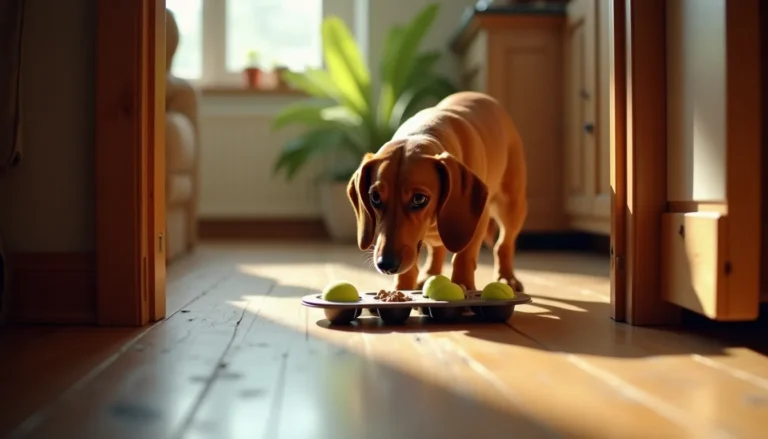
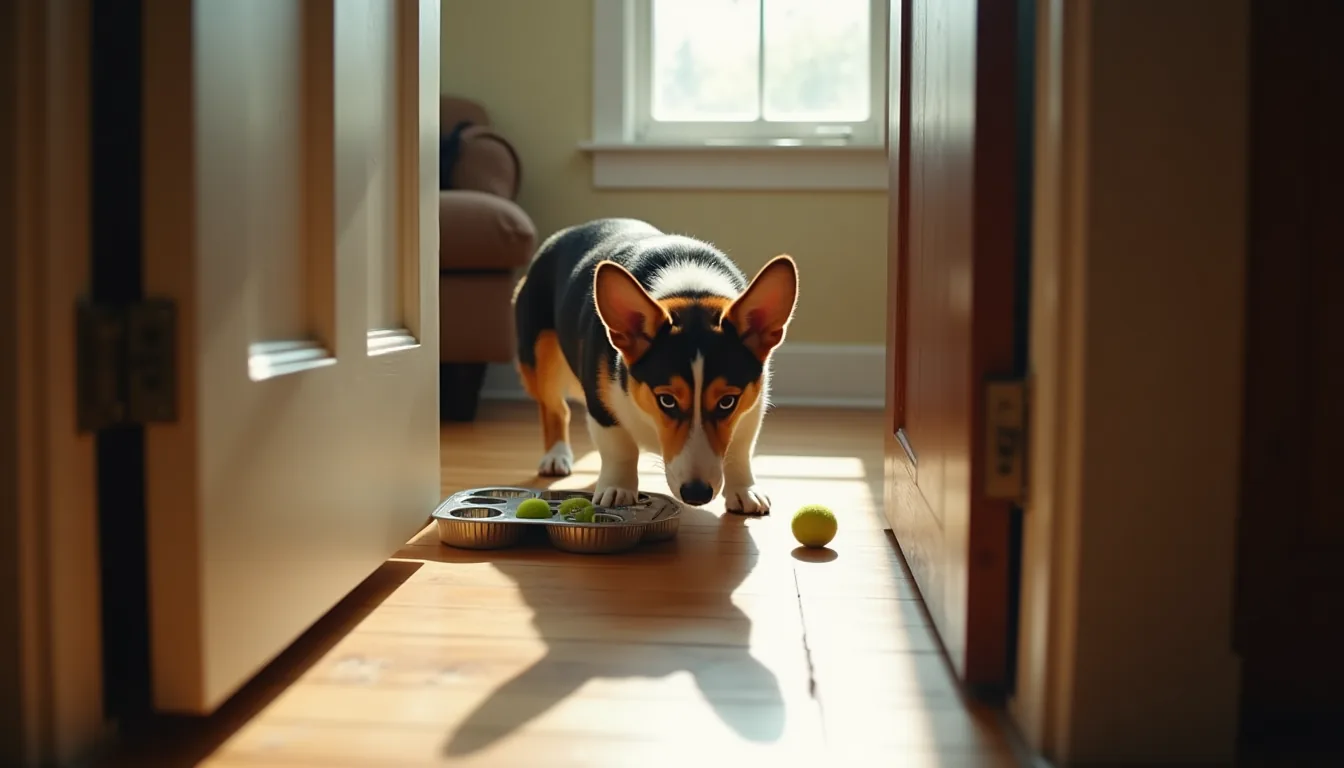
Muffin Tin Game
Put kibble or small treats in a few cups of a muffin tin, then cover all the cups with tennis balls. Your dog has to lift each ball to find the food. It sounds simple because it is — and dogs love it. Start with food under every cup so your dog learns the game, then gradually leave some cups empty to increase the challenge.
Scatter Feeding in Grass
Instead of putting your dog’s meal in a bowl, toss it handful by handful into the backyard grass. Your dog will spend 10-15 minutes sniffing and foraging for every piece. This is one of the best examples of free mental enrichment for dogs — it costs nothing extra and uses food you’re already buying.
Box Search
Set out five or six cardboard boxes of different sizes, hide a high-value treat in one, and let your dog search. Once they find it reliably, start hiding the treat before they enter the room. This is the foundation of competitive nose work and a genuinely tiring activity for dogs of any age or mobility level.
Food Enrichment: Turning Every Meal Into a Challenge
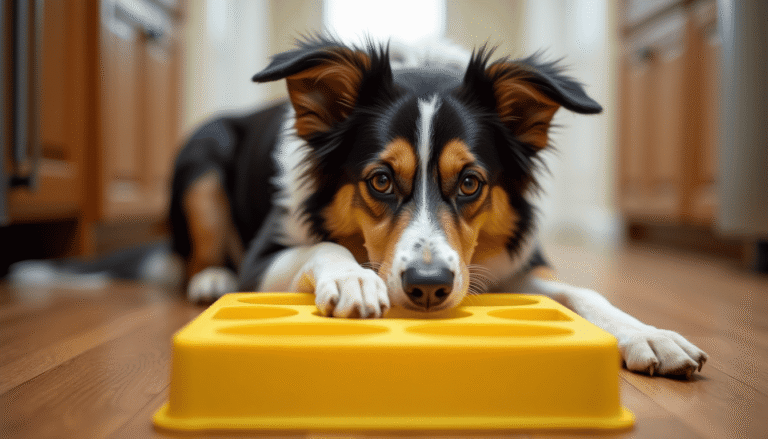
A stainless bowl takes about 45 seconds to empty. A frozen stuffed rubber toy takes 20 minutes. That difference alone is worth paying attention to. Food enrichment for dogs is one of the most practical categories because it uses something your dog already gets every day — their meals — and makes it work harder.
The basic formula: take your dog’s regular food, add a small amount of something sticky (plain pumpkin puree, unsweetened yogurt, mashed banana), pack it into a hollow rubber toy or silicone mat, and freeze it. Frozen meals take significantly longer to finish and give your dog a focused task. For filling ideas, our guide to lick mat recipes has 12 options that work well for this.
Rotate the vessel, not just the filling. One day use a lick mat, the next a stuffed toy, the next a snuffle mat. Your dog stays more engaged when the format changes, even if the food is similar.
Slow feeders and puzzle bowls also fall into this category. They’re especially useful for dogs who eat too fast, and they require zero prep — just pour the food in and hand it over. The ASPCA recommends food puzzles as part of a daily enrichment routine for dogs, particularly those spending long stretches alone.
DIY Enrichment Activities You Can Build in 10 Minutes
A rolled-up towel with kibble tucked inside the folds costs nothing and takes about 30 seconds to make. That’s the spirit of dog enrichment ideas DIY — using what you already have at home to create a problem for your dog to solve.
Here are five no-cost options that actually get used:
- Towel roll: Lay a hand towel flat, scatter treats across it, roll it up loosely, and hand it to your dog. Most dogs figure it out in under a minute and ask for it again immediately.
- Egg carton puzzle: Put treats in the cups of a cardboard egg carton and fold it closed. Your dog has to tear or pry it open. Supervision required — not for dogs who eat cardboard.
- Bottle spinner: Thread a wooden dowel through two empty plastic bottles with treats inside. Mount it on a cardboard box so it spins. Your dog nudges the bottles to drop treats out.
- Snuffle mat from fleece strips: Cut fleece into strips and tie them through a rubber mat with holes. Scatter kibble through the strips. Takes about 20 minutes to make and lasts for years.
- Ice block foraging: Freeze kibble or small treats inside a block of water. On a hot day, let your dog work through the ice to get to the food. Messy, but effective.
If you want more ideas in this vein, our post on DIY enrichment toys covers builds that go a step further with minimal materials.
Enrichment Activities for Dogs Indoors on Low-Energy Days
Three days of rain in a row. A post-surgery recovery week. A heat wave that makes outdoor time impossible. Every dog owner hits stretches where getting outside isn’t happening, and enrichment activities for dogs indoors become the main event.
Training New Behaviors
Pick one trick your dog doesn’t know — “touch” (nose to hand), “spin,” “back up” — and spend five minutes on it. Short, positive training sessions are mentally tiring in a way that’s completely different from physical exercise. Five minutes of focused training can be more exhausting for your dog than a 20-minute walk. Keep sessions short enough that your dog stays engaged and ends on a success.
Indoor Obstacle Course
Use couch cushions, laundry baskets, and a broomstick balanced between two chairs to build a simple course. Guide your dog through it with treats. You’re asking them to read your cues, navigate novel obstacles, and stay focused — all cognitively demanding tasks.
Tug and Retrieve Games
Tug isn’t just physical. When you add rules — “drop it” before the next round, “wait” before you start — you layer in impulse control work. That combination of arousal and self-regulation is excellent mental exercise. Keep sessions under five minutes so they stay sharp and fun.
For a longer list of ideas specifically for indoor days, the post on indoor enrichment ideas has ten solid options broken out by effort level.
Our Picks
These three product categories consistently earn their keep in a daily enrichment routine:
- Rubber puzzle toy with multiple compartments — holds a full meal’s worth of kibble mixed with a soft binder, freezes well, and the irregular shape makes it harder to pin down than a straight cylinder.
- Adjustable snuffle mat with varied pile heights — the height variation means some kibble hides deeper than other pieces, which keeps your dog searching longer instead of vacuuming the surface in 60 seconds.
- Multi-level sliding tile puzzle board — requires your dog to move pieces in sequence to uncover the food, which adds a planning element that simpler flip-lid puzzles don’t have.
FAQ
How much mental enrichment does a dog need per day?
Most adult dogs benefit from 20-30 minutes of dedicated mental enrichment spread across the day — not necessarily in one block. A 10-minute nose work session in the morning and a frozen stuffed toy at lunch covers a lot. High-energy working breeds generally need more than that to stay settled.
What can I give my dog for mental enrichment while I’m at work?
Frozen stuffed toys are the most reliable option because they’re self-contained and last 15-30 minutes depending on the filling and your dog’s size. A snuffle mat with their breakfast scattered through it also works well. Rotate the options so your dog doesn’t lose interest in any single format. Dog enrichment ideas while at work work best when they’re prepared the night before.
Can mental enrichment replace physical exercise for dogs?
No — they serve different needs. Mental enrichment reduces restlessness and anxiety, but your dog still needs movement for cardiovascular health, joint function, and basic well-being. Think of mental enrichment as something that runs alongside physical exercise, not instead of it.
What are the best free mental enrichment activities for dogs?
Scatter feeding in grass, the muffin tin game, hide-and-seek with kibble, and short training sessions all cost nothing beyond the food your dog already eats. Homemade mental enrichment for dogs is genuinely effective — you don’t need to buy anything to get started today.
Is mental enrichment good for anxious or reactive dogs?
Yes, with some caveats. Calm, low-arousal enrichment — lick mats, snuffle mats, frozen toys — is particularly useful for anxious dogs because the repetitive licking motion has a self-soothing effect. High-arousal games like tug or fast-paced puzzle solving are better suited for dogs that are already emotionally regulated. If your dog has significant anxiety, pair enrichment with guidance from a certified trainer or veterinary behaviorist.
Start With One Thing Today
Mental enrichment for dogs doesn’t require a complete routine overhaul. Pick the simplest activity on this list — scatter your dog’s next meal in the grass, roll up a towel with kibble inside, or spend five minutes teaching one new cue. Do that one thing consistently for a week. You’ll notice your dog settling faster, sleeping more soundly, and asking less insistently for your attention. That’s the result of a brain that’s actually been used. Build from there.