The best dog travel accessories aren’t the ones with the most features — they’re the ones you actually reach for every single trip. You’ve probably packed a bag for your dog at least once, realized halfway to the highway that you forgot a bowl, and improvised with a takeout container at a rest stop. That’s the trip that teaches you what actually belongs in the kit. This guide cuts straight to the gear that solves real problems on real trips.
Why Most Dog Travel Kits Fall Short on Safety
A 60-pound dog in an unrestrained crate becomes a 2,700-pound projectile in a 35 mph collision — that’s basic physics, and it’s the reason crash-tested restraint systems exist. Yet most pet owners still drive with their dog loose in the backseat or cargo area. The AKC recommends restraining your dog during every car ride, either with a crash-tested harness clipped to the seatbelt or inside a secured crate.
The practical problem: most harnesses on the market haven’t been crash-tested. They’re designed for walking, not impact. When you’re shopping, look specifically for harnesses that have passed independent sled tests — the certification language will say so on the packaging or product page.
If you only upgrade one thing in your setup, make it the restraint system. Everything else on this list makes the trip better. A proper harness makes it survivable.
Beyond the harness, window guards or mesh barriers matter if your dog is a jumper or gets anxious in traffic. A dog who can lunge toward the driver is a distraction hazard, full stop. Our tips for traveling with a dog in a car go deeper on positioning and setup if you want the full breakdown.
One more thing: make sure your dog’s ID tag has a phone number that works when you’re away from home. A cell number beats a home landline every time.
The Collapsible Gear That Actually Saves Space
A standard stainless steel water bowl takes up roughly the same footprint as three collapsible silicone bowls stacked flat. That math matters when you’re fitting dog gear alongside luggage, a cooler, and everything else a road trip demands.
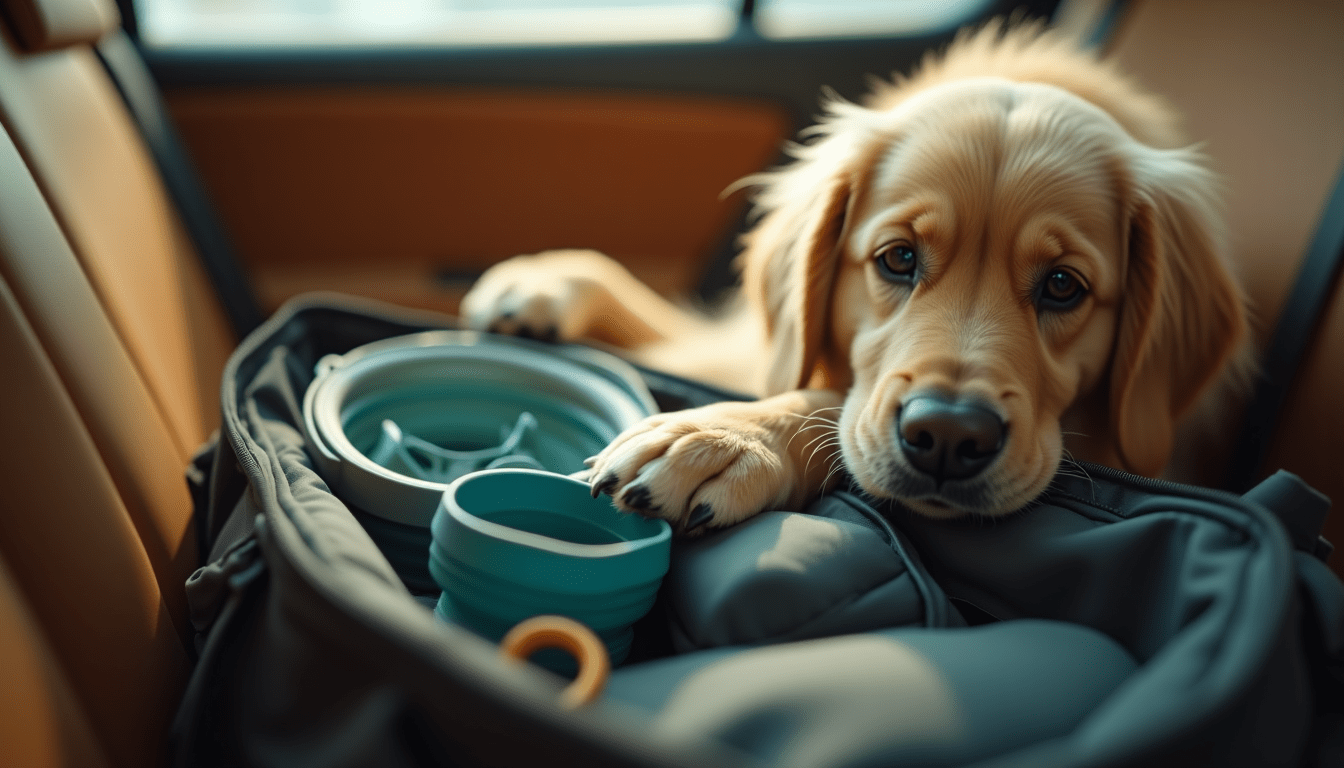
Collapsible silicone bowls are the single most universally useful piece of kit for travel. They work for water at rest stops, food at campsites, and rinsing muddy paws in a pinch. They weigh almost nothing and clip to a bag handle.
What collapses well (and what doesn’t)
- Silicone bowls: Genuinely flat when empty. Easy to rinse. Hold up for years.
- Fabric bowls: Lighter, but absorb odors over time and are harder to sanitize.
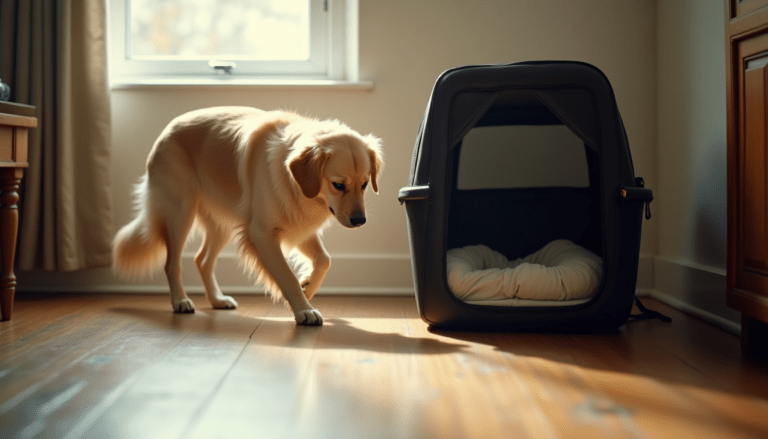
- Pop-up crates: Useful for hotel stays; look for ones with a rigid floor panel so your dog isn’t sleeping on a hammock of mesh.
- Collapsible food storage containers: Better than zip bags for kibble — they stack, seal, and don’t puncture.
What’s not worth the collapsible version
Collapsible leashes and retractable leads are a skip for travel. They tend to fail at the worst moments — busy parking lots, unfamiliar rest stops — and a standard 6-foot nylon leash takes up almost no space anyway.
A compact, flat-folding travel mat (think thin foam or packable nylon) is worth adding to the collapsible pile. It gives your dog a familiar surface at hotels or campsites, which helps them settle faster in a new environment.
10 Best Dog Travel Accessories Worth Packing Every Time
This list is ordered by how often each item actually gets used, not by price or novelty. The first three come out on every single trip. The rest depend on length and destination.
- Crash-tested travel harness — Non-negotiable for safety in the car.
- Collapsible silicone water bowl — Used at every stop.
- Spill-proof water bottle with attached trough — Hands-free hydration without hunting for a surface.
- Waterproof seat cover or hammock liner — Protects upholstery and gives your dog a defined space.
- Portable pop-up crate or travel bed — Familiar sleeping surface for hotel nights.
- Waste bags (double your estimate) — You will always need more than you think.
- Enzymatic cleaner in a travel bottle — Motion sickness happens. Be ready.
- First aid kit sized for dogs — Includes gauze, saline, tweezers, and a muzzle. The ASPCA maintains a full list of what a pet first aid kit should contain.
- Copies of vaccination records — Required at most pet-friendly hotels and some state parks.
- A frozen stuffed toy or chew — Keeps an anxious dog occupied during long driving stretches.
For a printable version of everything your dog needs packed before you leave the driveway, our dog travel packing list has it organized by trip type and length.
Setting Up the Car So Your Dog Actually Settles
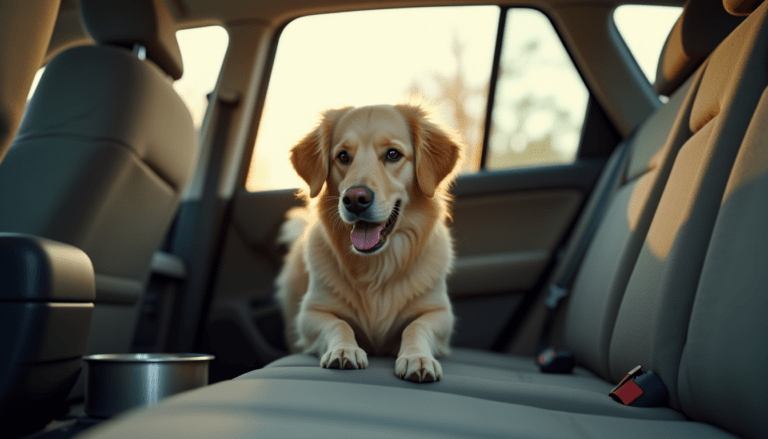
A waterproof seat hammock — the kind that clips to the front and rear headrests and covers the full backseat — does two things at once: it keeps your upholstery clean, and it creates a defined “dog zone” that most dogs learn to associate with car time.
The setup matters as much as the gear. Put the hammock in before the dog gets in. Add the travel bed or a worn t-shirt that smells like home on top of it. Clip the harness to the seatbelt loop. Then load your dog in calmly, without a lot of ceremony — the more routine it feels, the faster they’ll lie down.
Avoid feeding a full meal within two hours of departure. Motion sickness is more common in dogs than most owners realize, and a full stomach makes it worse. A small snack is fine; a full bowl is a gamble.
Window shades for the rear side windows help on hot, sunny days — they reduce heat load and cut the visual stimulation of passing scenery, which some dogs find overstimulating. They’re inexpensive and fold flat when not in use.
If your dog is genuinely anxious in the car rather than just restless, that’s a behavioral and sometimes medical issue worth addressing before a long trip. Short practice drives, positive associations, and in some cases a conversation with your vet about anti-nausea medication are all worth considering.
Hotel and Overnight Stays: What Changes When You Stop Moving
Most pet-friendly hotels have a weight limit and a pet fee — sometimes both. Before you book, check the specific property’s policy, not just the chain’s general policy, because they vary by location. Our roundup of pet-friendly hotels across the US covers what to look for beyond just “dogs allowed.”
Once you’re in the room, the gear that matters shifts. The car harness stays in the bag. What comes out:
- The travel bed or mat — set it up in the same spot relative to your bed each night to build a consistent routine.
- A portable water bowl filled immediately — dogs often don’t drink enough during travel days and arrive dehydrated.
- The enzymatic cleaner — accidents happen in unfamiliar spaces, especially with younger dogs.
- A familiar chew or toy — helps your dog decompress after a stimulating travel day.
Don’t leave your dog alone in a hotel room on the first night if you can avoid it. New smells, new sounds, and a new space can trigger barking that gets you both kicked out. If you need to step out, a white noise app on your phone left playing near the bed helps more than you’d expect.
A short leash walk around the hotel property before settling in for the night does a lot to reduce restlessness. Even 10 minutes of sniffing new territory burns mental energy.
Our Picks
These three categories cover the gaps most dog travel kits leave open. Each link is a placeholder for affiliate pricing — click through to compare current options.
- Crash-tested travel harness with seatbelt clip — The only restraint category that’s been independently tested for impact; standard walking harnesses aren’t built for this.
- Waterproof backseat hammock with side flaps — Side flaps prevent your dog from sliding into the door gap on turns, which standard seat covers skip entirely.
- Insulated travel water bottle with attached trough dispenser — Keeps water cool for 8+ hours and dispenses without needing a flat surface, which matters at highway rest stops.
FAQ
What is the safest way to restrain a dog in a car?
A crash-tested harness clipped directly to the vehicle’s seatbelt is the safest option for most dogs. A secured, impact-rated crate bolted to the cargo area is the alternative for larger breeds. Standard walking harnesses and unrestrained crates are not designed for collision forces and should not be used as primary restraints.
Do I need to bring my dog’s vet records when traveling?
Most pet-friendly hotels require proof of current rabies vaccination at minimum, and some require a full vaccination record. If you’re crossing state lines, certain states have entry requirements for dogs. Keep digital copies on your phone and a paper copy in your bag.
How do I stop my dog from getting car sick on road trips?
Avoid feeding a full meal within two hours of departure. Keep the car cool and well-ventilated. Face your dog forward if possible, since rear-facing positions increase nausea. For dogs with persistent motion sickness, your vet can prescribe anti-nausea medication that’s safe for travel days.
What dog travel accessories are actually worth buying vs. improvising?
Buy the restraint system and the enzymatic cleaner — both require specific engineering that improvised solutions can’t replicate safely. Everything else (bowls, beds, waste bags) can be improvised in a pinch, though collapsible versions save real space. Don’t cheap out on the harness.
How do I find pet-friendly hotels that allow large dogs?
Search filters on booking platforms often let you filter by “pets allowed,” but weight limits vary widely by property. Always call the specific hotel to confirm their weight cap and pet fee before booking — the chain-level policy and the individual property policy frequently don’t match.
Start With One Thing
If your current setup is a leash and a prayer, don’t try to overhaul everything at once. Pick the one gap that caused the most friction on your last trip — probably the restraint, the water situation, or the cleanup kit — and fix that first. Once those three are solid, the rest of the best dog travel accessories slot in naturally around them. Check our road trip packing list for pets before your next departure and you’ll leave the driveway with nothing forgotten.