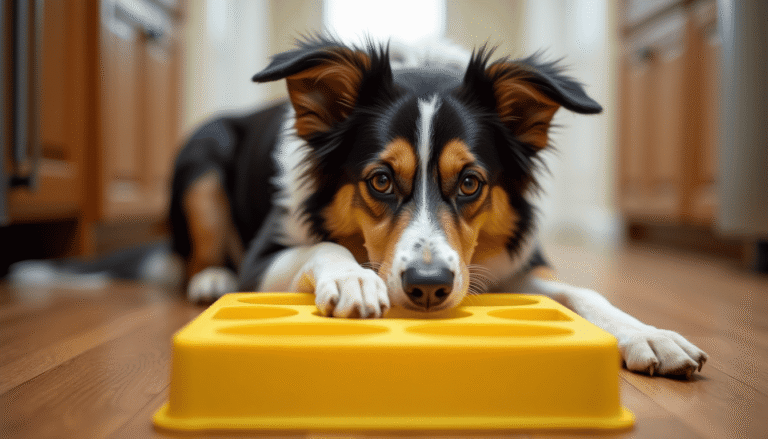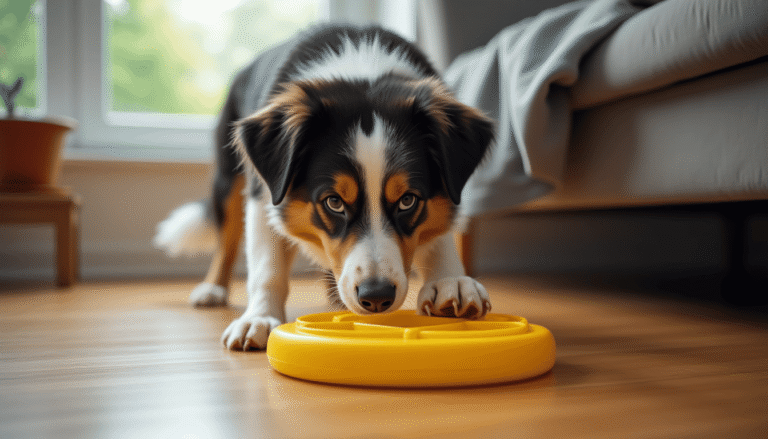
The best dog puzzle ideas at home don’t require a trip to the pet store — your recycling bin, a muffin tin, and a handful of kibble can keep a restless dog occupied for 20 solid minutes. Whether your dog is bouncing off the walls on a rainy afternoon or you just want to swap out the same old walk routine, DIY mental challenges burn energy faster than most people expect. Here’s what actually works, tested on dogs that don’t take “easy” for an answer.
Why Mental Work Tires Dogs Out Faster Than a Walk
A 15-minute sniff-and-search session on the living room floor can leave a high-drive dog more settled than a 30-minute leash walk around the block. That’s not a guess — it’s something most trainers and veterinary behaviorists point to when owners complain their dog is “always hyper.” The reason is that problem-solving recruits the prefrontal regions of a dog’s brain and keeps stress hormones cycling in a productive direction rather than building toward destructive behavior.
The practical upshot: if your dog is shredding mail, barking at shadows, or pestering you every 10 minutes, the problem is almost never “not enough exercise.” It’s usually not enough cognitive work. Before you add a second daily walk, try adding one 15-minute puzzle session instead and watch what changes.
Mental enrichment also helps dogs that can’t exercise freely — post-surgery recoveries, senior dogs with joint pain, or flat-faced breeds that overheat quickly. A puzzle doesn’t replace veterinary care, but it gives those dogs something to do with the mental energy they still have in abundance. According to the AKC, mental stimulation is a core component of canine well-being alongside physical exercise and social interaction.
One practical note: keep early sessions short. Five minutes of a genuinely hard puzzle is better than 20 minutes of a dog giving up and walking away. Start easier than you think you need to, then raise the bar once your dog is actively seeking out the challenge.
The Muffin Tin Game and 4 Other Dog Puzzle Ideas at Home
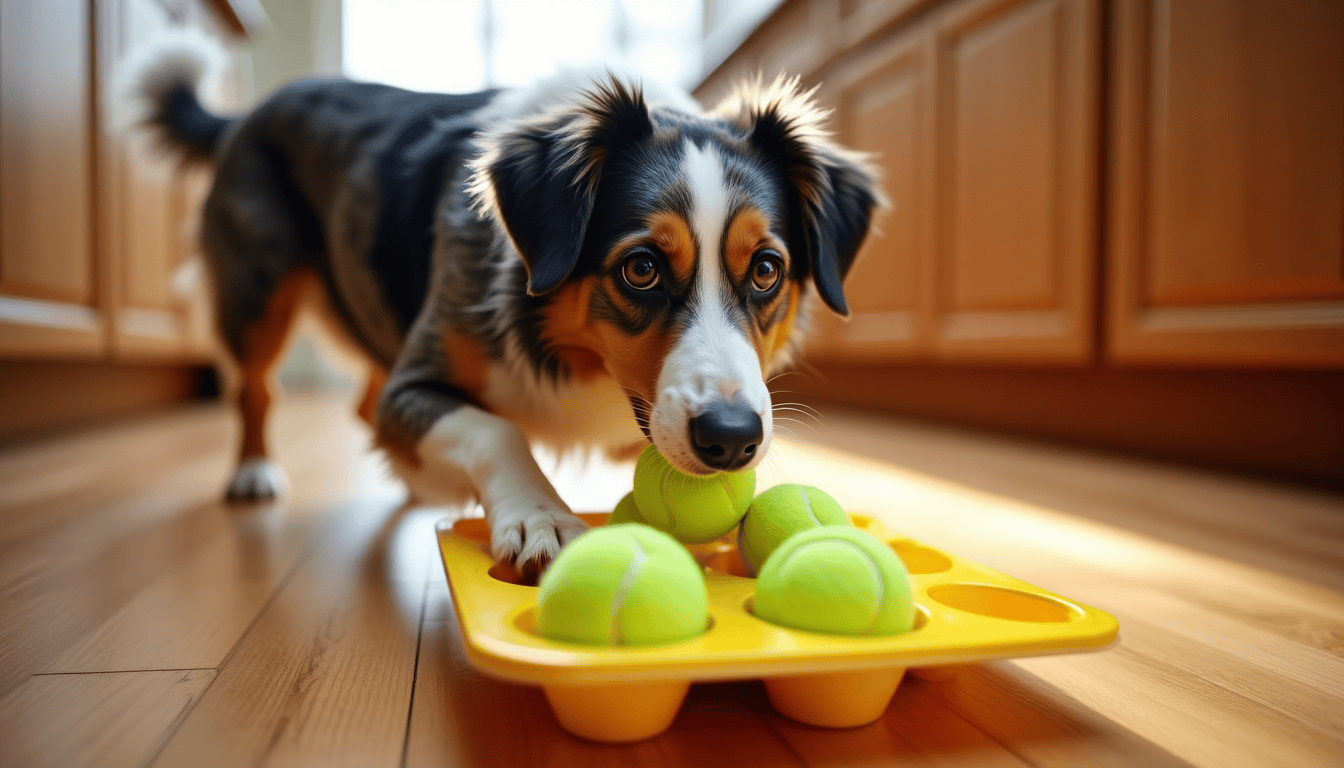
A standard 12-cup muffin tin is the most-used object in a dog enrichment toolkit, and it costs nothing if you already bake. Place a small treat or a pinch of kibble in each cup, then cover every cup with a tennis ball. Your dog has to nose or paw each ball off to find the reward. Once that’s easy, only fill some of the cups — now your dog has to work out which ones are worth investigating.
The Snuffle Mat Substitute
Cut an old rubber sink mat into strips and weave fleece fabric scraps through the holes. Sprinkle kibble into the fleece tufts. This mimics the foraging behavior dogs are wired for — rooting through grass for food — and a 10-minute session often leaves dogs noticeably calmer. Wash it weekly; wet kibble sitting in fabric grows mold faster than you’d expect.
The Cardboard Box Dig
Fill a shallow cardboard box with crumpled newspaper, paper towel tubes, and a few toilet paper rolls. Hide treats throughout the layers. Your dog digs, sniffs, and problem-solves to uncover them. Supervise this one — some dogs eat the cardboard, which isn’t dangerous in small amounts but isn’t the goal either.
The Towel Roll
Lay a kitchen towel flat, scatter treats across it, then roll it up loosely. Set it on the floor. Your dog has to unroll it with their paws and nose to get to the food inside. It sounds too simple, but dogs that have never seen it will spend several focused minutes on it.
The Ice Block Lick
Freeze a mix of low-sodium broth, a spoonful of plain pumpkin, and a few blueberries in a Tupperware container overnight. Pop it out onto a tray. Licking is a naturally calming behavior for dogs — it activates the parasympathetic nervous system — so this one doubles as a stress-reduction tool on vet days or during thunderstorms.
Matching Puzzle Difficulty to Your Dog’s Breed Drive
A beagle and a border collie are both smart dogs, but they engage with puzzles very differently. Scent hounds like beagles, basset hounds, and bloodhounds are motivated almost entirely by smell — they’ll work a nose-work puzzle for 20 minutes without losing interest. Herding breeds like border collies and Australian shepherds tend to get frustrated with purely olfactory tasks; they want to manipulate objects, solve sequences, and feel like they’re making decisions.
Terriers are persistent to the point of being destructive — they’ll dismantle a cardboard puzzle in 90 seconds flat, so you need sturdier materials or faster rotation. Bully breeds often respond best to food-stuffed puzzles where the reward is obvious but the extraction takes physical effort. Toy breeds, despite their size, can handle surprisingly complex puzzles; don’t underestimate them just because they’re small.
A useful rule: if your dog solves the puzzle in under two minutes, it’s too easy. If they walk away after 30 seconds, it’s too hard. The sweet spot is 5–15 minutes of active, focused engagement with occasional small wins throughout.
Age matters too. Puppies under 4 months do best with single-step puzzles — one tennis ball over one cup. Senior dogs may have slower processing but still benefit enormously; just watch for signs of frustration and keep sessions shorter.
Two Mistakes That Make Puzzles Backfire
The first mistake is loading the puzzle with too much food. A puzzle stuffed with 200 calories of treats isn’t enrichment — it’s a meal replacement that will throw off your dog’s diet and teach them that puzzles are about gorging rather than working. Use your dog’s regular kibble as the puzzle reward and count it against their daily portion. A quarter cup of kibble spread across a muffin tin game is plenty.
The second mistake is doing the puzzle for your dog. When owners see their dog struggle, the instinct is to tip the muffin tin slightly or nudge the tennis ball. Resist this. The struggle is the point. If your dog genuinely can’t make progress after two minutes, reset the puzzle at a simpler level — don’t solve it for them. Dogs that are rescued from every difficulty never build the persistence that makes enrichment actually enriching.
A third mistake worth mentioning: leaving puzzles out unsupervised. A dog that has unlimited access to a puzzle will either destroy it or lose interest in it entirely. Puzzles should be “special occasion” items that come out at specific times and get put away when the session ends. That scarcity keeps the motivation high.
If your dog shows signs of guarding the puzzle — stiffening, growling, or snapping when you approach — stop the session immediately and consult a certified trainer. Resource guarding around food puzzles is a real behavioral concern. The ASPCA has solid guidance on recognizing and addressing resource guarding before it escalates.
Building a Weekly Puzzle Rotation That Stays Fresh
Seven different puzzles, rotated daily, will hold a dog’s interest far longer than the same puzzle every day. The novelty itself is part of the enrichment — a new shape, a new smell, a new mechanism keeps the brain working harder than a familiar one. You don’t need to buy seven commercial puzzles to achieve this.
A practical weekly rotation might look like this:
- Monday: Muffin tin with tennis balls
- Tuesday: Frozen broth block on a tray
- Wednesday: Towel roll with kibble
- Thursday: Cardboard box dig
- Friday: Snuffle mat (DIY or commercial)
- Saturday: Hide-and-seek with kibble scattered in three rooms
- Sunday: Rest day — or a new puzzle you haven’t tried yet
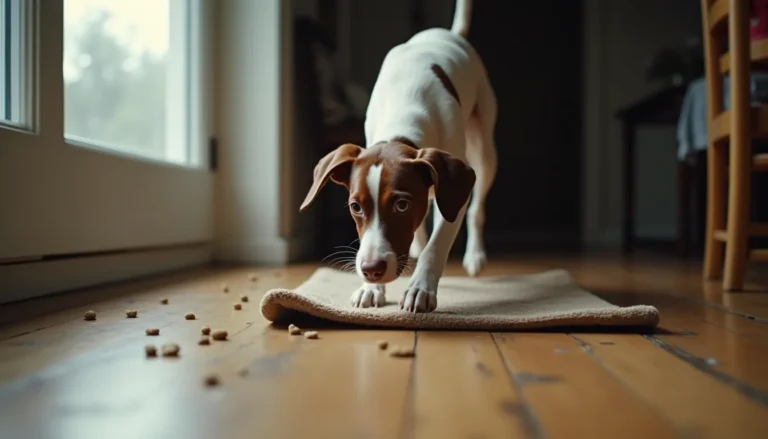
Scatter feeding — simply tossing a handful of kibble across the grass or a textured rug and letting your dog sniff it out — counts as a puzzle and takes zero prep time. It’s underrated precisely because it looks too simple. For dogs that inhale their food from a bowl, scatter feeding alone can add 10 minutes of focused activity to a meal.
Photograph or note which puzzles your dog engages with longest — that data tells you what type of problem-solver your dog is and helps you invest in the right commercial products when you’re ready to level up.
Our Picks
Once you’ve worked through the DIY versions, these three product categories are worth the investment:
- Adjustable-difficulty sliding tile puzzle feeder — these have multiple compartments that can be locked or unlocked, so you can scale the challenge as your dog improves rather than buying a new puzzle every few months.
- Silicone lick mat with suction base — the suction cup holds the mat to a tile floor or the inside of a crate door, which prevents your dog from just flipping it over and licking the underside; the textured surface also extends licking time significantly compared to a flat surface.
- Rubber treat-dispensing wobble ball — unlike a standard Kong, a wobble ball rolls unpredictably across the floor as kibble falls out, which adds a light physical component to the mental work and keeps high-energy dogs engaged longer.
FAQ
How long should a dog puzzle session last?
For most adult dogs, 10–20 minutes per session is plenty. Puppies and senior dogs do better with 5–10 minute sessions. The goal is focused engagement, not marathon duration — a dog that finishes a puzzle and walks away calmly has gotten what they need.
Can I use a dog puzzle with a dog that has no teeth or dental issues?
Yes, with adjustments. Avoid hard rubber toys that require significant biting force. Lick mats, frozen broth blocks, and snuffle mats are all excellent options for dogs with dental problems because they require no chewing at all. Check with your vet if your dog is recovering from oral surgery before introducing anything new.
Are dog puzzles safe to leave out while I’m at work?
Generally, no. Most puzzles have small parts, cardboard elements, or food residue that can become a hazard or a hygiene issue without supervision. The exception is a large, durable rubber dispenser with no detachable parts — those are typically safe for unsupervised use, but check the manufacturer’s guidelines for your specific product.
My dog solves every puzzle in under a minute. What do I do next?
Combine puzzles — put a muffin tin inside a cardboard box filled with crumpled paper, for example. You can also switch from food rewards to toy rewards, which adds an extra layer of motivation for play-driven dogs. If your dog consistently demolishes every challenge you set, a formal nose work class is worth exploring; it’s the most scalable mental workout available for dogs.
How many times a week should I do puzzle enrichment with my dog?
Daily is ideal for high-energy or high-drive breeds. For calmer or lower-energy dogs, three to four times per week is a reasonable baseline. The key is consistency — a dog that gets regular mental work is easier to live with than one that gets it occasionally in large bursts.
Start Tonight
Pick one dog puzzle idea at home from this list — the muffin tin game takes about 90 seconds to set up — and run it before your dog’s next meal using a portion of their kibble. Watch how they approach it, note whether they solve it too fast or give up, and use that information to adjust the difficulty tomorrow. That single observation will tell you more about your dog’s problem-solving style than any breed profile ever will. The best dog puzzle ideas at home are the ones you actually do.