The moment you reach for the car keys, your dog starts drooling — not with excitement, but with the early warning signs of nausea. Dog motion sickness medicine can stop that cycle before it starts, but knowing which option is right for your dog takes more than a quick Amazon search. Whether you’re headed to the vet across town or a three-day road trip through the mountains, here’s what actually works.
Why Dogs Get Car Sick in the First Place
Puppies get car sick far more often than adult dogs — and there’s a structural reason for that. The fluid-filled chambers in the inner ear that regulate balance aren’t fully developed in young dogs, which means the motion signals reaching their brain don’t match what their eyes are seeing. That mismatch triggers nausea. Most dogs improve significantly by the time they’re about one year old, but some never fully outgrow it.
Beyond the physical cause, there’s also a conditioned anxiety component. If your dog has vomited in the car before, they may start feeling sick before the car even moves — the smell of the interior, the sound of the engine, the sight of the carrier. That’s not weakness; it’s a learned association that takes deliberate effort to undo.
Common dog car sickness symptoms to watch for include:
- Excessive drooling or yawning before or during the ride
- Lip-licking and repeated swallowing
- Whining, panting, or restlessness
- Vomiting — often without much warning
- Lethargy or “shutting down” behavior during the trip
If your dog shows three or more of these signs consistently, it’s worth talking to your vet before the next trip. Some dogs need a medical solution; others respond well to behavioral conditioning alone. Most benefit from a combination of both. Our guide on helping dogs with car sickness covers the behavioral side in depth.
Prescription Dog Motion Sickness Medicine Options
Cerenia (maropitant citrate) is the only FDA-approved prescription drug specifically for vomiting due to motion sickness in dogs. It works by blocking neurokinin receptors in the brain — the same receptors that trigger the vomiting reflex — rather than just sedating your dog. That distinction matters: your dog stays alert and comfortable, not groggy and confused.
Your vet will typically prescribe it as a once-daily oral tablet, given at least two hours before travel. It’s approved for dogs 16 weeks and older. VCA Animal Hospitals notes that Cerenia is generally well-tolerated, though some dogs experience mild drooling or lethargy at the injection site when given the injectable form.
When to Ask for a Prescription
If your dog vomits on more than half of car rides, or if OTC options haven’t worked after two or three attempts, a prescription is the logical next step. Don’t wait through a dozen miserable trips before bringing it up with your vet.
Other Vet-Prescribed Options
Some vets also prescribe meclizine (an antihistamine) or diazepam for dogs with severe anxiety-driven motion sickness. These work differently — they reduce the anxiety response rather than directly blocking nausea — and they do carry sedation as a side effect. They’re typically reserved for dogs where anxiety is the dominant trigger.
Always confirm the correct dose with your vet before giving any prescription medication. Weight, age, and existing health conditions all affect the appropriate amount.
Over-the-Counter Dog Motion Sickness Medicine
Benadryl (diphenhydramine) is the most commonly reached-for dog motion sickness medicine over the counter, and it does have a mild anti-nausea effect alongside its sedative properties. The standard guideline is 1 mg per pound of body weight, but the formulation matters — many Benadryl products contain xylitol or other additives that are toxic to dogs. ASPCA lists xylitol as a significant toxin for dogs, so check the inactive ingredients label before giving anything.
Dramamine (dimenhydrinate) is another OTC option that pet owners use, though it’s not labeled specifically for dogs. It works on the vestibular system and can reduce nausea from motion. The concern with Dramamine is dosing — the standard human tablet is 50 mg, and smaller dogs need a fraction of that. Without vet guidance, it’s easy to over- or under-dose.
What to Look for in OTC Products
- Single active ingredient — avoid combination formulas (e.g., Dramamine Non-Drowsy, which uses meclizine at a different concentration)
- No xylitol, no artificial sweeteners, no added decongestants
- A clear mg-per-kg dosing chart from your vet before use
Timing Is Everything
OTC antihistamines need 30–60 minutes to take effect. Giving them in the parking lot before a three-hour drive is too late. Plan to administer at least one hour before departure, and withhold food for a few hours beforehand to reduce the likelihood of vomiting even if nausea occurs.
Natural Remedies: Ginger and Beyond
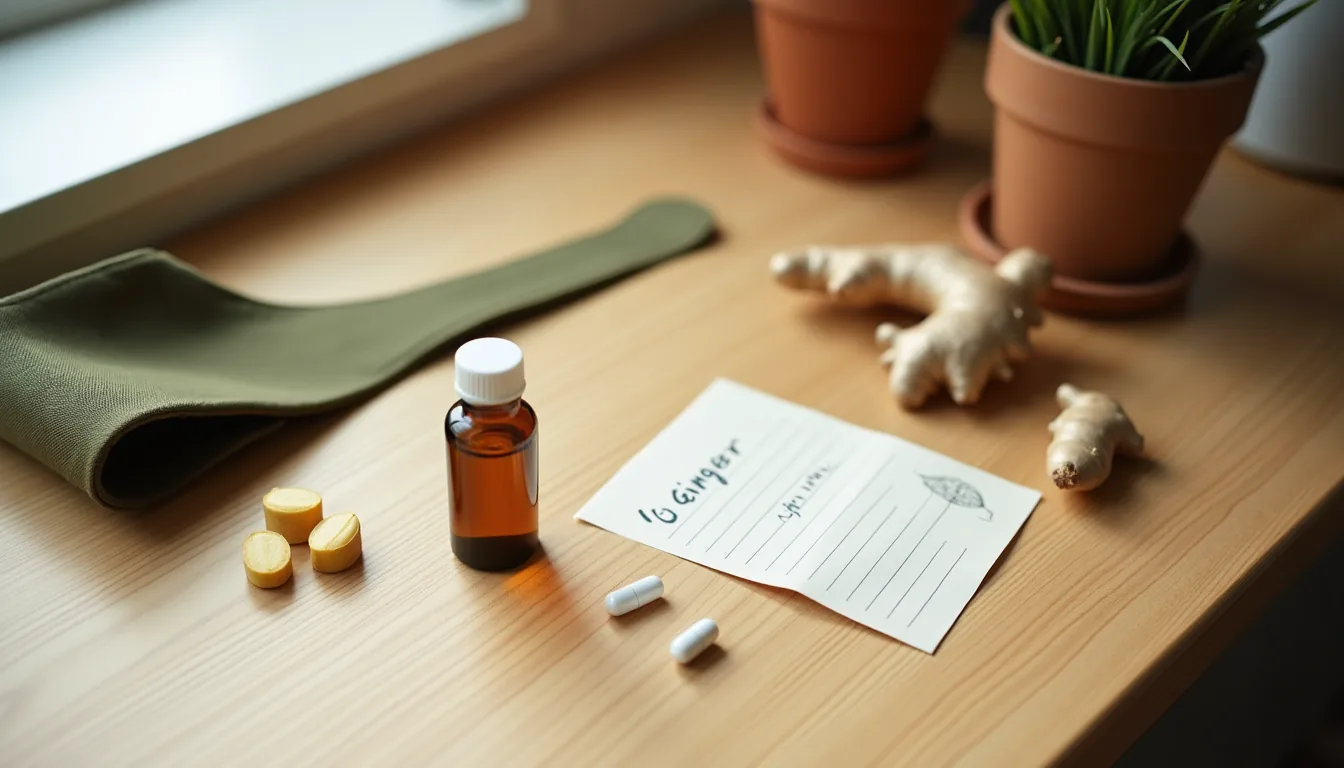
Ginger has a legitimate track record for reducing nausea in both humans and dogs. It works by blocking serotonin receptors in the gut — the same pathway that many prescription anti-nausea drugs target, just less potently. For mild cases, ginger for dog car sickness is worth trying before moving to pharmaceuticals.
Practical forms include:
- Plain ginger snap cookies (check for xylitol — some brands use it)
- Small amounts of fresh ginger grated into food before the trip (roughly ¼ tsp for a 30-lb dog)
- Ginger-based dog treats formulated for travel nausea
Beyond ginger, a few other non-pharmaceutical approaches consistently help dogs with mild motion sickness. Keeping your dog facing forward reduces the visual-vestibular mismatch. Cracking a window slightly equalizes air pressure and gives fresh air. Keeping the car cool lowers the likelihood of heat-triggered nausea. And positioning your dog in the middle of the back seat (rather than a window) minimizes the visual input of moving scenery.
These dog car sickness natural remedy approaches work best for dogs with mild symptoms or those who are still being desensitized to car travel. They’re not a substitute for medication in dogs with severe nausea, but they’re a solid first line of defense and a useful complement to any medicine protocol. For a broader look at building positive car associations, our post on preventing car sickness in dogs walks through the full desensitization process step by step.
Building a Pre-Trip Routine That Actually Helps
Forty-eight hours before a long drive, most experienced dog owners start their pre-trip protocol — not two hours before departure. The difference between a dog that travels well and one that doesn’t is usually preparation, not just medication.
Here’s a practical pre-trip sequence:
- 48 hours out: Confirm your medication plan with your vet. If using Cerenia, pick up the prescription. If using OTC, verify the dose and check the label.
- Night before: Limit dinner to a smaller portion than usual. A full stomach increases the risk of vomiting even with medication on board.
- Morning of: Give medication on the correct schedule — Cerenia needs 2 hours minimum; OTC antihistamines need at least 1 hour.
- At departure: Skip the big pre-trip meal. A light snack is fine; a full bowl is not.
- During the trip: Stop every 90 minutes to 2 hours. Let your dog walk, sniff, and reset their vestibular system before continuing.
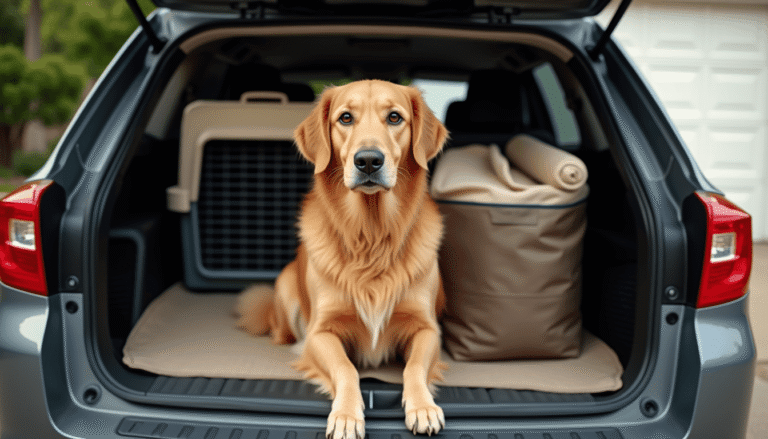
Proper restraint also plays a role — a dog sliding around the back seat experiences more disorienting motion than one secured in a travel crate or with a harness. See our breakdown of smart car travel strategies for more on positioning and restraint options that reduce nausea. And if you’re planning a longer road trip, our road trip packing list covers everything else you’ll want to have on hand.
Our Picks: Product Categories Worth Having
These are the three product categories that consistently make a difference for dogs prone to car sickness. No brand names — what matters is what to look for, not which logo is on the package.
- Vet-formulated chewable anti-nausea supplement — look for products with ginger, chamomile, or L-theanine as active ingredients; these are designed specifically for travel nausea and don’t carry the sedation risk of antihistamines.
- Adjustable rear-seat dog travel harness with crash-test certification — keeping your dog secured and facing forward is one of the most underrated tools for reducing motion sickness; a certified harness does double duty for safety and nausea prevention.
- Portable cooling mat for car crate or back seat — heat significantly worsens nausea, and a cooling surface keeps your dog’s core temperature down during summer travel without relying on air conditioning alone.
FAQ: Dog Motion Sickness Medicine
Can I give my dog Dramamine for car sickness?
Dramamine (dimenhydrinate) is sometimes used off-label for dogs, but it’s not FDA-approved for canine use. Before giving it, check with your vet for the correct dose based on your dog’s weight. Avoid Dramamine Non-Drowsy, which contains meclizine at a concentration that may not be appropriate without vet guidance.
How long before a car ride should I give dog motion sickness medicine?
Cerenia should be given at least 2 hours before travel. OTC antihistamines like Benadryl or Dramamine need 30–60 minutes to take effect. Giving medication at the last minute is one of the most common reasons it doesn’t seem to work.
Is there a dog motion sickness medicine OTC that actually works?
Diphenhydramine (the active ingredient in plain Benadryl) has a mild anti-nausea effect and is widely available. It works for some dogs, particularly those with mild symptoms. For dogs with moderate to severe motion sickness, an OTC option is unlikely to be sufficient, and a prescription like Cerenia is worth discussing with your vet.
My dog drools in the car but doesn’t vomit — does that need treatment?
Yes — excessive drooling is one of the earliest signs of nausea, and it means your dog is uncomfortable even if they’re not vomiting. Treating the nausea at this stage is easier than waiting until it progresses. A car sick dog drooling treatment plan is the same as for vomiting: address the underlying cause with medication, positioning, and behavioral desensitization.
Can puppies take motion sickness medicine?
Cerenia is approved for puppies 16 weeks and older. OTC antihistamines are generally not recommended for very young puppies without explicit vet guidance. If your puppy is getting car sick, start with short positive car experiences and consult your vet before reaching for any medication.
The One Thing to Do Before Your Next Trip
If your dog has been car sick more than twice, call your vet before the next drive and ask specifically about dog motion sickness medicine options for your dog’s size and health history. Don’t wait until the night before a long trip to figure this out. A five-minute phone call can mean the difference between a miserable ride and one where your dog actually settles in and sleeps — which is exactly what travel with a dog should look like.