10 Snuffle Mat Games for Dogs That Actually Work
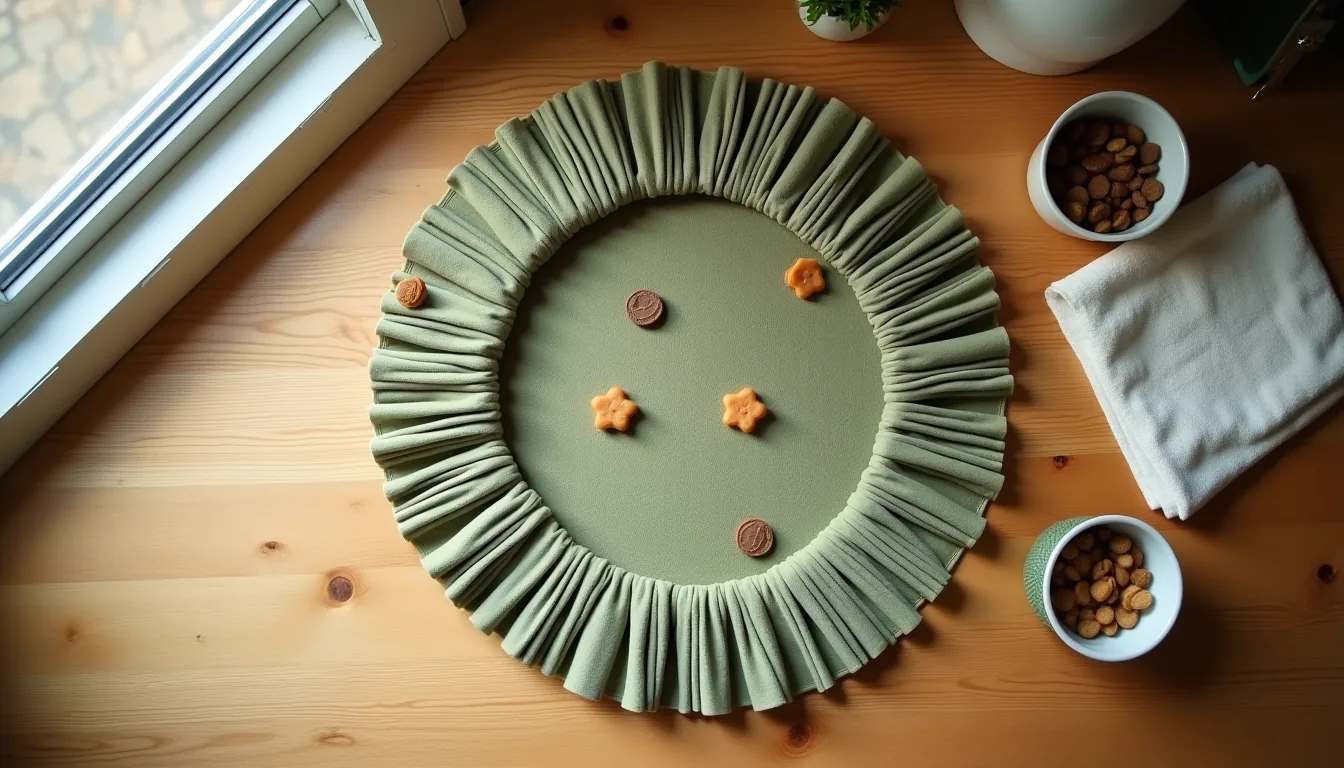
Snuffle mat games for dogs are one of the fastest ways to burn mental energy without leaving the house — your dog’s nose does the heavy lifting while you just prep the mat and step back. If you’ve been scattering kibble in the fabric and calling it done, you’re leaving a lot of enrichment value on the table. The mat itself is just the tool. The games you play with it are what actually tire your dog out.
Why Sniffing Tires Dogs Out Faster Than Running
A ten-minute nose work session can leave your dog more settled than a thirty-minute walk. That’s not an exaggeration — it’s basic canine biology. A dog’s nose contains roughly 300 million olfactory receptors compared to a human’s six million, according to the AKC. Processing all that scent information burns real cognitive energy. When your dog is working a snuffle mat, their brain is running at full capacity.
The foraging behavior the mat triggers is also deeply hardwired. Before domestication, dogs spent the majority of their waking hours searching for food — moving, sniffing, problem-solving. A snuffle mat recreates that sequence in a safe, controlled way. Your dog isn’t just eating; they’re hunting, which satisfies an instinct that a bowl of kibble never touches.
This is especially useful on days when physical exercise isn’t possible. If your dog is recovering from an injury, dealing with extreme heat, or you’re simply stuck inside, swapping one meal per day into a snuffle mat session gives your dog a genuine outlet without requiring you to leave the couch. For more ideas on keeping dogs busy when going outside isn’t an option, the indoor enrichment strategies on this site pair well with mat work.
The mat also works as a decompression tool. Dogs who are overstimulated, anxious, or reactive often benefit from having something low-pressure to focus on. The repetitive sniffing motion has a calming effect similar to the way humans find certain repetitive tasks soothing.
10 Snuffle Mat Games for Dogs: Beginner to Advanced
Most owners use the mat the same way every time: hide treats, let the dog find them, done. These 10 games add structure, difficulty, and variety — all of which keep the activity genuinely enriching rather than routine.
Beginner Games (Sessions 1–5)
- Kibble scatter: Spread your dog’s entire meal across the mat. This is the baseline game and the right starting point for dogs who have never used a snuffle mat before.
- One-scent search: Use a single high-value treat — a small piece of chicken or cheese — hidden in one spot. Let your dog find it, then reset and repeat three times. Builds focus and reward association.
- Layered hide: Tuck treats at different depths in the fabric — some on top, some buried deep. Your dog learns that persistence pays off.
Intermediate Games (Once Your Dog Has the Hang of It)
- Two-scent discrimination: Hide two different treats — say, kibble and a small piece of dried sweet potato — in separate zones. Watch which scent your dog prioritizes. This tells you a lot about their preferences.
- Slow reveal: Cover the mat with a lightweight towel and let your dog figure out they need to move the towel first. Adds a problem-solving layer before the nose work even begins.
- Mat + bowl combo: Place the snuffle mat next to a puzzle bowl. Hide treats in both and let your dog move freely between them. Extends the session without overwhelming.
- Wet food smear: Instead of treats, smear a thin layer of wet food, pumpkin puree, or plain yogurt across the mat’s surface. Your dog works to lick it out of the fabric folds. This slows them down significantly and works well for fast eaters. Check out these lick mat filling ideas — many translate directly to snuffle mat use.
Advanced Games (For Dogs Who’ve Mastered the Basics)
- Scent container hide: Place a small lidded container with holes punched in it — holding a high-value treat — somewhere inside the mat’s folds. Your dog can smell it but has to work to locate and paw it out.
- Timed challenge: Set a timer for three minutes. Count how many treats your dog finds. Next session, hide them more strategically. Track improvement over weeks.
- Cold mat: After loading the mat, place it in the freezer for 20 minutes before serving. Wet food and soft treats firm up, making extraction harder and the session longer.
How to Load a Snuffle Mat So It Actually Challenges Your Dog
The difference between a mat session that lasts two minutes and one that lasts twelve is almost entirely in how you load it. Three treats scattered on top of the fabric is not a challenge — it’s a snack. Here’s how to make the mat work harder.
Vary the hiding depth every single session. If you always bury treats at the same depth, your dog learns the pattern within a few uses and stops actually sniffing — they just paw at the base layer. Mix surface-level, mid-depth, and fully buried treats in the same session.
Use different treat sizes. Small, uniform treats are easy to locate by volume of scent. Mixing in one or two larger, higher-value pieces hidden deep forces your dog to keep working after they’ve found the easy ones.
Rotate the mat’s orientation. If your dog always starts at the same corner, try turning the mat 90 degrees or flipping it so the section they usually ignore is now the starting point. Small changes reset the challenge.
For small dogs and senior dogs, keep treats closer to the surface and use softer textures that don’t require as much pawing. A snuffle mat for senior dogs should prioritize accessibility — the mental work is still there, but you’re not asking arthritic paws to dig aggressively. For high-energy breeds, go the opposite direction: bury everything deep, use the cold mat technique, and combine with other enrichment strategies for active dogs to build a full session.
Keeping the Mat Safe and Sanitary
A snuffle mat that smells like last week’s chicken is not enriching — it’s just confusing. Scent hygiene matters more than most owners realize, and it’s one of the most overlooked parts of mat ownership.
Wash the mat at least once a week if you’re using it daily, more often if you’re loading wet food or raw treats. Most fabric mats are machine washable on a gentle cycle; check the manufacturer’s instructions, but cold water and air drying is almost always safe. Never put a rubber-backed mat in a hot dryer — the backing can warp and shed small pieces your dog could ingest.
Between washes, shake the mat outside and let it air out after each session. Treat crumbs left in the fabric can mold in humid conditions, and a moldy mat is a health hazard. The ASPCA notes that mold exposure can cause gastrointestinal distress in dogs, so this isn’t a step to skip.
Supervise your dog during the first several sessions with any new mat. Some dogs — especially puppies and heavy chewers — will try to eat the fabric rather than just sniff it. If your dog starts pulling at the fabric strands, remove the mat and redirect. A mat with loose or fraying fabric should be replaced immediately.
Store the mat flat or loosely rolled, not compressed. Compressing the fabric strands flattens them over time, which reduces the number of hiding spots and shortens the mat’s useful life.
Our Picks: Snuffle Mat Types Worth Buying
These recommendations are by category, not brand — every category has multiple solid options at different price points.
- Rubber-base snuffle mat with long fleece strips — The rubber backing keeps the mat from sliding across hard floors, and longer strips create more hiding depth for dogs who’ve mastered beginner-level mats.
- Portable roll-up snuffle mat for travel — Rolls into a cylinder for easy packing; useful for hotels, vet waiting rooms, or car trips where you need a quick calming activity.
- Large-format snuffle mat (28″+ diameter) for big dogs — Standard mats feel cramped for large dogs; a bigger surface area means more hiding zones and a longer, more satisfying session.
FAQ: Snuffle Mat Questions Owners Actually Ask
Do dogs get bored of snuffle mats over time?
Yes, if you use the mat the same way every session. The mat itself doesn’t lose novelty — the repetitive loading pattern does. Rotate the games above, change the treats you use, and vary the loading depth to keep each session genuinely different. Dogs who seem disinterested in a mat they once loved are usually reacting to predictability, not the mat itself.
How long should a snuffle mat session last?
Most dogs work a well-loaded mat for five to fifteen minutes. Sessions under five minutes usually mean the mat wasn’t loaded with enough challenge. Sessions over twenty minutes can indicate your dog is frustrated rather than engaged — check that the treats aren’t buried so deep they’re impossible to reach.
Can I use a snuffle mat for a puppy?
Yes, with supervision. Start with larger treats that are easy to locate and can’t be swallowed whole. Puppies are more likely to chew the fabric, so watch closely during the first few sessions. Short sessions — three to five minutes — are enough for puppies whose attention spans are still developing.
Is a snuffle mat better than a puzzle feeder?
They serve slightly different purposes. A snuffle mat activates scent-driven foraging behavior; a puzzle feeder typically requires more paw and nose manipulation to release treats. Many owners use both on rotation. If your dog is new to enrichment toys, a snuffle mat is usually the easier starting point because there’s no “wrong” way to use it.
What treats work best in a snuffle mat?
Small, dry treats are the easiest to hide and the least messy to clean up. Kibble, freeze-dried meat crumbles, and small training treats all work well. Wet food, pumpkin puree, and plain yogurt work too but require more cleanup and should be used on a mat you can wash the same day. Avoid anything sticky enough to mat the fabric strands together.
Start With One Game Today
Pick one game from the beginner list and load your dog’s next meal into the mat instead of a bowl. That’s it. You don’t need a perfect setup or a dozen different treats — you need a mat, some kibble, and five minutes. Once you see how hard your dog works and how calm they are afterward, snuffle mat games for dogs will become a regular part of your routine. The rainy day enrichment guide on this site has even more ways to stack mental work when you can’t get outside.